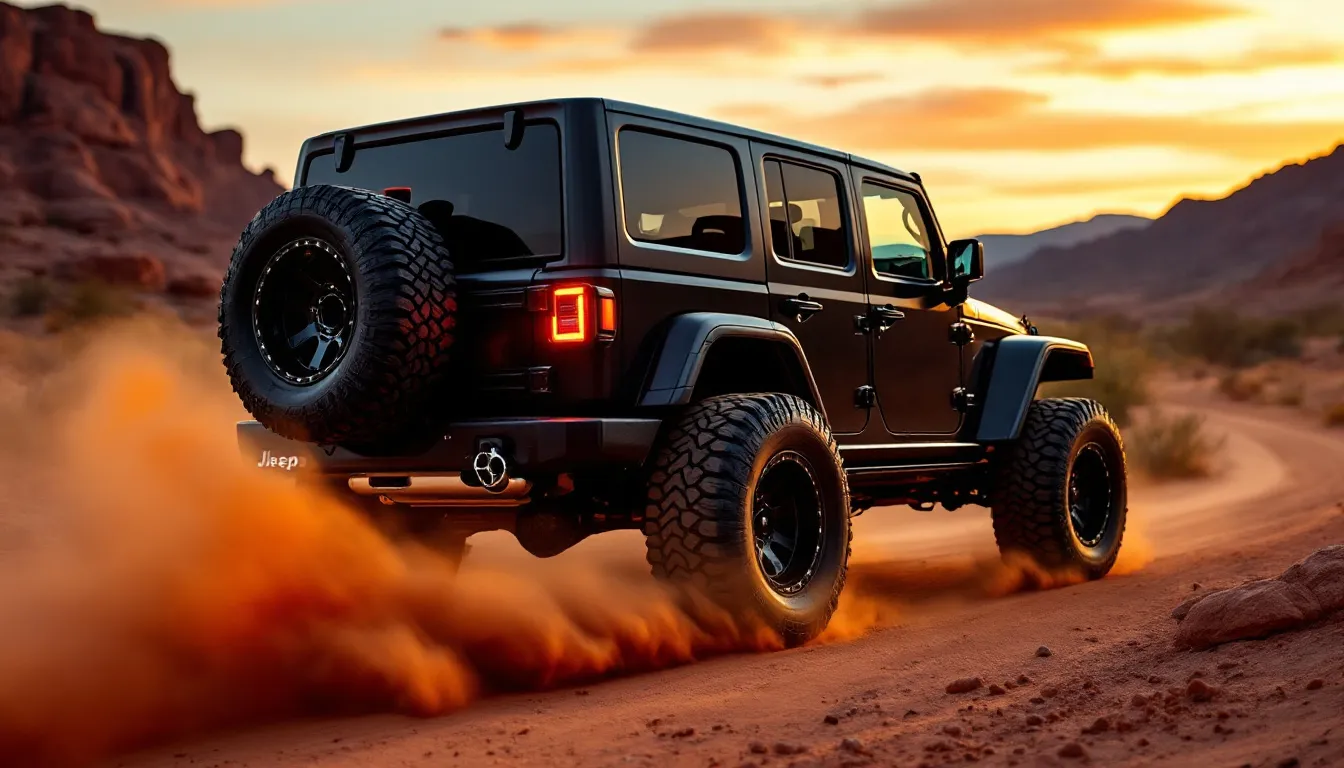
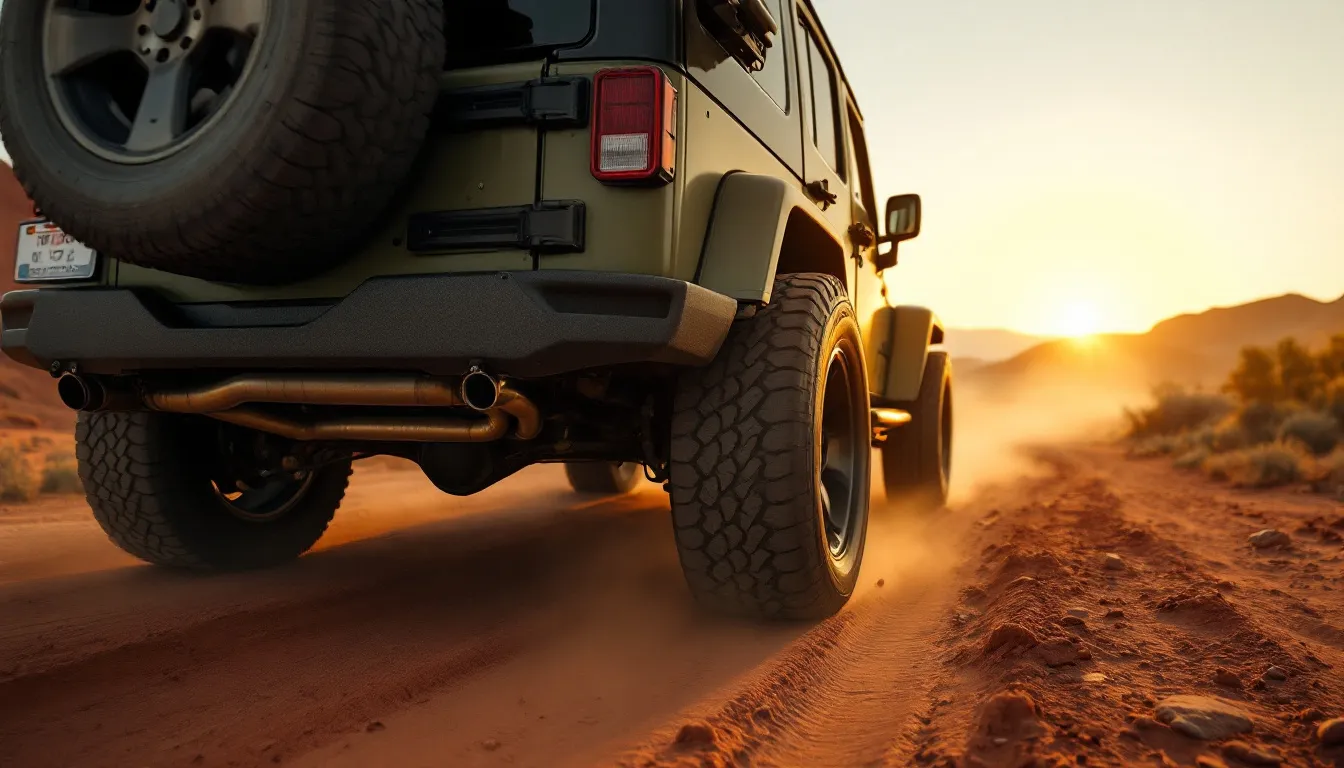
Drivetrain & Axles

Best Diff Breathers for Jeep JK: Extended Vent Kits & Water Fording Protection
43 min read
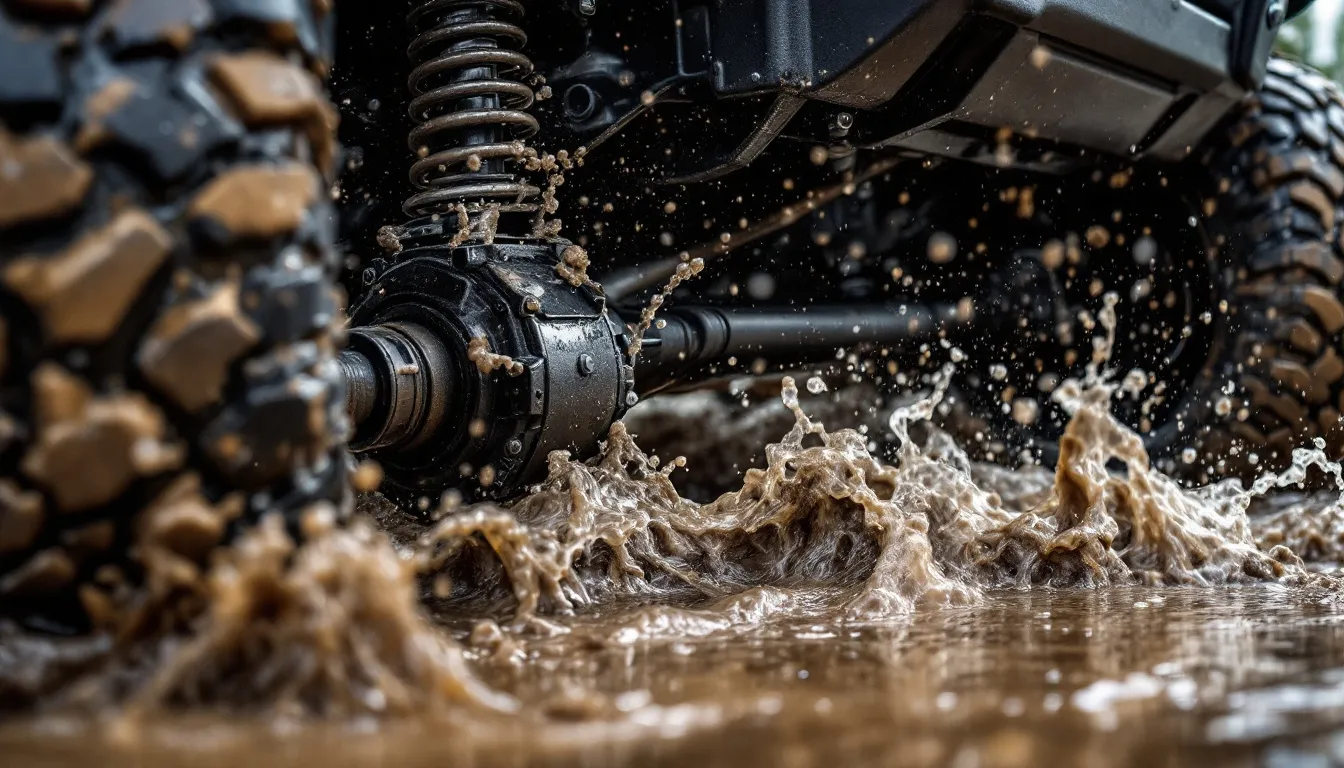
Jeep Wrangler JK crossing stream with extended differential breathers protecting drivetrain

The best differential breather kit for a Jeep Wrangler JK is the ARB 170112 for serious water crossers ($89), or the High-Flow 4-point kit for weekend warriors who need solid protection at $60. Budget builders can get basic coverage with ARB-style replacements for under $40. All three protect the four critical venting points — front differential, rear differential, transmission, and transfer case — by relocating air intake from axle height (18-24 inches) to firewall or snorkel height (36-48+ inches).

Your differentials breathe. As they heat up during use, air inside expands and pressure increases. Stop after a water crossing and components cool rapidly, creating a vacuum that sucks air back IN through the breather. If that breather’s underwater during cooling, you’re pulling water straight into your diff. One ingestion event can emulsify your gear oil and destroy bearings within weeks.

Stock JK breathers sit on top of the axle housings — maybe 20 inches off the ground on a good day. Cross a 24-inch puddle at even a slight angle and you’ve submerged them. The water you’re worried about isn’t the crossing itself. It’s what happens five minutes later when you park and everything cools down.

I installed extended breathers before my first real water crossing because I’d heard enough horror stories from the community. This blog is my research journal — every guide here started because I needed to figure it out for my own build. When it comes to breather systems, the consensus among experienced JK owners is clear: this is one of the first three modifications you should make, right alongside recovery points and upgraded diff covers.

You’ll spend $50-90 on a complete kit. You’ll spend $1,500-2,000 rebuilding a diff that ingested water. Simple math.

Why Your JK Needs Extended Differential Breathers

Factory breathers are a disaster waiting to happen. Jeep mounts them on top of the Dana 30 front and Dana 44 rear housings as simple open vent tubes with tiny filter caps. They equalize air pressure as your drivetrain heats and cools during normal operation — works perfectly fine on pavement.

Take that JK off-road and the equation changes completely.

The problem isn’t just water depth. It’s geometry. Your JK might have 10 inches of ground clearance, but those breather caps sit at roughly 18-24 inches depending on suspension setup. Cross a stream at any angle and you’ve already compromised that clearance. A 20-inch deep crossing becomes a 26-inch submersion when you’re tilted on a rock. The front axle dips. Breather goes under.

Here’s what most people miss: the danger isn’t during the crossing itself. It’s after. You make it through the water, crawl up the far bank, and park to check your line for the next obstacle. Your diffs are hot — maybe 180-200°F from working hard in low range. They start cooling immediately. Air inside contracts. Physics demands pressure equalization with the outside environment, so the differential sucks air back through the breather.

If that breather’s still dripping from the crossing you just made, you’re not sucking air. You’re sucking water.

All four drivetrain venting points are vulnerable: front differential, rear differential, transmission, and transfer case. Most JK owners obsess over diff breathers and completely forget the transmission and transfer case have breather tubes too. They’re all mounted low. All at risk.

Extended breathers solve this by relocating the air intake point to firewall height (36-40 inches) or snorkel height (48+ inches). Simple concept. Massive impact. You’re giving your drivetrain the ability to breathe from above the waterline no matter how deep you go — within reason. We’re talking stream crossings and mud holes, not submarine operations.

Even JK owners who insist they’ll never cross deep water benefit from extended differential breathers for a reason most people overlook: dust. Desert trails and fire roads kick up fine dust that standard breathers filter poorly. Extended breathers with proper filtration keep that dust out of your gear oil during dry-trail running. Not just a water mod. An all-conditions drivetrain protection upgrade.

The modification pays for itself the moment it prevents one contamination event. [CITATION: ARB product documentation on breather system effectiveness]. We’ll cover complete four-point kits, budget alternatives, snorkel-integrated systems, and component-level DIY solutions. Pick based on your budget and how deep you plan to go.

How Differential Breathers Work (And Why Stock JK Breathers Fail)

Understanding the physics helps you appreciate why this modification matters. Your differential housing is a sealed unit filled with gear oil. As the ring and pinion mesh under load, they generate significant heat through friction. Heat transfers to the housing and the air space inside.

Hot air expands. Basic thermodynamics.

As internal temperature climbs from 70°F ambient to 180°F operating temp, air pressure inside the housing increases proportionally. Without a breather, that pressure would blow seals and force oil past gaskets. The breather vents excess pressure to atmosphere during heating cycles.

Now reverse it. You shut down after a hard trail run or climb out of a water crossing. Components cool rapidly. Air temperature drops. Volume contracts. This creates negative pressure — a vacuum — inside the housing. Nature abhors a vacuum, so air rushes back IN through the breather to equalize pressure.

Here’s where stock breathers fail catastrophically: they’re just open tubes. There’s a small foam filter to catch dust, but zero protection against liquid ingestion. If the breather inlet is underwater during that cooling cycle, the vacuum sucks water straight into the differential. Not a little condensation. Not moisture. Actual water.

Water doesn’t compress. Water doesn’t lubricate steel. Water mixed with gear oil creates a milky emulsion that has roughly the same lubricating properties as mayonnaise. Bearings score within hours. Gears pit within days. By the time you notice the damage during your next oil change, you’re looking at a complete rebuild.

One water ingestion event can be catastrophic.

The stock Dana 30 front breather mounts on top of the differential pumpkin near the pinion yoke. Dana 44 rear breather sits on top of the housing on the driver’s side. Both are maybe 20 inches off the ground with stock suspension. Sport and Sahara models running the 42RLE or W5A580 automatic have transmission breathers near the bell housing. The NV241 or NV241OR transfer case has a breather tube on top, passenger side.

All four are vulnerable. All four need extending if you’re serious about water crossings.

Extended breathers relocate the air intake to firewall or snorkel height using flexible hose and brass fittings. Brilliance is in the simplicity: you’re not changing how the system works, just where it breathes from. The differential still vents pressure normally during heating. Still equalizes during cooling. But now the air intake point is 36-48 inches higher — well above any realistic water depth you’d attempt in a JK.

Premium kits add check valves — one-way valves that allow air OUT but prevent water IN even if the termination point somehow gets submerged. Belt-and-suspenders engineering for serious water crossers.

Top 6 Differential Breather Kits for Jeep JK

We’re ranking complete kits, budget alternatives, and specialty solutions based on coverage (two-point vs four-point systems), component quality, price, installation difficulty, and community reputation.

Installation time runs about 2-3 hours for first-timers. Once you’ve done it, subsequent installs take under an hour. The process is straightforward: remove stock breather caps, install extended fittings, route hoses to firewall or snorkel, secure everything with zip ties. We’ll cover detailed installation steps later.

The goal is protecting all four drivetrain venting points: front differential, rear differential, transmission, and transfer case. Some budget options only cover two points. That’s a compromise, not a solution. Water finds the path of least resistance. Leave two vents unprotected and you’re still at risk.

Let’s break down the options from premium to budget, with specialty systems and DIY solutions rounding out the list.

1. ARB 170112 Differential Breather Kit — Best Overall

ARB developed extended breather systems for 4x4s in the 1980s when expedition vehicles started crossing rivers in Australia and Africa. The 170112 kit represents decades of refinement proven on vehicles that ford water for a living.

What you get: four brass fittings (one for each venting point), over 20 feet of UV-resistant hose, stainless steel clamps, integrated check valves, and complete mounting hardware. The kit covers front differential, rear differential, transmission, and transfer case with enough hose to route cleanly from each point to your chosen termination location.

The brass fittings matter more than people realize. Cheap kits use pot metal or plastic fittings that corrode within a season or crack from vibration. Brass resists corrosion, seals reliably, and won’t strip threads during installation. The fittings have 1/8” NPT threads on one end and barbed hose connections on the other.

ARB’s check valve design is genuinely clever. Each line incorporates a one-way valve that allows air to escape during heating but prevents reverse flow during cooling. Even if you somehow managed to submerge the termination point at firewall height — like, driving through a river deep enough to flood your interior — the check valves prevent water ingestion. Insurance on top of insurance.

Installation requires drilling or tapping some mounting points depending on your specific JK configuration. The front and rear differential breathers are straightforward — remove the stock caps, apply Teflon tape, thread in the new fittings. Transmission and transfer case breathers sometimes require adapters or slight modifications. [CITATION: ARB installation instructions specify torque specs and adapter requirements for various JK transmission models].

Hose routing is where you’ll spend most of your time. You need to avoid exhaust components (hose melts instantly), sharp edges (chafing causes failures), and moving suspension parts (flex creates stress). Run the hoses along existing frame rails or brake lines. Secure with zip ties every 12-18 inches. Terminate all four lines at firewall height or create a manifold at the snorkel if you’ve installed one.

The ARB 170112 costs $89. Budget clones run $35-60. Is the premium worth it?

For serious water crossers, absolutely. ARB components are proven on Camel Trophy vehicles, Dakar Rally support trucks, and Australian outback expedition rigs. The kit’s been on the market since the early 2000s with virtually zero reports of failure when properly installed. Community consensus across JK forums and build threads is unanimous: if you’re fording regularly or building a serious trail rig, buy the ARB once and forget about it.

Pros:

  • Industry standard used by professional builders and expedition outfitters
  • Covers all four drivetrain venting points with quality components
  • Brass fittings resist corrosion far better than steel or plastic alternatives
  • Integrated check valves prevent water intrusion during cooling cycles

Cons:

  • Premium pricing at $89 compared to generic alternatives at $35-60
  • Requires careful routing and methodical zip-tie management to avoid chafing
  • Hose comes in long sections — requires custom length cutting for clean install

Best for: Serious off-roader who does regular water crossings and wants bulletproof protection. Rubicon owners with electronic lockers benefit significantly since air-locker systems already have extended breather requirements.

{{PRODUCT_CARD:B00QBQYNF0}}

2. High-Flow Differential Breather Kit — Best Value

This kit occupies the sweet spot between premium ARB quality and budget-clone pricing. You’re getting ARB-style protection — four-point coverage with check valves and quality materials — for $60. That’s a 33% savings over the ARB original while maintaining the core functionality that matters.

The “high-flow” designation refers to slightly larger diameter hose (closer to 5/16” ID vs ARB’s 1/4” ID) which reduces pressure restrictions during rapid heating and cooling cycles. In practice, the difference is minimal for normal off-road use. But if you’re running aggressive trail paces in summer heat, the reduced restriction helps equalize pressure faster without relying entirely on venting capacity.

What’s included: four breather fittings (metal but not brass), approximately 6 feet of hose per line, mounting hardware, and a check valve system similar to ARB’s design. The kit ships with basic but adequate instructions. Installation follows the same process as premium kits — remove stock caps, install new fittings with thread sealant, route hoses to termination point, secure thoroughly.

Quality differences from ARB are subtle but real. The fittings are metal (likely steel or zinc alloy) rather than brass, which means they’ll eventually corrode if exposed to road salt or coastal moisture. The hose is reinforced nylon rather than UV-rated synthetic rubber, so expect a 5-7 year service life vs 10+ years for ARB hose. The check valves work identically to ARB’s but lack the same level of component refinement.

For most JK weekend warriors, these trade-offs are completely acceptable. You cross a stream twice a month. You’re not fording rivers in the Australian outback. The kit protects your drivetrain adequately, costs $30 less than ARB, and gives you the same four-point coverage that prevents catastrophic water ingestion.

Longevity is the only question mark. Expect to replace hoses after 5-7 years when UV exposure makes them brittle. Fittings may need replacement if corrosion becomes visible. But at $60 vs $89 for ARB, you could theoretically replace this kit 1.5 times and still break even.

Pros:

  • Mid-range pricing between premium ARB and budget clones
  • High-flow design reduces pressure buildup during aggressive use
  • Complete four-point coverage protects all drivetrain venting points
  • Solid value for weekend trail riders who cross water occasionally

Cons:

  • Less proven long-term durability than ARB’s 30+ year track record
  • Fittings are metal but not brass — eventual corrosion is possible
  • Limited manufacturer warranty information compared to ARB’s support

Best for: Weekend trail rider who crosses water occasionally and wants solid protection without premium pricing. This is the smart buy for JK owners who recognize the importance of breathers but don’t need expedition-grade durability.

{{PRODUCT_CARD:B0FL14WXNX}}

3. Budget ARB-Style Breather Kit — Best Budget Option

Under $40 gets you four-point breather protection. Not premium. Not expedition-grade. But exponentially better than stock breathers, and that’s what matters for entry-level JK owners who want basic water crossing insurance.

What you’re getting: four breather fittings (plastic or composite construction), approximately 6 feet of standard nylon hose per line, basic hose clamps, and simplified instructions. Some kits include check valves. Others use simple inline filters. Quality control varies by manufacturer since “ARB-style” is a generic category covering multiple overseas producers.

The fittings are the main compromise. Plastic threads are softer than brass or steel, which makes them easier to cross-thread during installation. Overtightening can crack the fitting body. Under-tightening causes leaks. You need a delicate touch and careful attention during install — not hard, just requires mindfulness.

Hose quality is serviceable. Same nylon tubing you’d find in budget pneumatic systems or aquarium setups. UV exposure will make it brittle within 3-5 years. Plan on replacing hoses as routine maintenance rather than one-and-done installation.

Check valves (when included) tend to be the weakest link. Budget inline valves sometimes fail open, which defeats the entire purpose of having them. Experienced builders often replace budget check valves with automotive inline fuel filters ($3 each at any auto parts store) which function surprisingly well as one-way valves for breather systems.

So why consider this kit at all? Because $40 worth of imperfect protection is infinitely better than zero protection. If you’re a first-time JK owner building on a tight budget, this kit prevents catastrophic water damage while you save up for other modifications. Stepping stone, not an endpoint.

Installation follows the same process as premium kits but requires more problem-solving. Instructions are often minimal. Fitting sizes might not match exactly. You may need thread sealant or Teflon tape that isn’t included. Consider it a learning experience rather than plug-and-play convenience.

The upgrade path is straightforward: run this kit for a season or two while you build experience with your JK. When you’re ready for serious water crossings or the hoses start showing age, upgrade to ARB or a mid-tier kit. You’ll already have the routing figured out, which makes the second install faster.

Pros:

  • Budget-friendly entry point at under $40
  • ARB-compatible design uses proven four-point layout
  • Covers all critical venting points despite lower cost
  • Adequate for light water crossings and dusty trail conditions

Cons:

  • Lower-quality fittings may crack or leak within 3-5 years
  • Installation instructions range from minimal to nonexistent
  • Not suitable for deep or frequent water crossings without component upgrades

Best for: First-time JK owner on a budget who wants basic water crossing protection. Perfect for someone who crosses shallow streams occasionally and needs dust protection on desert trails more than deep-water capability.

{{PRODUCT_CARD:B07V3C77HY}}

4. Single-Point Rear Differential Breather Extension — Minimalist Option

Not every JK owner needs a complete four-point system. If you’re crossing water less than 12 inches deep and doing it rarely, a single-point rear differential extension provides basic protection for under $25.

The logic is sound: the rear differential is the lowest point on your JK’s drivetrain and the first component to submerge in shallow water. Extending just the rear diff breather gives you insurance against the most vulnerable venting point without the complexity of routing four separate hoses.

What’s included in a basic single-point kit: one extended fitting, 6-8 feet of hose, a filter or check valve for the termination point, and hose clamps. Installation takes under an hour. Remove the stock breather cap on top of the Dana 44 housing (driver’s side), thread in the new fitting, route the hose to firewall or snorkel height, secure with zip ties.

Limitations are obvious. You’ve protected the rear diff but left the front differential, transmission, and transfer case vulnerable. That’s acceptable for very shallow crossings where only the rear axle submerges. But cross anything deeper than a foot and you’re still at risk for front diff contamination. Cross at an angle and you might submerge the front while the rear stays dry.

This approach makes sense in two scenarios:

First, you’re a JK owner who occasionally encounters shallow water but isn’t planning serious water crossings. Fire roads with puddles. Rainy-day trail running where streams are 6-10 inches deep. The rear breather extension gives you peace of mind without the complexity of a full system.

Second, you’re taking a gradual upgrade path. Install the rear breather this month. Install front diff and transmission breathers next month when budget allows. Eventually you’ve got four-point coverage without dropping $90 at once.

Community builders sometimes use single-point extensions as temporary solutions while diagnosing other drivetrain issues. If you’ve pulled your rear diff for a regear or locker install, adding an extended breather during reassembly is basically free in terms of labor since you’re already in there.

Best for: JK owner who rarely crosses water deeper than 12 inches and wants minimal protection without full system complexity. Also useful as first step in a gradual upgrade path toward complete four-point coverage.

Single-point kits won’t protect you in serious water. They’re compromised by design. But for minimal cost and minimal effort, they address the most vulnerable point on your drivetrain.

{{PRODUCT_CARD:B0DLNMFLSC}}

5. Snorkel-Integrated Breather Kit — Best for Deep Water

If you’ve installed a snorkel on your JK — whether it’s an AEV, Rugged Ridge, or ARB unit — your differential breathers need to terminate at the same height as your engine air intake. Mixing and matching makes no sense. What’s the point of preventing water ingestion into your engine if you’re still sucking water into your differentials?

Snorkel-integrated breather kits use a manifold block that mounts directly to the snorkel body. All four breather lines route to this single termination point, creating a clean bundle that runs from your firewall or frame rails up to snorkel height on the passenger-side A-pillar.

The fording depth advantage is significant. Snorkels raise your engine air intake to 48+ inches depending on mounting position. Extended breathers terminating at the same point give you legitimate 30-36 inch water fording capability — assuming your electrical system, transmission vent, and transfer case vent are all protected to the same level.

Installation requires an existing snorkel. You can’t mount the manifold block without the snorkel body as an anchor point. The routing process is similar to standard four-point kits: remove stock breathers, install extended fittings at each drivetrain component, run hoses forward along the frame rail or inner fender, bundle them together, route up the A-pillar to the snorkel.

The manifold block itself is typically aluminum or plastic with four barbed inputs (one for each breather line) and a single filtered output that terminates at snorkel height. Some designs incorporate check valves at each input. Others rely on the elevation alone for protection.

Aesthetics matter for some builders. A single bundle of hoses terminating at one location looks significantly cleaner than four individual hose ends zip-tied to the firewall. If you’re building a show-quality JK or just prefer refined installations, the snorkel-integrated approach delivers visual cohesion.

Premium pricing reflects the integrated manifold design. Expect $100-150 for complete snorkel-integrated kits vs $60-90 for standard four-point systems. You’re paying for the manifold hardware and the engineering that went into creating a mounting solution that works across multiple snorkel brands.

Manufacturers like ARB offer breather kits specifically designed for their Safari Snorkel line. [CITATION: ARB Safari Snorkel product specifications for breather manifold compatibility]. Rugged Ridge has equivalent products for their XHD Snorkel. Generic manifold blocks claim universal compatibility but may require custom mounting solutions.

Best for: Serious water crosser with an existing snorkel installation. Expedition JK builds where maximum fording depth is critical. Anyone who values clean aesthetics and wants all protective systems terminating at the same location.

If you don’t have a snorkel and don’t plan to install one, skip the integrated kit. Standard four-point systems terminating at firewall height give you 90% of the protection at significantly lower cost.

6. DIY Breather Extension Components — Custom Solution

Building your own breather system from individual components offers maximum flexibility and lowest total cost. You’ll spend $20-30 on bulk materials vs $60-90 for a complete kit. The trade-off is research time and installation complexity. You’re essentially reverse-engineering the ARB concept using off-the-shelf parts.

Component sources are straightforward:

Hose: Buy 25 feet of 6mm (1/4”) ID nylon or polyurethane hose from McMaster-Carr, Amazon, or a hydraulic supply house. Make sure it’s rated for automotive use and UV-resistant if possible. Cost: $10-15 for 25 feet.

Fittings: You need four 1/8” NPT to barbed hose fittings (brass preferred, steel acceptable). McMaster-Carr is the gold standard for industrial fittings. Auto parts stores carry generic pneumatic fittings that work. Verify thread size before buying — most JK breather ports are 1/8” NPT but some transmission breathers use different threading. Cost: $3-5 each, $12-20 total.

Check valves: Inline fuel filters from any auto parts store function surprisingly well as one-way valves for breather systems. The filter element traps dust while the internal check valve prevents backflow. Buy four for redundancy. Cost: $3 each, $12 total.

Hardware: Zip ties (buy 100-pack for $8), Teflon tape ($2), and optionally some adhesive-backed foam to prevent hose chafing ($5).

Total cost: roughly $25-35 depending on component quality and where you source them.

The DIY advantage is total control over routing. You can cut hoses to exact lengths for clean installations without excess slack. You can choose termination points that work for your specific setup. If you’re running a custom roof rack, roll cage, or aftermarket snorkel, off-the-shelf kits might not route cleanly — DIY lets you adapt.

Disadvantages are real. No instructions. You need to research proper fitting sizes and verify compatibility with your specific transmission and transfer case breather ports. Some JK configurations use metric fittings or non-standard threads. Getting it wrong means leaks or cross-threading.

You also need to understand breather system theory well enough to design an effective layout. Hoses need downward slope toward the firewall to prevent water pooling. Termination points need filters or check valves to prevent debris ingestion. Routing must avoid heat, sharp edges, and moving parts.

This approach makes sense for experienced DIY mechanics, custom builders, or anyone with specific routing needs that off-the-shelf kits don’t address. Not a beginner-friendly solution. But if you’re the type who prefers building systems from components rather than buying complete kits, the $30 you save on a DIY breather setup buys you a case of gear oil.

One community trick worth mentioning: some builders use aquarium air pump check valves as ultra-cheap breather check valves. They’re rated for similar flow rates, cost under $2 each, and function identically to automotive check valves. Just make sure they’re oriented correctly — check valves fail catastrophically if installed backwards.

Best for: DIY enthusiast who wants maximum control over component selection and routing. Custom builds where off-the-shelf kits don’t fit cleanly. Experienced mechanics comfortable researching fitting sizes and designing breather system layouts from first principles.

How to Install Extended Breathers on Your JK (Step-by-Step)

Installation takes 2-3 hours for first-timers. Once you understand the process, subsequent installs take under an hour. You’re removing four stock breather caps and replacing them with extended fittings, then routing hoses to a safe termination point. Nothing complicated. Just methodical.

Tools needed: 3/8” drive ratchet, combination wrenches (sizes vary by fitting), drill with bits (possibly, for firewall mounting), zip ties (buy a 100-pack), Teflon tape or liquid thread sealant, wire cutters or zip tie trimming tool.

Step 1: Locate all four breather points. Start with the differentials since they’re easiest to access. The Dana 30 front breather sits on top of the differential pumpkin, slightly offset toward the driver’s side near where the pinion yoke enters the housing. The Dana 44 rear breather is on top of the axle housing on the driver’s side, roughly centered between the axle tubes.

Transmission and transfer case breathers are trickier. The NSG370 manual transmission breather is near the shifter area on top of the transmission case. The 42RLE and W5A580 automatic transmissions have breathers near the bell housing. The NV241 and NV241OR transfer case breathers are on top of the case, passenger side. You may need to remove skid plates for clear access.

Step 2: Remove stock breather caps and inspect threads. The factory caps twist off by hand or with gentle wrench pressure. Inspect the threads carefully — you’re looking for damage, corrosion, or debris. Most JK breather ports are 1/8” NPT (National Pipe Taper) threads. Some transmissions use metric threads. Verify before installing new fittings.

Clean the threads with a wire brush if there’s any rust or crud buildup. Blow out the breather port with compressed air to remove internal debris — you don’t want to push dirt INTO the differential during fitting installation.

Step 3: Install new brass fittings with Teflon tape or thread sealant. Wrap the male NPT threads 2-3 times with Teflon tape in the direction of thread rotation (clockwise when looking at the fitting). Alternatively, apply liquid thread sealant per manufacturer instructions.

Thread the fitting by hand first. It should turn easily for several rotations. If you meet resistance immediately, stop — you’re cross-threading. Back it out and start over.

Once hand-tight, use a wrench to snug the fitting. Critical part: do NOT overtighten brass fittings. Brass is soft. Overtightening strips threads or cracks the fitting body. Snug is enough. You want a seal, not a crush.

Step 4: Route hoses from each fitting to firewall. This is where you’ll spend most of your time. Starting at each breather fitting, route hose toward the firewall avoiding three critical hazards:

  • Exhaust heat: Stay at least 6 inches away from exhaust manifolds, catalytic converters, and exhaust pipes. Hose melts instantly on contact. Even radiant heat from nearby exhaust will degrade hose over time.
  • Sharp edges: Frame rails, body panels, and brackets have stamped edges that will chafe through hose. Use rubber grommets or adhesive foam anywhere hose contacts metal.
  • Moving parts: Keep hoses away from suspension components, steering linkage, driveshafts, and anything that articulates. Flex creates stress concentrations that cause failures.

Good routing follows existing hard lines like brake lines or fuel lines. Run hoses along the frame rail using existing zip tie points. Where you need to cross open areas, bundle multiple hoses together for cleaner appearance and easier securing.

Step 5: Secure hoses every 12-18 inches with zip ties. Non-negotiable. Unsecured hoses vibrate, chafe, and eventually fail. Mount zip ties to frame rails, brake line brackets, or existing wiring harness attachment points. Pull snug but not crushing — you want to eliminate movement without deforming the hose.

Cut excess zip tie length flush to prevent sharp edges. Use UV-resistant black zip ties for longevity — cheap white zip ties degrade in sunlight within a year.

Step 6: Terminate hoses at firewall height or snorkel. Gather all four hoses at your chosen termination point. Firewall height (36-40 inches) is adequate for most water crossings. Snorkel height (48+ inches) is ideal for deep water.

Install check valves or inline filters at each termination point. Orient check valves correctly — they should allow air flow OUT from the differential but prevent air flow IN. Test by blowing into the valve; you should feel resistance in one direction, free flow in the other.

Some builders drill small holes in the firewall to pass hoses into the engine bay, then terminate them high on the firewall near the wiper motor. Others route all four lines up the A-pillar and terminate at the snorkel or roof rack. Choose based on aesthetics and your planned fording depth.

Step 7: Test for leaks. Start the engine and let it reach operating temperature. Check each fitting for drips or seepage. Tighten slightly if needed — remember not to overtighten brass fittings.

Drive the Jeep for 30 minutes including some low-range work if possible to heat cycle the drivetrain. Recheck all fittings after the test drive. If you see any oil seepage, you’ve got a leak path.

The system requires basically zero maintenance once installed properly. Check hose condition every 6 months. Replace zip ties every 2-3 years when UV exposure makes them brittle. Replace hoses when they show cracks or become stiff.

Where to Route Your Breather Hoses (Termination Points)

Termination location determines your maximum safe fording depth. Three main strategies exist: firewall mount, snorkel mount, or engine bay hidden mount. Each has trade-offs in height, accessibility, and aesthetics.

Firewall mount is the most common approach for JKs without snorkels. Route all four hoses along the passenger-side frame rail, up the inner fender, and terminate at the firewall near the wiper motor or brake booster. You’re achieving roughly 36-40 inches of height depending on where you mount. Some builders drill through the firewall and terminate inside the engine bay for cleaner appearance. Others leave hoses external with check valves or filters visible on the firewall surface.

Advantages: relatively easy routing, good height for most water crossings, simple to inspect and maintain. Disadvantages: hoses are visible (matters if aesthetics are priority), not as much height as snorkel mounting.

Snorkel mount is ideal for serious water crossers or JKs with existing snorkel installations. Bundle all four hoses together along the frame rail and inner fender, then route up the passenger A-pillar to snorkel height. Use a manifold block mounted to the snorkel body for clean termination, or secure individual hose ends at the snorkel intake area.

Advantages: maximum height (48+ inches), matches engine air intake protection level, clean appearance when bundled properly. Disadvantages: requires existing snorkel, longer hose runs mean more potential for chafing, harder to inspect without climbing on the Jeep.

Engine bay hidden mount tucks hoses behind the battery, air box, or along the fender well for low-profile appearance. You’re terminating around 30-34 inches height — lower than firewall mount but still better than stock.

Advantages: invisible from outside, clean appearance for daily-driver JKs. Disadvantages: lower maximum fording depth, much harder to inspect, risk of heat exposure near engine components.

Why does height matter so much? Math. Every inch of elevation reduces your risk during unexpected deep sections or off-angle crossings. A 24-inch puddle becomes a 30-inch challenge when your JK’s tilted on a rock or climbing a submerged obstacle. Stock breathers at 20 inches are underwater. Firewall-mounted breathers at 38 inches stay dry. Snorkel-mounted breathers at 48 inches give you huge margin for error.

Routing best practices apply regardless of termination point:

  • Avoid exhaust heat: Keep hoses at least 6 inches from exhaust components. Melted hose equals instant failure.
  • Avoid sharp edges: Use rubber grommets or adhesive foam where hoses contact metal. Vibration causes chafing failures over thousands of miles.
  • Avoid suspension/steering movement: Tie hoses to static frame points, not control arms or tie rods. Articulation creates stress that tears fittings loose.

Some hardcore builders route hoses all the way up the A-pillar, across the windshield frame, and down the driver’s A-pillar to create redundant termination points on both sides of the Jeep. Overkill for 99% of JK owners but effective if you’re building an expedition rig that’ll see months-long remote crossings.

Community debate exists around whether hidden routing or visible routing is better. Hidden looks clean but makes inspection impossible without tearing apart the engine bay. Visible routing (zip-tied to frame rails and firewall) looks more utilitarian but lets you spot problems during routine checks. Function over aesthetics every time — if you can’t inspect it easily, you won’t inspect it regularly.

Check Valves vs Filters: What’s the Difference?

Confusion runs rampant about check valves and filters. They’re different components that solve different problems. Understanding the distinction helps you choose the right solution for your breather system.

Check valves are one-way valves that allow air flow in one direction but prevent reverse flow. In breather applications, they permit air OUT of the differential during heating (when pressure builds) but prevent air IN during cooling (when vacuum forms). Even if the termination point is submerged, the check valve blocks water ingestion.

Check valves are mandatory for serious water crossings. They’re your last line of defense if you miscalculate depth or hit an unexpectedly deep section. Premium kits like ARB’s use automotive-grade check valves rated for thousands of cycles. Budget kits use generic pneumatic check valves that work adequately for occasional use.

Filters are simple mesh screens or foam elements that trap dust and debris but don’t prevent backflow. They’re useful for keeping dust out of your gear oil during desert trail running or muddy conditions. But filters alone provide zero protection against water ingestion during cooling cycles.

When to use each:

  • Water crossings: Check valves are mandatory. Filters optional but nice to have.
  • Dusty trails: Filters required. Check valves optional unless you also cross water.
  • Best of both worlds: Use both — filter first (captures dust), then check valve (prevents backflow). Some premium systems integrate both in series for complete protection.

The hybrid approach makes sense for most JK owners. You get dust protection during dry running and water protection during wet crossings without compromising either function. Install an inline filter at the termination point, then a check valve immediately after it. Air flows through the filter (capturing dust), through the check valve (preventing backflow), and exhausts to atmosphere.

Community builders discovered that standard automotive inline fuel filters function surprisingly well as cheap check valves. The internal check valve (designed to prevent fuel backflow) works identically for breather applications. At $3 each from any auto parts store, they’re a budget-friendly solution that actually works.

Maintenance requirements differ. Check valves should be tested annually — blow into the valve to verify one-directional flow. Replace if the valve fails to seal. Filters should be cleaned or replaced every 6-12 months depending on dust exposure. Pull the filter, shake out accumulated dust, rinse with water if needed, and reinstall.

One mistake beginners make: installing check valves backwards. The valve must allow air OUT from the differential and prevent air IN from atmosphere. Get it backwards and you’ve created a pressure bomb that blows seals during heating cycles. Most check valves have an arrow indicating flow direction. Follow it religiously.

Common Mistakes to Avoid

Extended breathers are straightforward in theory but easy to screw up in execution. These seven mistakes account for 90% of installation failures:

Mistake 1: Routing hoses near exhaust. Your exhaust manifolds, catalytic converter, and exhaust pipes get HOT — we’re talking 800-1200°F during normal operation. Plastic or rubber hose melts on contact. Even being within a few inches of exhaust creates enough radiant heat to degrade hose within weeks.

Solution: Route hoses along the frame rail on the opposite side from the exhaust system, or keep at least 6 inches clearance if you must cross near exhaust. Use heat-resistant sleeve on any sections that can’t avoid proximity to hot components.

Mistake 2: Forgetting transmission and transfer case breathers. Everyone remembers the front and rear differential breathers. Half of installers forget the transmission and transfer case also have breather vents that need extending. Water ingestion into your transmission is just as catastrophic as water in your differentials.

Solution: Budget for a four-point system from the start. Don’t half-ass it with just diff breathers.

Mistake 3: Not securing hoses every 12-18 inches. Unsecured hoses vibrate against the frame for thousands of miles. Vibration causes chafing. Chafing wears through the hose. Eventually you get a hole that allows dust and water ingestion despite having extended breathers installed.

Solution: Zip tie religiously. Every foot of hose length needs a secure attachment point. Use existing brake line brackets, frame rails, or wiring harness clips. Buy a 100-pack of UV-resistant zip ties and use them liberally.

Mistake 4: Overtightening brass fittings. Brass threads are softer than steel. Overtightening strips threads or cracks the fitting body. Once you’ve damaged the threads, you’re looking at a helicoil repair or replacement housing — expensive mistakes.

Solution: Hand-tighten first, then snug with a wrench. You want secure, not crushed. Teflon tape or thread sealant provides the seal, not torque.

Mistake 5: Using wrong hose diameter. Too small restricts airflow and creates pressure buildup that blows seals. Too large doesn’t seal properly on barbed fittings and allows leaks. The correct size for JK breathers is 1/4” (6mm) ID. High-flow applications can use 5/16” (8mm) ID if your fittings accommodate it.

Solution: Verify hose size matches your fittings before installation. Test-fit hose on barbed connections — it should require firm pressure to fully seat but not be so tight you can’t push it on by hand.

Mistake 6: Terminating hoses below firewall level. Some installers run extended hoses but terminate them at frame rail height — maybe 24-28 inches. That’s better than stock but still vulnerable in deep water or angled crossings.

Solution: Commit to proper termination height. Firewall is minimum (36-40 inches). Snorkel is ideal (48+ inches). Don’t half-ass the final step after doing all the routing work correctly.

Mistake 7: Not testing for leaks after installation. Small oil drips at fittings seem minor but compound over time. A drip becomes a leak. A leak means differential oil level drops. Low oil level destroys bearings. Catastrophic failure follows.

Solution: Start the engine after installation. Let it reach operating temperature. Check every fitting for seepage. Do a 30-minute test drive including some low-range work. Recheck all fittings. Fix any leaks immediately before they become problems.

Insurance perspective: extended breathers cost $50-90. Rebuilding a differential after water ingestion costs $1,200-2,000. Rebuilding a transmission costs $2,500-4,000. One prevented contamination event pays for the breather kit twenty times over. Don’t cheap out. Don’t skip steps. Install it right the first time.

Maintenance and Inspection

Extended breathers are basically install-and-forget modifications. But “basically” isn’t the same as “completely.” You need periodic inspection to catch problems before they become failures.

Inspection frequency: Every 6 months minimum. After any major water crossing (above hood height). After any trail damage event where you’ve scraped rocks or trees along the frame rails.

What to inspect: Start at each fitting. Look for oil seepage around threads — indicates loose fitting or failed seal. Check hose condition near fittings — this is where stress concentrations cause cracks. Follow each hose from fitting to termination point looking for chafing, cracks, or brittleness. Verify zip ties are secure — UV exposure degrades plastic zip ties within 2-3 years.

Hose replacement schedule: Quality UV-resistant hose lasts 5-7 years before becoming brittle. Budget hose might need replacement after 3-5 years. Don’t wait for visible cracking — preventive replacement avoids trail-side failures. Hose is cheap ($10 for 25 feet). Differential rebuilds are not.

Check valve testing: Once yearly, disconnect the check valve and test function manually. Blow into the valve — air should flow freely in one direction, meet resistance in the other. If you get bidirectional flow, the valve’s failed. Replace immediately. A failed check valve provides zero protection against water ingestion.

Differential fluid inspection: During routine diff oil changes, check for milky or foamy appearance. Clean gear oil is translucent amber. Water-contaminated oil looks like chocolate milk or coffee with cream. If you see contamination despite having extended breathers, you’ve got a leak somewhere in the system.

Extended breathers should completely prevent water ingestion if properly installed and maintained. Finding contamination means something failed — loose fitting, cracked hose, backwards check valve, or termination point submerged deeper than anticipated.

Zip tie replacement: Check zip ties every 6 months. Replace any that show cracking or brittleness. Budget an hour every 2-3 years to cut off all old zip ties and install fresh ones. Degraded zip ties let hoses sag, which creates stress on fittings and increases chafing risk.

Trail kit spares: Keep extra hose (6 feet), spare fittings (one of each thread size), spare zip ties (20-pack), and Teflon tape in your trail recovery kit. Field repairs are possible if you damage a hose on the trail. Trim off the damaged section, cut new hose to length, reconnect. Takes 15 minutes and prevents aborting the trail run.

The maintenance time investment is minimal. Two inspections per year at 10 minutes each. Hose replacement every 5 years at 90 minutes. Zip tie refresh every 2-3 years at 60 minutes. Call it 2-3 hours of total maintenance over the entire time you own the JK.

Compare that to the 8-12 hours of labor rebuilding a differential plus $1,500 in parts if water ingestion destroys your bearings. The ROI on breather maintenance is absurdly favorable.

Do You Need Breathers If You Don’t Cross Deep Water?

Common question. The answer depends on how you define “deep water” and what other conditions you encounter on trails.

First, understand that 18 inches of water depth doesn’t mean your breathers stay dry. Geometry matters enormously. If your JK’s on flat ground crossing an 18-inch puddle, stock breathers at 20-24 inches might stay dry. But real trails aren’t flat. You’re crossing at an angle. The front end dips into the entry. The frame tilts 10-15° laterally on rocks. Suddenly that 18-inch puddle is a 24-inch submersion event for the front differential breather.

JK owners often insist they “never cross deep water” while showing photos of their rig fording streams that are clearly above the frame rails. Water halfway up the door panels is DEEP WATER even if it’s not above the hood. Stock breathers are completely submerged at that depth.

Dust protection: Here’s the benefit most people overlook. Extended differential breathers with proper filtration prevent dust ingestion on dry trails. Fire roads, desert washes, and plateau crossings kick up fine dust that penetrates standard breather filters. Over time, dust suspended in gear oil acts as grinding compound wearing bearings and gears.

Extended breathers with inline filters capture that dust before it enters the differential. The benefit is subtle but real. Gear oil stays cleaner longer. Bearing life extends. Not dramatic like preventing catastrophic water damage, but legitimate value even for JK owners who never see water deeper than a puddle.

The insurance argument: Extended breathers cost $50-90 depending on kit quality. Differential rebuild after water contamination costs $1,200-2,000. Transmission rebuild costs $2,500-4,000. Install breathers once, cross water unexpectedly once, avoid one contamination event — you’ve justified the cost twenty times over.

Most JK owners underestimate water depth until they’re in it. Trail conditions change. A stream that’s 8 inches deep in summer is 20 inches deep after spring runoff. The fire road you’ve driven fifty times without issue has a 24-inch puddle after a storm. You encounter unexpected water crossings during group runs when someone else chooses the route.

Extended breathers are insurance. You hope you never need them. You’re grateful they’re installed when conditions exceed expectations.

Overkill or essential? Some builders argue breathers are only necessary for “serious” off-roaders — Rubicon Trail runners, Moab veterans, expedition rigs crossing rivers in remote locations. Any JK owner who leaves pavement benefits from extended breathers. Cost is minimal. Installation is straightforward. Protection is absolute.

Would I recommend breathers for a pavement-princess mall crawler that literally never sees dirt? No. But if you’ve installed lift, tires, and armor to BUILD an off-road JK, then driven it exclusively on pavement, what’s the point? You built capability. Use it. And when you do, differential breathers are mandatory.

Community consensus among experienced JK owners across forums like JKOwners.com, Wrangler Forum, and JeepForum is universal: extended differential breathers are one of the first three modifications you should make, alongside recovery points and upgraded diff covers. That consensus didn’t form by accident. It formed through decades of collective experience preventing catastrophic damage through simple preventive modifications.

FAQ

What size hose do I need for JK breathers?

Standard is 1/4 inch (6mm) inside diameter. This fits most brass fittings and provides adequate airflow for normal heating/cooling cycles. High-flow applications can use 5/16 inch (8mm) ID if your fittings accommodate it, but the difference is minimal for typical trail use. Make sure hose diameter matches your fitting barbs — it should require firm pressure to fully seat but not be impossible to install by hand.

Can I reuse stock breather caps?

No. Stock caps are simple twist-off covers with small foam filters. They don’t have barbed fittings for hose attachment. You need new brass or metal fittings with NPT threads on one end (to thread into the differential housing) and barbed hose connections on the other end. Budget $12-20 for four quality brass fittings or buy a complete kit that includes them.

How high should I mount breather termination points?

Minimum firewall level gives you 36-40 inches of height, which handles most water crossings JK owners encounter. Snorkel height (48+ inches) is ideal for serious water fording and provides huge safety margin. Never terminate below 36 inches — at that point you’ve done all the routing work without achieving meaningful protection. Remember that water depth plus frame angle can submerge points lower than the maximum crossing depth.

Do I need to extend all four breather points?

For complete protection, yes. Front differential, rear differential, transmission, and transfer case all have breathers that need extending. If you absolutely must prioritize due to budget, start with the rear differential (lowest point, most vulnerable) then add front diff, transmission, and transfer case as budget allows. But understand you’re still at risk with partial coverage.

Will extended breathers void my warranty?

No. Extended breathers are considered routine maintenance modifications similar to installing aftermarket air filters or changing fluids. They don’t modify powertrain components or alter emissions systems. Dealerships may try to blame breather installation for unrelated failures, but proper installation doesn’t cause warranty issues. Document your installation with photos as protection against false warranty denials.

Can I install breathers without lifting my JK?

Absolutely. Breathers are about water protection, not suspension height. They work perfectly on stock suspension JKs. The stock breather height problem exists regardless of lift — factory breathers are only 20-24 inches off the ground even with lift because they mount on the axle housing which moves with suspension articulation. Extended breathers fix this by relocating the air intake point to a fixed height on the body.

How often should I replace breather hoses?

Inspect every 6 months for cracks or brittleness. Replace every 5-7 years for UV-resistant hose, 3-5 years for budget hose. Don’t wait for visible failure — preventive replacement prevents trail-side problems. Hose is cheap ($10 for 25 feet). Rebuilding a contaminated differential is expensive ($1,200-2,000). Factor hose replacement into routine maintenance schedule like brake pads or ball joints.

What happens if I forget to extend breathers and cross water?

Water may be sucked into differentials during the cooling cycle after you exit the crossing. Check differential fluid immediately — remove the fill plug and look for milky or foamy appearance. Clean gear oil is translucent amber. Contaminated oil looks like chocolate milk. If you see contamination, drain and refill immediately (within 24 hours) to minimize bearing damage. Repeat the fluid change after 100 miles to flush remaining water. Severe contamination requires differential disassembly and bearing inspection.

Final Recommendation

Extended differential breathers are mandatory for any Jeep JK that leaves pavement. Not optional. Not “nice to have.” Mandatory. They prevent catastrophic water damage for $50-90 and 2-3 hours of installation time. The math isn’t complicated.

If you’re crossing water regularly or building a serious trail rig, buy the ARB 170112. It’s the gold standard for good reason — proven over thirty years on vehicles that ford rivers for a living. The $89 price premium over generic kits buys you brass fittings, integrated check valves, and peace of mind that your protection system won’t fail when you need it most.

Weekend warriors who cross streams occasionally should consider the High-Flow kit at $60. You’re getting ARB-style protection with complete four-point coverage for 33% less than the premium option. It’s the value pick that makes sense for most JK owners.

Budget builders can start with generic ARB-style kits under $40. They’re not expedition-grade but they’re exponentially better than stock breathers. Think of them as entry-level protection while you save for other modifications. Upgrade to premium components later when budget allows.

Installation difficulty is low. Two to three hours. Basic hand tools. Follow the steps we covered: remove stock caps, install brass fittings with Teflon tape, route hoses avoiding exhaust and sharp edges, secure with zip ties every 12-18 inches, terminate at firewall or snorkel height. Test for leaks. Done.

Install extended breathers BEFORE your first water crossing, not after. Don’t be the guy who learns this lesson by contaminating a differential and facing a $1,500 rebuild. The community’s been shouting this advice for twenty years. Listen.

This modification sits in that rare category of upgrades you install once and never think about again. It just works. Quietly. Reliably. Preventing problems you’ll never experience because you took preventive action. Similar to how regearing to 4.56 transformed my JK’s drivability with 35-inch tires — sometimes the most important modifications are the ones that eliminate problems rather than add capability.

Pick your kit based on budget and use case. Order this week. Install this weekend. Cross water with confidence next month. Your differentials will thank you by lasting another 100,000 miles without catastrophic failure.

Free PDF Guide

Get the Free JK Build Planner

Complete PDF with mod checklists, gear ratios, tire sizing charts, and budget worksheets. Everything you need to plan your JK build.

No spam. Unsubscribe anytime. By subscribing, you agree to our Privacy Policy.

JK

Jeep JK Guide

We're JK owners who've been building, breaking, and fixing Wranglers for years. Everything here is tested on our own rigs - no sponsored fluff, just honest recommendations.

Learn more about us →

Get the JK Build Planner

Free PDF with complete build checklists, gear ratios, and tire fitment guides.

By subscribing, you agree to our Privacy Policy.