Best Exhaust System For Jeep JK: Expert Guide to Sound & Performance Upgrades
This article contains affiliate links. We may earn a commission at no extra cost to you.
Best Exhaust System For Jeep JK: Expert Guide to Sound & Performance Upgrades
Finding the best exhaust system for Jeep JK isn’t about chasing horsepower numbers on a spec sheet—it’s about understanding what real JK owners experience after the install. An upgraded exhaust transforms your Wrangler’s character, delivering a deeper, more aggressive sound that makes every drive more engaging. But with countless options marketed to JK owners, how do you separate genuine performance improvements from empty marketing claims?
My research philosophy is simple: I prioritize real-world community knowledge over manufacturer spec sheets. The recommendations in this guide come from JK owner feedback, forum testing threads, and years of collective experience from the Wrangler community. When experienced owners consistently praise a specific cat-back system or warn about fitment issues with certain brands, that’s the data that matters.
Whether you’re working with a 2007 3.8L or a 2017 3.6L Pentastar, understanding your options is the first step. This guide will walk you through the three main types of exhaust upgrades, set realistic expectations for sound and performance gains, and prepare you for the installation process with tool recommendations and step-by-step guidance. You’ll also learn about the often-overlooked hardware that prevents exhaust leaks, heat management solutions for specific setups, and answers to the most common questions about warranty concerns and emissions testing. If you’re new to the JK platform, check out our comprehensive JK Buyers Guide to understand the broader context of modifications and maintenance.
By the end of this article, you’ll have the knowledge to choose an exhaust system that matches your budget, sound preferences, and mechanical skill level—with confidence that your decision is backed by real-world testing, not marketing hype.
Types of Exhaust Systems for Jeep JK: Cat-Back, Axle-Back, and Headers
Understanding the three main types of exhaust upgrades helps you match your budget and goals to the right product. Each option offers different levels of sound improvement, performance gains, and installation complexity.
Cat-back systems replace everything from the catalytic converter to the tailpipe. This means new mid-pipes, muffler, and tailpipe—typically the most comprehensive upgrade for most JK owners. Cat-back systems deliver the most noticeable sound improvement without triggering check engine lights or emissions concerns. Installation difficulty is moderate; expect 2-3 hours with basic hand tools and jack stands. This is the sweet spot for JK owners who want substantial sound improvement and modest performance gains without modifying emissions equipment.
Axle-back systems replace only the rear section of the exhaust—from the rear axle to the tailpipe. This is the most budget-friendly option and the easiest to install, often taking less than an hour with minimal tools. You’ll get a noticeable sound change, but it’s less dramatic than a cat-back system since you’re retaining the factory mid-pipe and muffler. Axle-back systems work well if you want a slightly deeper tone without major modifications or if you’re testing the waters before committing to a full cat-back upgrade.
Headers replace the factory exhaust manifolds, offering the most significant performance potential by reducing backpressure right at the engine. However, headers are the most expensive option and require advanced mechanical skills—you’re working in a cramped engine bay with heat shields, oxygen sensors, and emission components. Headers also raise emissions concerns in states with strict testing. Many JK owners report modest gains on stock engines, and the real performance benefits typically require complementary modifications like cold air intakes and tuning.
Engine variations matter here. The 3.8L (2007-2011) and 3.6L Pentastar (2012-2018) have different exhaust configurations, so verify compatibility when shopping. Our guide on JK model year differences covers the key variations between these engine generations.
The verdict: For most JK owners, a quality cat-back system delivers the best balance of sound improvement, performance gains, installation simplicity, and value. You get the exhaust note you want without the complexity of headers or the limitations of axle-back systems.
What to Expect: Sound Improvement and Performance Gains
Let’s be honest about what an exhaust upgrade actually delivers for your JK. You’re not going to unlock hidden horsepower that transforms your Wrangler into a sports car. The real gains are more nuanced—and in many ways, more satisfying.
Performance gains on a stock JK with a cat-back exhaust typically range from 5-10 horsepower. That’s not enough to notice at the stoplight, but you will feel improved throttle response, especially in the mid-range where you spend most of your driving time. The less restrictive exhaust reduces backpressure, allowing the engine to breathe more efficiently. You’ll notice this most when merging onto highways or climbing moderate grades—the engine doesn’t work quite as hard to deliver the same power.
Sound improvement is the primary reason most JK owners upgrade their exhaust. The factory system prioritizes silence over character, leaving the 3.6L Pentastar sounding muted and uninspiring. A quality cat-back system adds depth and aggression without creating obnoxious drone at highway speeds. Expect a deeper rumble at idle, a more pronounced growl under acceleration, and a satisfying bark when you get on the throttle. The difference is immediately noticeable—your passengers will comment on it.
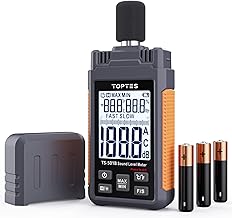
Decibel Meter, TopTes TS-501B Sound Level Meter with 2.25” Backlit LCD Screen, Portable SPL Tester with A/C Weighted, Range 30-130dB, MAX/MIN, Data Hold, Use for Home, Noisy Neighbor, Factory - Orange
$26.99
Check Price on AmazonIf you want to measure the difference objectively, a decibel meter like the TopTes TS-501B helps you track sound levels before and after the upgrade. Most quality cat-back systems add 3-5 decibels at idle and 5-8 decibels under load compared to stock—enough to be noticed without being overwhelming.
The key takeaway: prioritize quality systems with good drone control over cheap options that promise maximum sound. Excessive drone at 55-70 mph makes highway driving miserable. Read owner reviews specifically mentioning highway drone before purchasing. The best exhaust systems balance aggressive sound when you want it with civilized cruising when you don’t.
Fuel economy changes are minimal—some owners report slight improvements, others see no change, and a few notice a small decrease. Don’t buy an exhaust expecting to save money at the pump. The value is in the improved driving experience, better sound, and the satisfaction of a less restrictive exhaust system that lets your JK breathe the way it should.
Installation: What You Need and What to Expect
Installing a cat-back exhaust system on your JK is well within the capabilities of a home mechanic with basic tools and a weekend afternoon. Here’s what the process looks like and what you’ll need to do it safely and effectively.
Safety setup first. Park on a level surface, engage the parking brake, and chock the front wheels. Use a quality floor jack to lift the rear of the JK, then immediately place jack stands under the frame rails—not the axle. You’ll need a set of jack stands like the Amazon Basics 3-ton model to safely support your JK while you work underneath.
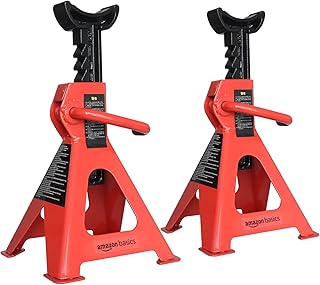
Amazon Basics Steel Jack Auto Stands, 3 Ton (2.7 metric Ton) Capacity, Easy to Use, Adjustable Height, 6,000 lb, 1 Pair, Black and Red
$28.88
Check Price on AmazonNever work under a vehicle supported only by a jack. Jack stands are non-negotiable. Lives have been lost from this mistake.
Removal process:
- Spray all exhaust hangers and clamp bolts with penetrating oil like WD-40 Specialist Penetrant and let it soak for 15-20 minutes. Exhaust hardware rusts, and this step prevents snapped bolts.
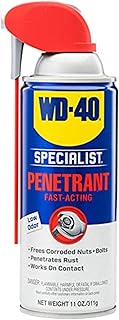
WD-40 Specialist Penetrant with Smart Straw, Penetrant for Metal, Rubber and Plastic Threads, Locks and Nuts, Industrial Strength Fast-Acting Formula, 11 Oz.
$7.98
Check Price on Amazon- Start at the back and work forward. Remove the tailpipe from the rubber hangers by pushing the exhaust forward to create slack, then twisting and pulling the pipe out of the hanger. A hose clamp plier tool makes this much easier if the rubber is stiff.
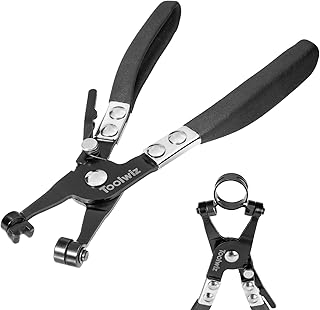
Hose Clamp Pliers Heavy Duty Hose Clamp Tool with Locking Device and Non-Slip Handle Removal and Installation Tool for Ring-Type and Flat-Band Hose Clamps (Black)
$9.95
Check Price on Amazon-
Unbolt the connection at the catalytic converter. This is typically a two-bolt flange or a band clamp. Support the exhaust with one hand as you remove the last bolt—the system is heavier than it looks and will drop when released.
-
Lower the factory exhaust carefully and inspect the rubber hangers. Replace any that are torn or deteriorated.
Installation of the new system:
-
Test-fit all components before final installation. Loosely assemble the entire exhaust from front to back, checking clearances around the driveshaft, fuel lines, and frame. Adjust as needed before tightening anything.
-
Use a torque wrench to tighten all clamps and bolts to manufacturer specs—typically 30-35 ft-lbs for flange bolts. A quality torque wrench set like the YIYEIE 22-piece ensures you don’t over-tighten and warp flanges or under-tighten and create exhaust leaks.
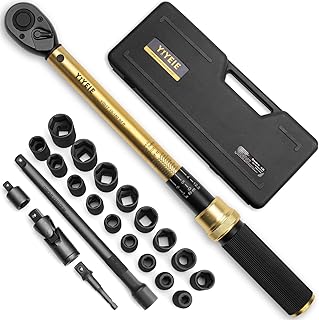
YIYEIE 22PCS Torque Wrench Set 1/2" Drive, 10-180 ft.lb/13.6-244.1 Nm, Click Torque Wrench with Impact Sockets, 1 ft.lbs Micro, 72-Tooth Ratchet, Quick Release Head, Master Torque Tool for Car Repair
$59.97
Check Price on Amazon- If your exhaust includes heat wrap or you’re adding it for heat management, wrap the pipes before final installation. Applying wrap to installed pipes is awkward and time-consuming. Soak the wrap in water before application for easier handling and tighter wraps.
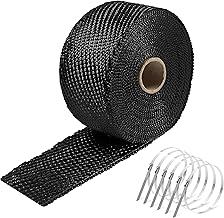
2" x 16FT Exhaust Heat Wrap, 1400°F High Temp Fiberglass Header Wrap Heat Shield Tape with 6 Stainless Steel 304 Locking Ties for Motorcycle, Automotive Exhaust, Turbo & Manifold Insulation
$9.99
Check Price on Amazon- After everything is torqued to spec, start the engine and check for leaks. Listen carefully at each connection point. A slight hiss indicates a leak that needs to be addressed before you lower the vehicle.
Total installation time: Expect 2-3 hours for your first cat-back install, including setup and cleanup. Experienced DIYers can complete it in 90 minutes. The process is straightforward—the only real challenge is dealing with rusty hardware on older JKs. Budget extra time if your Jeep has spent winters in salt-belt states.
Essential Gaskets, Clamps, and Hardware for a Leak-Free Install
The difference between a professional-quality exhaust installation and one that leaks and rattles comes down to the small parts you might overlook. Quality gaskets, clamps, and sealant prevent the frustrating exhaust leaks that send you back under the Jeep a week after installation.
Exhaust gaskets seal the connection between exhaust components, particularly at the catalytic converter flange. Most cat-back systems include gaskets, but they’re often thin and prone to blowing out under heat cycling. Upgrade to graphite-impregnated gaskets at critical connection points—they handle heat better and compress evenly for a lasting seal.
Permatex Ultra Copper RTV is the secret weapon for preventing exhaust leaks at flanges and slip-fit connections. Apply a thin bead to both sides of the gasket before installing—it fills micro-imperfections in the mating surfaces and creates a heat-resistant seal up to 700°F.
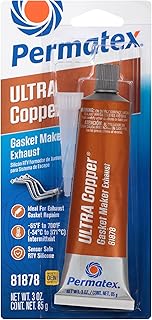
Permatex 81878 Ultra Copper Maximum Temperature RTV Silicone Gasket Maker, 3 oz. Tube
$9.79
Check Price on AmazonStainless steel band clamps provide adjustable clamping force at slip-fit connections. They’re superior to U-bolt clamps because they distribute pressure evenly around the entire circumference of the pipe. A 2.5-inch stainless clamp like this universal butt joint assembly works for most JK exhaust connections and won’t rust out in two years like mild steel versions.
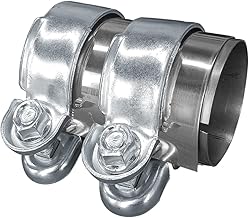
2.5 Inch Automotive Exhaust Clamp, Stainless Steel Butt Joint Bolts Band Flanges Clamp Assembly, Universal Tube Connector Sleeve Coupler for Muffler
$12.78
Check Price on AmazonEssential hardware checklist:
- Replacement exhaust hangers (rubber isolators wear out—replace any that look cracked)
- Anti-seize compound for bolts (prevents seized hardware for future service)
- Stainless steel bolts and nuts (factory hardware often strips during removal)
- Thread-locking compound for clamp bolts (prevents vibration loosening)
The key takeaway about preventing leaks: invest $30 in quality hardware and sealant to avoid redoing the job. Exhaust leaks don’t just sound terrible—they can trigger check engine lights when exhaust gases escape upstream of oxygen sensors. A few extra dollars on proper gaskets and clamps ensures your installation stays leak-free through years of heat cycling and vibration.
Many JK owners skip these details and end up chasing exhaust leaks for weeks. Do it right the first time with quality components, and your exhaust will remain quiet and sealed for the life of the system.
Managing Exhaust Heat: Wrap, Shields, and Reflective Tape
Heat management becomes important for specific JK setups—particularly lifted models with aftermarket skid plates, or vehicles where exhaust routing brings pipes close to heat-sensitive components like wiring harnesses or fuel lines. Most stock or mild builds won’t need additional heat protection, but understanding your options helps you make the right call for your configuration.
Exhaust wrap encases the exhaust pipe in a high-temp fiberglass or titanium weave, reducing radiant heat and slightly lowering underhood temperatures. Wrap is most beneficial on headers and the front section of the exhaust where temperatures are highest. It keeps heat contained in the exhaust gases, which can marginally improve flow and reduce heat soak in the engine bay.
Reflective heat tape like the Design Engineering Cool-Tape serves a different purpose. Rather than wrapping the exhaust pipe itself, you apply reflective tape to adjacent components that need protection from radiant heat. Fuel lines, wiring looms, and brake lines near the exhaust benefit from a reflective barrier that bounces heat away.
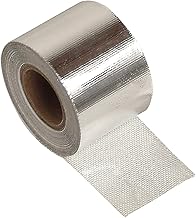
Design Engineering Cool-Tape | Self-Adhesive Heat Reflective Tape - High Temp (up to 400F)| 1.5" x 15' Roll | Flexible Heat Shield for Automotive & Industrial Use
$17.99
Check Price on AmazonThe Cool-Tape is self-adhesive and handles temperatures up to 400°F—hot enough to protect most vulnerable components without the permanent commitment of exhaust wrap. It’s particularly useful on lifted Rubicon models where aftermarket suspension and drive shafts sometimes place components closer to the exhaust than factory configurations.
When you actually need heat management:
- Running aftermarket aluminum skid plates (aluminum conducts heat into the transmission and transfer case)
- Lifted JKs with aftermarket drive shafts that route near the exhaust
- Headers that place pipes closer to engine wiring or fuel rails
- Track or desert racing where sustained high RPMs create extreme exhaust temperatures
For most street-driven JKs with cat-back systems, additional heat management is unnecessary. The factory routing keeps exhaust pipes adequately separated from heat-sensitive components, and cat-back systems don’t significantly increase exhaust temperatures over stock. Evaluate your specific setup—if you see wiring or lines within a few inches of the exhaust after installation, add protective tape. Otherwise, save the money and complexity.
Reference Materials: Haynes Repair Manual for JK Exhaust Work
A physical repair manual remains one of the most valuable resources for DIY exhaust work, even in the era of YouTube tutorials and forum guides. The Haynes Repair Manual for 2007-2017 Jeep Wranglers provides detailed torque specifications, component diagrams, and step-by-step procedures that don’t depend on your phone’s battery or garage Wi-Fi.
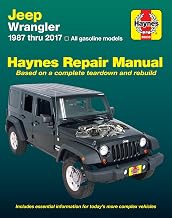
Jeep Wrangler 4-cyl & 6-cyl Gas Engine, 2WD & 4WD Models (87-17) Haynes Repair Manual (Does not include info specific to diesel engine models. Includes coverage apart from specific exclusion noted)
$35
Check Price on AmazonThe exhaust section includes detailed photos of factory routing, all connection points, and proper hanger placement—critical information when you’re under the Jeep trying to remember where that one stubborn rubber hanger goes. The manual also documents the differences between 3.8L and 3.6L exhaust configurations, helping you avoid compatibility mistakes when ordering parts.
Why a physical manual matters: When you’re covered in rust and penetrating oil, a book that stays open on the garage floor beats scrolling on a greasy phone screen. The manual’s troubleshooting sections help diagnose exhaust leaks, rattles, and check engine light codes related to exhaust system modifications. For the cost of a couple shop manuals, you have a permanent reference that covers not just exhaust work but every other system on your JK.
The Haynes manual doesn’t replace community knowledge from JK forums, but it provides the factory-spec foundation that helps you understand why experienced owners recommend specific modifications. Keep it in your toolbox—you’ll reference it more than you expect.
Frequently Asked Questions About Jeep JK Exhaust Systems
Will an aftermarket exhaust void my Jeep warranty?
Installing a cat-back or axle-back exhaust system will not automatically void your entire warranty. Under the Magnuson-Moss Warranty Act, manufacturers must prove that an aftermarket part directly caused a failure before denying a warranty claim. However, if you install headers that modify emissions equipment and then have a catalytic converter failure, Jeep can legitimately deny that claim. Cat-back systems that don’t modify emissions components are generally safe. Save your factory exhaust and reinstall it if you need warranty service on an unrelated component. For broader warranty concerns, see our guide on common JK problems to understand which issues are most likely to require warranty coverage.
Do I need a tune after installing an exhaust system?
Cat-back and axle-back exhaust systems do not require a tune. These systems don’t change air/fuel ratios or trigger check engine lights because they don’t modify sensors or emissions equipment. Headers that replace manifolds may benefit from a tune to optimize fuel delivery and timing for the increased airflow, but even then, it’s optional on stock engines. If you install a full header-back system with high-flow catalytic converters, a tune becomes more valuable to maximize the investment and ensure the engine runs optimally with the modified flow characteristics.
Will a louder exhaust affect my JK’s resale value?
This depends entirely on your buyer. Enthusiast buyers who appreciate modifications may value a quality exhaust upgrade and see it as money they don’t have to spend. Conservative buyers who want a quiet, stock Jeep will view it negatively. If resale is a concern, keep your factory exhaust and list it as included with the sale—buyers appreciate the option to return to stock if desired. Generally, a well-chosen cat-back system from a reputable brand is viewed more favorably than cheap eBay systems or excessively loud setups with aggressive tips.
Can I install an exhaust system on a lifted JK?
Yes, cat-back exhaust systems work fine on lifted JKs. The exhaust hangs from the body, not the frame or suspension, so lift height doesn’t affect fitment. However, extreme lifts (6+ inches) with aftermarket drive shafts may require minor adjustments to exhaust routing to maintain clearance. Check clearances after installation—particularly around the rear drive shaft, which can shift position with suspension travel. Most 2-4 inch lifts with factory drive shafts have no clearance issues with quality cat-back systems designed for JKs.
How long does a stainless steel exhaust last?
Quality stainless steel exhaust systems typically last 10-15 years or more, even in harsh climates with road salt. Aluminized steel systems (cheaper options) usually last 5-7 years before rust-through occurs. The key failure points are typically the muffler internals (which can degrade from heat cycling) and connections at the catalytic converter (which see the highest temperatures). Stainless systems with welded construction and minimal clamps last longest. Factor in climate—JKs in Arizona can expect 15+ years from stainless exhausts, while Michigan JKs see more corrosion and may get 8-10 years.
Will an exhaust make my JK fail emissions testing?
Cat-back and axle-back systems will not cause emissions test failures because they don’t modify emissions equipment. They retain all factory catalytic converters and oxygen sensors. Headers with high-flow cats or off-road (no-cat) headers will cause failures in states with sniffer tests or OBD-II inspections. Even high-flow cats may not meet state requirements in California and other strict states. If you live in an area with emissions testing, stick with cat-back systems that leave all emissions equipment in place. Some owners swap back to stock exhaust for testing, but this is time-consuming and not worth the hassle when cat-back systems deliver excellent results without compliance risks.
Final Thoughts: Choosing the Right Exhaust for Your JK
Upgrading your JK’s exhaust transforms the driving experience in a way that few other modifications can match. The deeper, more aggressive sound adds character and engagement to every drive—whether you’re commuting to work or hitting the trails on the weekend. A quality cat-back system delivers noticeable sound improvement, modest performance gains, and the satisfaction of knowing your Wrangler breathes the way it should.
The key to a successful upgrade is matching your choice to your specific needs and capabilities. Cat-back systems offer the best balance of sound, performance, and installation simplicity for most JK owners. Axle-back systems work well if you want a budget-friendly sound improvement with minimal installation effort. Headers deliver the most performance potential but come with higher costs, installation complexity, and emissions concerns that make them suitable for experienced builders with specific performance goals.
Don’t overlook the supporting components—quality gaskets, clamps, and hardware prevent the exhaust leaks and rattles that undermine otherwise solid installations. Invest in the right tools like jack stands, penetrating oil, and a torque wrench to make the installation safe and effective. For specialized setups with heat management needs, reflective tape and wrap provide solutions without complexity.
As you consider broader modifications to your JK, the exhaust upgrade fits into a larger picture of personalization. Our JK vs JL comparison can help you understand how the JK platform compares if you’re considering a newer model. And if you’re thinking about comfort modifications alongside performance upgrades, our guides on soft top vs hard top options and best soft tops for JK cover important decisions about your Jeep’s configuration.
Your JK deserves an exhaust system that matches its capability and your driving style. With the information in this guide, you’re equipped to make a confident choice that delivers the sound and performance you want—backed by real-world knowledge, not marketing hype. Start your upgrade with quality components, take your time during installation, and enjoy the improved character of your Wrangler for years to come.
This article contains affiliate links. If you purchase through these links, we may earn a small commission at no extra cost to you. This helps support the site and allows us to continue creating content for the Jeep JK community.
Get the Free JK Build Planner
Complete PDF with mod checklists, gear ratios, tire sizing charts, and budget worksheets. Everything you need to plan your JK build.
No spam. Unsubscribe anytime. By subscribing, you agree to our Privacy Policy.
Jeep JK Guide
We're JK owners who've been building, breaking, and fixing Wranglers for years. Everything here is tested on our own rigs - no sponsored fluff, just honest recommendations.
Learn more about us →Get the JK Build Planner
Free PDF with complete build checklists, gear ratios, and tire fitment guides.
By subscribing, you agree to our Privacy Policy.
Related Articles
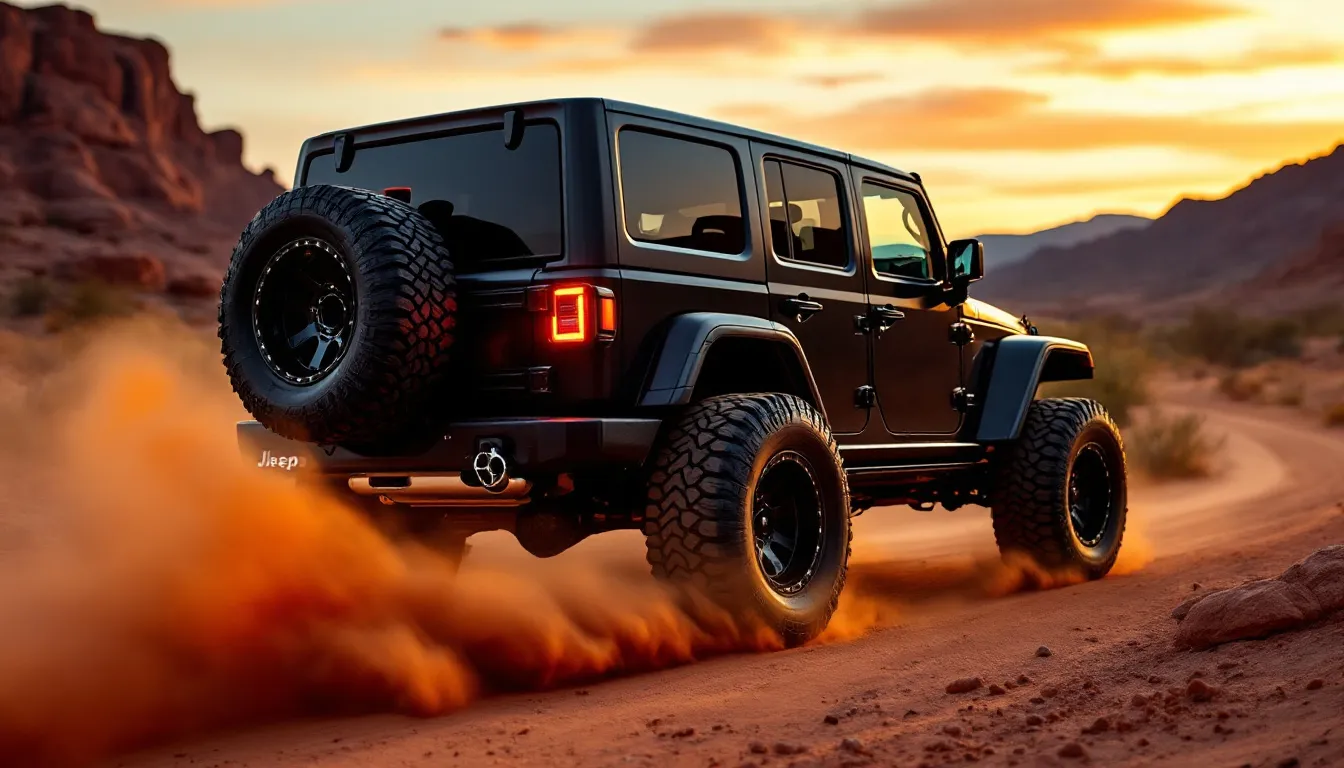
Best Sounding Exhaust for Jeep JK: 8 Aggressive Options Ranked
Find the best sounding exhaust for Jeep JK with our ranked guide. Compare 8 aggressive cat-back and axle-back systems for tone, drone, and value.

Best Axle Back Exhaust for Jeep JK: Budget-Friendly Sound Upgrades
Best axle back exhaust for Jeep JK delivers 70-80% of the sound improvement at 30-40% of the cost. Our top picks balance aggressive tone with zero drone and bolt-on installation.
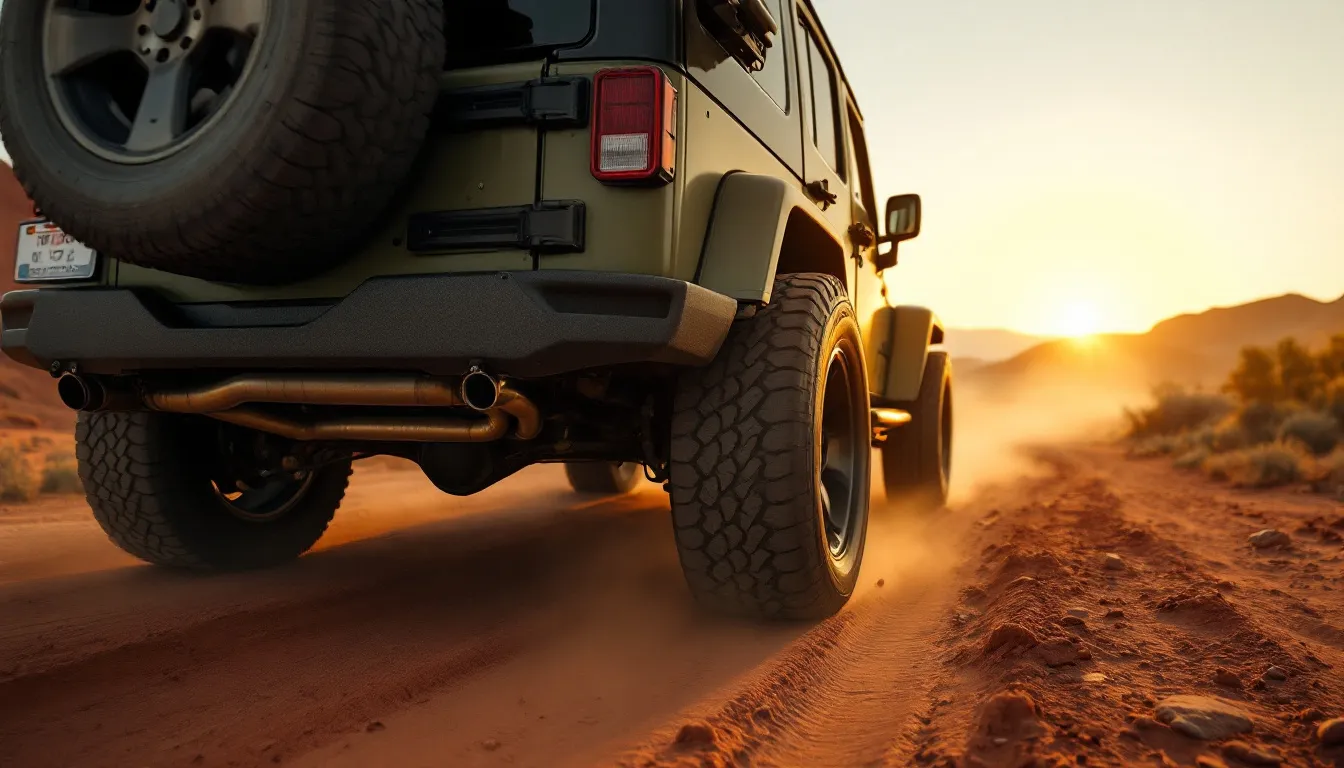
Best Cat Back Exhaust for Jeep JK: Complete System Comparison
Compare the top cat-back exhaust systems for Jeep Wrangler JK. Stainless steel vs aluminized, drone ratings, installation tips, and honest sound reviews for 3.6L and 3.8L engines.