JK Maintenance Guide: Keep Your Wrangler Running Strong

Your Jeep Wrangler JK was built to handle punishment on the trail, but that capability comes with a responsibility: proper maintenance. Whether you’re running a bone-stock daily driver or a heavily modified trail rig, staying on top of maintenance keeps your JK reliable, safe, and holding its value.
This guide covers everything you need to know about maintaining your 2007-2018 Jeep Wrangler JK, from basic service intervals to model-specific issues and post-wheeling care.
Understanding Your JK’s Engine
The JK came with two different V6 engines during its production run, and knowing which one you have matters for maintenance.
3.8L V6 (2007-2011)
The 3.8L is essentially a minivan engine that Chrysler adapted for Jeep duty. It produces 202 horsepower and 237 lb-ft of torque. While often criticized for being underpowered (especially with larger tires), it’s actually quite reliable when maintained properly.
Key characteristics:
- Known for oil consumption (check levels regularly)
- Timing chain design is robust
- Prone to exhaust manifold cracks
- Uses a traditional distributor-less ignition system
3.6L Pentastar V6 (2012-2018)
The Pentastar was a major upgrade, delivering 285 horsepower and 260 lb-ft of torque. It’s more refined, more powerful, and generally more efficient than the 3.8L.
Key characteristics:
- Variable valve timing requires quality oil
- Early models (2012-2013) had cylinder head issues (covered by extended warranty)
- Better suited for larger tires
- More complex but well-proven design
Complete Service Interval Schedule
Use this table as your baseline maintenance schedule. Adjust intervals shorter (not longer) based on your driving conditions.
| Service | Interval | Severe Duty* |
|---|---|---|
| Engine Oil & Filter | 5,000-7,500 miles | 5,000 miles |
| Air Filter | 15,000-30,000 miles | Inspect after every trail ride |
| Spark Plugs | 100,000 miles | 100,000 miles |
| Transmission Fluid (Auto) | 60,000 miles | 30,000 miles |
| Transmission Fluid (Manual) | 60,000 miles | 30,000 miles |
| Transfer Case Fluid | 30,000 miles | 15,000 miles or after water submersion |
| Front Differential | 30,000 miles | 15,000 miles or after water submersion |
| Rear Differential | 30,000 miles | 15,000 miles or after water submersion |
| Coolant | 100,000 miles / 5 years | 100,000 miles / 5 years |
| Brake Fluid | 45,000 miles / 3 years | 30,000 miles / 2 years |
| Power Steering Fluid | Inspect at oil changes | Inspect at oil changes |
| Serpentine Belt | 60,000-100,000 miles | Inspect frequently |
| Brake Pads | 30,000-50,000 miles | Varies greatly |
Severe duty includes: frequent off-roading, dusty conditions, towing, short trips, extreme temperatures
Fluid Specifications
Using the correct fluids is critical. The wrong fluid can cause premature wear, seal damage, or complete failure.
Engine Oil
| Engine | Capacity | Viscosity | Specification |
|---|---|---|---|
| 3.8L V6 | 6 quarts | 5W-20 | MS-6395 |
| 3.6L Pentastar | 6 quarts | 5W-20 (or 0W-20) | MS-6395 |
Full synthetic oil is strongly recommended, especially for the Pentastar. Brands like Pennzoil Platinum, Mobil 1, and Royal Purple all meet the MS-6395 specification.
Transmission Fluid
Automatic (42RLE/545RFE/W5A580):
- ATF+4 automatic transmission fluid
- Capacity varies by transmission (check your specific model)
- Do NOT substitute with Dexron or Mercon
Manual (NSG370):
- Mopar Manual Transmission Lubricant or equivalent GL-3
- Capacity: approximately 2 quarts
- Some owners prefer Synchromesh or Royal Purple Synchromax
Transfer Case Fluid
NV241OR (Rubicon):
- ATF+4 automatic transmission fluid
- Capacity: approximately 1.5 quarts
NV241J (Non-Rubicon):
- ATF+4 automatic transmission fluid
- Capacity: approximately 1.5 quarts
Differential Fluid
Front Differential:
- Mopar SAE 75W-85 GL-5 gear oil
- Rubicon with electronic locker: requires friction modifier additive
Rear Differential:
- Standard: SAE 75W-85 GL-5
- Limited slip (LSD): Add friction modifier
- Rubicon: Requires friction modifier for electronic locker
Coolant
- Mopar OAT (Organic Acid Technology) coolant
- Color: Purple/Violet
- Mix 50/50 with distilled water
- Do NOT mix with green (IAT) or orange (DEXCOOL) coolants
Brake Fluid
- DOT 3 brake fluid
- Replace if moisture content exceeds 3% or fluid appears dark
Power Steering Fluid
- ATF+4 automatic transmission fluid
- Capacity: approximately 1 quart
Common JK Problems by Model Year
Every vehicle has its quirks. Here are the issues most commonly reported for each model year range. For a comprehensive list, see our JK Common Problems by Year guide.
2007-2008 Models
- TIPM (Totally Integrated Power Module) failures: Causes random electrical gremlins, no-start conditions, fuel pump issues
- Exhaust manifold cracks: Creates ticking noise that increases with engine temperature
- Oil consumption: 3.8L engines may consume up to 1 quart per 1,000 miles
- Clutch master cylinder failures: Manual transmission models
2009-2011 Models
- Exhaust manifold issues continue: Less prevalent but still common
- Water leaks: Freedom Top panels may leak at seals
- Transmission mount failures: Causes vibration and clunking
- Steering stabilizer wear: Can contribute to death wobble
2012-2013 Models (First Pentastar Years)
- Cylinder head casting issues: Left head prone to cracking (extended warranty coverage to 150,000 miles)
- Oil filter housing leaks: Common around the cooler lines
- Rocker arm failures: Early Pentastar issues
- HVAC blend door actuator failures: Clicking sounds from dash
2014-2018 Models
- Oil filter housing leaks persist: Less common but still reported
- Power steering pump whine: Normal but can indicate low fluid
- Ball joint wear: Especially with larger tires and lift kits
- Transmission shift quality: Some 5-speed auto models report rough shifts
Essential Maintenance Tools & Supplies
Quality tools and supplies make maintenance easier and safer. Here are some top recommendations:



Pros:
- Purpose-built for JK Wrangler ensures proper fitment and function
- Durable construction handles trail abuse and daily driving
- Backed by positive community reviews and trail-tested results
Cons:
-
Premium pricing compared to generic aftermarket options
-
May require longer lead times for specialty or popular items
-
Some products require professional installation for best results
<h5 style="margin: 0 0 10px 0; color: #1a202c;">Mobil 1 5W-20 Synthetic Oil</h5>
<p style="font-size: 24px; font-weight: bold; color: #c75a2a; margin: 0 0 10px 0;">$25-30</p>
<a href="https://www.amazon.com/dp/B00I4DLHKW?tag=jeepjkguide-20" target="_blank" rel="nofollow sponsored" style="display: inline-block; background: #FF9900; color: #111; padding: 12px 24px; border-radius: 6px; text-decoration: none; font-weight: bold;">Check Price on Amazon →</a>

Preventive Maintenance Checklist
Beyond scheduled services, regular inspections catch problems before they become expensive repairs.
Weekly Checks
- Tire pressure (including spare)
- Oil level (especially 3.8L engines)
Pros:
- Purpose-built for JK Wrangler ensures proper fitment and function
- Durable construction handles trail abuse and daily driving
- Backed by positive community reviews and trail-tested results
Cons:
-
Premium pricing compared to generic aftermarket options
-
May require longer lead times for specialty or popular items
-
Some products require professional installation for best results
-
Coolant level (visual check in overflow tank)
-
Walk-around for leaks, damage, loose parts
Monthly Checks
- Brake pad thickness (visual through wheel spokes)
- Power steering fluid level
- Battery terminals for corrosion
- All exterior lights functioning
- Windshield washer fluid
- Serpentine belt condition
Quarterly Checks
- Tire rotation (every 5,000-7,500 miles)
- Inspect suspension components for wear
- Check steering components for play
- Inspect brake lines and hoses
- Test 4WD system engagement
Annual Inspection
- Brake fluid condition
- Coolant condition and freeze point
- Frame and body mount inspection
- Exhaust system inspection
- Full suspension inspection (bushings, ball joints, tie rod ends)
Post-Wheeling Maintenance
What you do after a trail ride directly impacts your JK’s longevity. Develop these habits after every off-road adventure.
Immediately After the Trail
- Wash the undercarriage: Remove mud, dirt, and debris that traps moisture and accelerates corrosion
- Check for damage: Walk around and look for dents, scrapes, leaks, or loose parts
- Listen for new noises: A quick test drive reveals new squeaks, clunks, or grinding
Within 24-48 Hours
- Check all fluid levels: Look for any loss that might indicate damage
- Inspect air filter: Dusty trails can clog filters quickly
- Check tire condition: Look for sidewall damage, punctures, or embedded rocks
- Inspect brake performance: Mud and water affect braking
- Check for leaks: Park on clean concrete to spot any drips
After Water Crossings
Water is the enemy of gear oil. If you’ve submerged your differentials or transfer case:
- Check for milky fluid: Indicates water contamination
- Change fluids within 24-48 hours if water entry is suspected
- Inspect axle and pinion seals: Water can damage seals over time
- Check wheel bearings: Listen for grinding or howling
After Deep Mud
- Thoroughly clean brake components: Mud packs around calipers and rotors
- Inspect CV boots: Mud hides tears
- Clean engine bay: Mud on the engine traps heat
DIY vs. Professional Service
Some maintenance tasks are straightforward; others require specialized tools or knowledge.
Easy DIY Tasks
- Oil and filter change: Basic tools, 30 minutes
- Air filter replacement: No tools, 5 minutes
- Tire rotation: Floor jack and lug wrench
- Battery replacement: Basic tools
- Wiper blades: No tools
- Cabin air filter (if equipped): Varies by year
Intermediate DIY
- Brake pad replacement: Requires jack stands, basic brake tools
- Differential fluid change: Moderate difficulty, messy
- Transfer case fluid change: Easy if you have a fluid pump
- Spark plug replacement: Tight on the 3.8L, easier on 3.6L
- Serpentine belt: Need to know the routing
Best Left to Professionals
- Transmission fluid flush: Requires proper equipment
- Coolant system flush: Need to properly bleed air
- Suspension work: Requires alignment afterward
- Major engine repairs: Specialized tools and knowledge
- Electrical diagnostics: Requires scan tools and expertise
Cost Expectations for Common Services
Understanding typical costs helps you budget and recognize fair pricing.
| Service | DIY Cost | Shop Cost |
|---|---|---|
| Oil Change | $30-50 | $50-90 |
| Brake Pads (front) | $30-60 | $150-250 |
| Brake Pads & Rotors (front) | $100-150 | $300-450 |
| Transmission Fluid | $40-60 | $150-250 |
| Differential Service (per axle) | $25-40 | $80-150 |
| Transfer Case Service | $20-35 | $75-125 |
| Coolant Flush | $30-40 | $100-150 |
| Spark Plugs | $30-50 | $150-250 |
| Serpentine Belt | $25-40 | $100-150 |
| Ball Joints (pair) | $80-150 | $400-600 |
| Wheel Bearing (each) | $50-100 | $200-350 |
Prices are estimates and vary by location and parts quality
Building Your Maintenance Record
Keep detailed records of all maintenance. This helps you:
- Track intervals accurately
- Identify recurring problems
- Prove maintenance history for resale
- Catch patterns (like increasing oil consumption)
Record these details for every service:
- Date and mileage
- What was done
- Parts used (brand, part number)
- Who performed the work
- Any observations or concerns
Related Maintenance Guides
Dive deeper into specific maintenance topics:
- Death Wobble: Causes and Fixes - Diagnose and eliminate the dreaded death wobble
- JK Oil Change Interval Guide - Complete oil change intervals and specifications
- JK Fluid Specifications - All fluid types and capacities
- JK Brake Upgrade Guide - Brake pads, rotors, and big brake kits
- Buying a Used JK Checklist - Pre-purchase inspection guide
- JK Common Problems by Year - Model-year specific issues
The Bottom Line
Your Jeep JK is remarkably capable and surprisingly reliable when maintained properly. The key principles are simple:
- Use the right fluids: Never substitute or mix incompatible products
- Follow the schedule: Adjust intervals shorter for severe use
- Inspect regularly: Catch small problems before they become big ones
- Address issues promptly: Strange noises and small leaks deserve attention
- Keep records: Documentation pays off at resale and during diagnosis
Whether you’re wrenching in your garage or building a relationship with a trusted shop, consistent maintenance is the single best investment you can make in your JK’s future. A well-maintained Wrangler can easily exceed 200,000 miles while retaining the capability that made you buy it in the first place.
Stay on top of the basics, and your JK will take you wherever you want to go.
Related Guides
Explore more JK upgrade guides to complement your build:
- Best JK Lift Kits — lift kit maintenance considerations
- Steering Stabilizer — steering component maintenance
- Best Diff Covers — differential maintenance and protection
- Electrical Guide — electrical system maintenance
Get the Free JK Build Planner
Complete PDF with mod checklists, gear ratios, tire sizing charts, and budget worksheets. Everything you need to plan your JK build.
No spam. Unsubscribe anytime. By subscribing, you agree to our Privacy Policy.
Frequently Asked Questions
What oil does a Jeep JK take?
The 3.8L V6 (2007-2011) requires 6 quarts of 5W-20. The 3.6L Pentastar V6 (2012-2018) requires 6 quarts of 5W-20 (or 0W-20 for better cold starts). Always use oil meeting MS-6395 specification.
How often should I change the oil in my JK?
Every 5,000-7,500 miles for conventional oil, or up to 10,000 miles with full synthetic. If you off-road frequently or drive in dusty conditions, stick to 5,000 miles regardless of oil type.
What's the JK maintenance schedule?
Oil every 5,000-7,500 miles. Transmission fluid every 60,000 miles. Transfer case and differentials every 30,000 miles (more often if submerged in water). Coolant every 100,000 miles or 5 years. Spark plugs every 100,000 miles.
What are the most important JK maintenance items to never skip?
The critical items are oil changes every 5,000-8,000 miles (3.6L) or 3,000-5,000 miles (3.8L), differential fluid changes every 30,000 miles, transfer case fluid every 30,000 miles, coolant flush every 50,000 miles, and front-end component inspection every 15,000 miles. Skipping differential fluid changes is the most common cause of expensive drivetrain failures.
How much does annual JK maintenance cost?
Budget $500-800 per year for a daily-driven JK covering oil changes, tire rotations, filters, and brake inspections. Add $300-500 every 30,000 miles for differential and transfer case fluid changes. Modified JKs with larger tires need more frequent alignment checks ($80-120) and front-end inspections. DIY maintenance cuts costs by 40-60%.
Jeep JK Guide
We're JK owners who've been building, breaking, and fixing Wranglers for years. Everything here is tested on our own rigs - no sponsored fluff, just honest recommendations.
Learn more about us →Get the JK Build Planner
Free PDF with complete build checklists, gear ratios, and tire fitment guides.
By subscribing, you agree to our Privacy Policy.
Related Articles
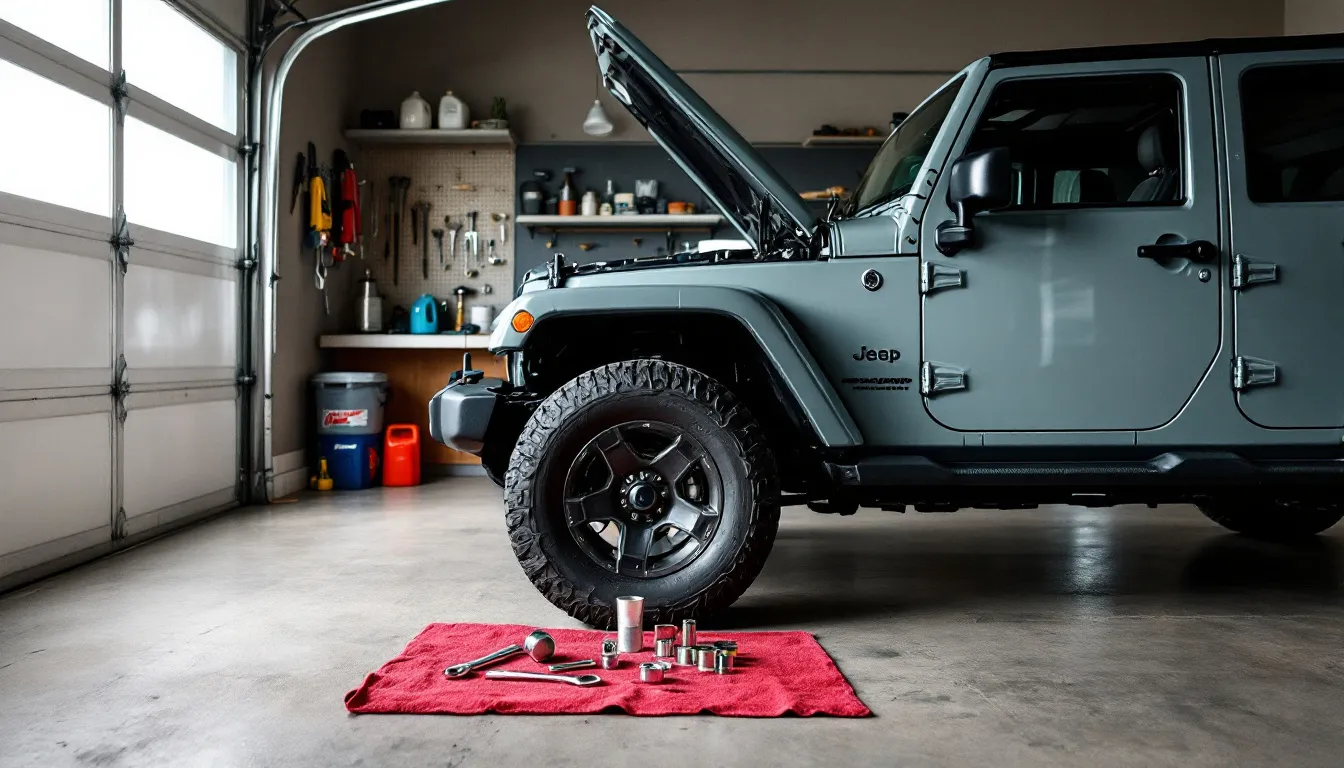
2018 Jeep Wrangler JK Maintenance Schedule: Final Year Service Guide
Complete 2018 Jeep Wrangler JK maintenance schedule with severe service intervals, fluid specs, and cost breakdowns. Keep your final-year JK running strong.
2017 Jeep Wrangler JK Maintenance Schedule: Complete Service Guide
2017 Jeep JK needs 0W-20 synthetic oil every 5,000-10,000 miles, tire rotation every 5,000-7,500 miles, and differential service every 15,000-60,000 miles depending on use.
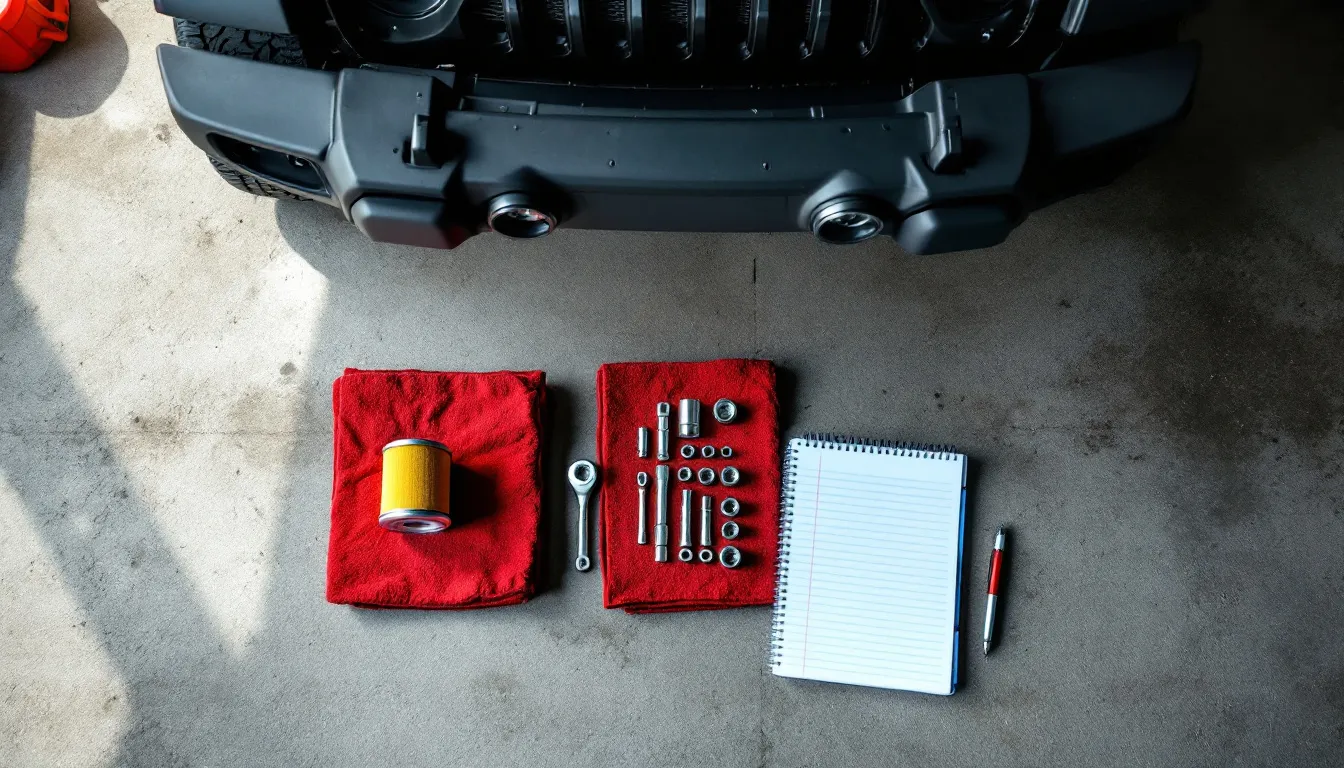
Jeep JK Maintenance Schedule: Complete Guide for 2007-2018 Wranglers
Complete maintenance schedule for 2007-2018 Jeep JK Wranglers. Includes oil change intervals, major service milestones, 3.8L vs 3.6L differences, and DIY tool recommendations.