Best JK Skid Plates: Protect Your Undercarriage

Last updated: February 1, 2025
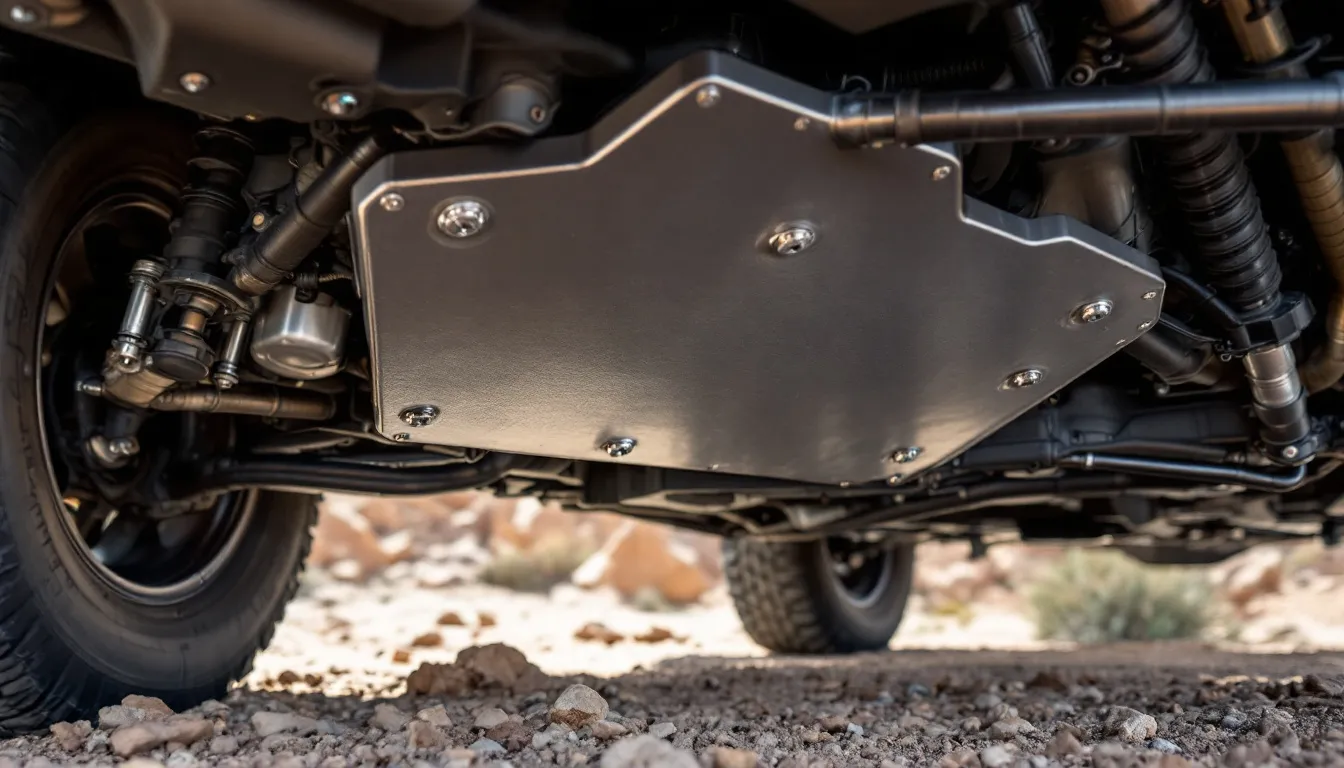
Your JK’s underbody has several components just waiting to get smashed on rocks. The oil pan, transmission, transfer case, and gas tank all hang lower than you’d like, and one solid hit to any of them can end your trail day or worse.
JK skid plates provide the protection these vulnerable components need. But knowing which skids to buy, in what order, and from which brands requires understanding what you’re actually protecting and what kind of wheeling you do.
What Needs Protection Under Your JK
Not everything under your JK is equally vulnerable or equally important. Understanding the priority order helps you spend your armor budget wisely.
Engine Oil Pan: Priority One
The oil pan is your most critical protection point. It hangs low at the front of the engine, directly in the path of trail obstacles. One solid rock strike can puncture the pan, dump your oil, and destroy your engine within minutes.
The stock JK has a plastic splash shield in this area, not actual protection. It keeps road debris out but offers zero impact resistance.
Why it matters most: A punctured oil pan means immediate trip-ending damage. Unlike a dented gas tank or cracked transmission pan, you cannot limp home on a punctured oil pan without causing catastrophic engine damage.
Transmission: Priority Two
The transmission pan sits behind the oil pan and is also vulnerable to rock impacts. While not as immediately catastrophic as oil pan damage, transmission pan damage means fluid loss and eventual transmission failure.
Stock protection: Rubicon models include a basic transmission skid. Sport and Sahara models have minimal protection.
Why it matters: Transmission fluid loss leads to overheating and transmission failure. The repair cost makes prevention worthwhile.
Transfer Case: Priority Three
The transfer case hangs below the transmission and represents another low point in your JK’s underbody profile. It’s particularly vulnerable in lifted JKs that access more aggressive terrain.
Stock protection: Rubicon models include transfer case protection. Other trims are exposed.
Why it matters: The transfer case is essential for four-wheel-drive operation. Damage here eliminates your ability to use 4WD, potentially stranding you on difficult terrain.
Gas Tank: Priority Four
The JK gas tank, especially on JKU models, is surprisingly exposed along the rear underside. While not as immediately critical as drivetrain components, a punctured gas tank creates serious safety concerns and obviously ends your ability to continue.
Stock protection: Minimal plastic shielding.
Why it matters: Fire hazard concerns aside, running out of fuel on a remote trail creates significant recovery challenges.
Evaporative Canister: Often Overlooked
The evap canister hangs low on the driver’s side and gets hit more often than most JK owners expect. Damage triggers check engine lights and creates emissions issues.
Stock protection: Essentially none.
Why it matters: While not trail-ending, repeated evap canister damage gets expensive and annoying to diagnose.
Steel vs Aluminum: The Material Decision
This debate never ends in the JK community. Here’s the honest breakdown.
Steel Skid Plates
Advantages:
- Stronger for the thickness - Steel handles concentrated impacts better than aluminum of the same thickness
- Repairable on the trail - Steel can be welded, hammered, and improvised if damaged
- Lower cost - Steel skids typically cost 20-30% less than aluminum equivalents
- Better for extreme rock crawling - When maximum strength matters most, steel wins
Disadvantages:
- Heavy - A full steel skid plate kit can add 100-150 pounds to your JK
- Rust potential - Steel requires maintenance and will rust if the coating is damaged
- Worse glide - Steel has more friction against rocks than aluminum
Aluminum Skid Plates
Advantages:
- Lightweight - Aluminum saves 40-50% weight compared to steel
- Slides better - Aluminum glides over rocks more smoothly
- Won’t rust - Corrosion resistance means less maintenance
- Works well for most applications - Strong enough for typical trail use
Disadvantages:
- Higher cost - Expect to pay more for aluminum construction
- Can crack - Extreme impacts may crack aluminum rather than bending it
- Not trail-repairable - Aluminum welding requires specialized equipment
- Less “tough” reputation - Psychological factor for some owners
The Practical Recommendation
For most JK owners, aluminum skid plates provide the best balance of protection and weight savings. Unless you’re doing extreme rock crawling where every impact is violent, quality aluminum skids handle typical trail abuse while saving significant weight.
If budget is the primary concern, steel skids protect just as well and cost less. You’ll just carry more weight.
Top JK Skid Plate Options



Savvy Offroad Skid Plate System
Savvy Offroad builds some of the most comprehensive skid plate systems available for the JK.
Key Features:
- Complete belly armor kits available
- Heavy-duty steel construction
- Integrated oil pan, transmission, and transfer case coverage
- Designed for serious off-road use
- Multiple configurations available
Why It Stands Out:
Savvy designs with actual off-road performance as the priority. Their skid plates connect seamlessly for complete underbody coverage, and the construction handles repeated abuse.
Considerations:
Premium pricing. Heavy weight if going full steel coverage. Overkill for light trail use.
Price Range: $400-1,200 depending on coverage and configuration
River Raider Skid Plates
River Raider produces both steel and aluminum skid plates with a focus on quality construction.
Key Features:
- Available in steel or aluminum
- Individual components or complete kits
- Vented designs for heat dissipation
- Powder coat or raw finish options
- Made in USA
Why It Stands Out:
River Raider offers flexibility with both material options in multiple configurations. Their aluminum skids are particularly well-regarded for the weight-conscious builder.
Considerations:
Mid to premium pricing. Some configurations require modification for aftermarket exhaust or lift components.
Price Range: $200-900 depending on coverage and material
Artec Industries Skid Plates
Artec Industries builds armor-grade skid plate systems for serious wheelers.
Key Features:
- Heavy-duty steel construction
- Complete underbody coverage systems
- Integrated crossmember designs
- Designed for rock crawling abuse
- Multiple mounting options
Why It Stands Out:
Artec designs for the worst-case scenario. Their skid plates aren’t just protection; they’re structural components that can handle tremendous abuse. Popular choice for competition rigs.
Considerations:
Premium pricing reflects competition-grade construction. Heavy. May be more protection than casual wheelers need.
Price Range: $500-1,500 depending on coverage
Budget Option: Rough Country Skid Plates
For budget-conscious builders, Rough Country offers functional protection at lower price points.
Key Features:
- Steel construction
- Individual components available
- Black powder coat finish
- Adequate protection for moderate use
- Budget-friendly pricing
Why It Stands Out:
Entry-level pricing for genuine protection. Better than no skid plates.
Considerations:
Thinner material than premium brands. Fit and finish below mid-range options. Adequate for light trail use but may not survive repeated hard impacts.
Price Range: $100-400 depending on coverage
Buying Strategy: Individual Pieces vs Kits
Pros:
- Purpose-built for JK Wrangler ensures proper fitment and function
- Durable construction handles trail abuse and daily driving
- Backed by positive community reviews and trail-tested results
Cons:
- Premium pricing compared to generic aftermarket options
- May require longer lead times for specialty or popular items
- Some products require professional installation for best results
Individual Skid Plates
Advantages:
- Buy only what you need
- Spread cost over time
- Mix brands based on specific strengths
- Replace damaged components individually
When it makes sense: Budget builds, builds prioritizing specific protection areas, replacing single damaged components.
Complete Skid Plate Kits
Advantages:
- Often better pricing than individual pieces
- Designed to work together
- Complete protection in one purchase
- Consistent appearance
When it makes sense: Full armor builds, new builds starting from scratch, value-conscious buyers wanting complete coverage.
Installation Considerations
DIY Installation
Most JK skid plates are designed for owner installation with basic tools.
Typical tools required:
Pros:
- Purpose-built for JK Wrangler ensures proper fitment and function
- Durable construction handles trail abuse and daily driving
- Backed by positive community reviews and trail-tested results
Cons:
-
Premium pricing compared to generic aftermarket options
-
May require longer lead times for specialty or popular items
-
Some products require professional installation for best results
-
Socket set (metric and standard)
-
Wrenches
-
Torque wrench
-
Jack and jack stands
-
Floor creeper (makes life easier)
-
Thread locker (blue Loctite recommended)
General installation steps:
- Safely support the vehicle on jack stands
- Remove any factory splash shields or existing skids
- Test-fit the new skid plate
- Verify alignment with drain plugs and service points
- Install mounting hardware finger-tight
- Adjust alignment
- Torque all hardware to specification
- Apply thread locker to prevent vibration loosening
Time estimate: 2-4 hours for a complete kit; 30 minutes to 1 hour per individual skid
Professional Installation
If you’re not comfortable working under your JK:
- Individual skid plate installation: $50-100 per piece
- Complete kit installation: $150-300
Maintenance Access Concerns
Quality skid plates are designed with maintenance in mind:
- Oil drain access - Most oil pan skids include removable sections or are designed around drain plug access
- Transmission service - Consider how you’ll access the transmission pan for fluid changes
- Filter access - Oil filter accessibility varies by skid plate design
Before purchasing, verify that your chosen skid plates allow reasonable maintenance access. Some cheap designs make oil changes needlessly difficult.
Weight Impact Analysis
Full underbody protection adds significant weight. Here’s what to expect:
| Protection Component | Steel Weight | Aluminum Weight |
|---|---|---|
| Engine/oil pan skid | 25-40 lbs | 12-20 lbs |
| Transmission skid | 20-35 lbs | 10-18 lbs |
| Transfer case skid | 15-25 lbs | 8-15 lbs |
| Gas tank skid | 25-40 lbs | 12-20 lbs |
| Evap canister skid | 5-10 lbs | 3-6 lbs |
| Complete kit | 90-150 lbs | 45-80 lbs |
Weight Impact Reality Check
A complete steel skid plate kit can add 100+ pounds to your JK. This affects:
- Fuel economy - Expect minor mpg reduction (0.5-1 mpg typically)
- Payload capacity - Every pound of armor reduces available cargo/passenger capacity
- Acceleration - Marginal impact on an already-slow JK
- Braking - Minimal effect with properly maintained brakes
The protection benefit outweighs these minor impacts for any JK seeing real trail use.
Prioritizing Your Skid Plate Purchases
If you’re building your skid plate arsenal over time, here’s the recommended priority order:
Phase 1: Critical Protection
Oil pan/engine skid - Buy this first, no exceptions. A $200 skid plate prevents thousands in engine damage.
Budget for Phase 1: $150-400
Phase 2: Drivetrain Protection
Transmission skid - Protect the transmission pan from fluid loss and damage.
Transfer case skid - Complete your drivetrain protection.
Budget for Phase 2: $300-600
Phase 3: Complete Coverage
Gas tank skid - Especially important for JKU owners and remote trail travel.
Evap canister skid - Prevent nuisance check engine lights.
Budget for Phase 3: $200-500
Phase 4: Supporting Armor
Differential covers - Protect front and rear differential housings.
Control arm skids - Prevent bent control arms on aggressive crawling.
Budget for Phase 4: $150-400
Common Skid Plate Mistakes
Buying Too Cheap
The $80 skid plate from the no-name brand isn’t protecting anything. Quality skid plates use appropriate material thickness and proper mounting designs. Bargain-basement options bend, break, or rip off on first contact.
Ignoring Maintenance Access
Some skid plate designs make oil changes ridiculously difficult. Before purchasing, verify you can access your drain plug and filter without removing the entire skid. Quality designs include removable panels or are shaped to allow access.
Over-Protecting for Light Use
If you’re running maintained forest roads and easy trails, you probably don’t need competition-grade armor. A quality engine skid and basic transmission protection handle most recreational wheeling. Save money for other upgrades.
Under-Protecting for Serious Use
Conversely, if you’re rock crawling regularly, bargain skids won’t survive. Invest in quality construction that handles repeated impacts without bending or breaking.
Forgetting About Heat
Skid plates can trap heat in some configurations, particularly during slow-speed crawling. Choose vented designs or ensure your skid plate mounting allows airflow. While rare, heat buildup can occur in extreme conditions.
Integration with Other Modifications
Aftermarket Exhaust
Some skid plate designs conflict with aftermarket exhaust systems. Verify compatibility before purchasing, especially with:
- Dual exit exhausts
- Side exit configurations
- High-clearance exhaust relocations
Lift Kits
Lifting your JK doesn’t change skid plate requirements but may affect mounting point alignment. Most quality skid plates accommodate typical 2.5-4 inch lifts without modification. Extreme lifts may require specific skid plate versions.
Long Arm Suspension
Long arm suspension conversions often require specific skid plate designs that accommodate the different control arm geometry. Many manufacturers offer long arm-specific versions.
Maintenance and Inspection
Post-Trail Inspection
After any significant trail use:
- Visually inspect for damage, dents, or cracks
- Check all mounting hardware for looseness
- Look for fluid leaks that may indicate component damage despite skid protection
- Clean debris that may have packed between skids and components
Periodic Maintenance
- Quarterly (or every 3 trail runs): Check all mounting hardware torque
- Annually: Remove skids and inspect mounting points and protected components
- As needed: Touch up powder coat to prevent rust on steel skids
Related Resources
For a complete picture of JK armor options, see our Complete JK Armor Guide, which covers bumpers, rock sliders, and prioritizing your armor purchases alongside skid plates.
Check out our rock sliders and bumper guides to complete your protection package. Your front bumper and rear bumper integration with skid plates creates comprehensive armor coverage.
Understanding how your lift kit affects clearance helps you make better decisions about which skid plates you need based on the terrain you’ll access.
What skid plate setup are you running on your JK? Share your experience with different brands and configurations in the comments below.
Related Guides
Explore more JK upgrade guides to complement your build:
For related upgrades, see our wheels and tires guide.
- Best JK Fender Flares — fender flare options for larger tires
- Best Winches for JK — winch selection for recovery
- Best JK Steering Stabilizer — steering stabilizer options after lift
- Best All-Terrain Tires — tire choices for off-road capability
Frequently Asked Questions
Do I need skid plates if I have a lifted JK?
Yes, often more than a stock-height JK. While a lift raises your frame, it doesn’t move critical components like the oil pan or transfer case. Lifts let you access more challenging terrain where rock strikes are more likely. Many lifted JK owners find they need skid plates more than before their lift because they’re wheeling harder terrain.
Should I get steel or aluminum skid plates?
Both work well for different situations. Steel is stronger, cheaper, and can be welded for trail repairs but adds significant weight. Aluminum is lighter by 40-50%, won’t rust, and slides over rocks better but costs more and can crack under extreme impacts. Most JK owners benefit from aluminum skids unless doing extreme rock crawling where maximum strength matters.
Which skid plate should I buy first?
Start with the engine/oil pan skid plate. A punctured oil pan ends your trip immediately and causes expensive damage. The oil pan is the lowest-hanging critical component and takes the most abuse. After that, add transmission protection, then transfer case, then gas tank based on your typical terrain.
Will skid plates make my JK run hotter?
Generally no. Skid plates cover the bottom, not the sides or front where airflow matters most. Some skid plate designs include venting to allow heat dissipation. If you’re concerned, choose vented designs or leave small gaps at mounting points. Real-world overheating from skid plates is rare except in extreme slow-speed rock crawling conditions.
How often should I check my skid plate hardware?
Check skid plate hardware before and after any serious trail run. Vibration and impacts can loosen bolts over time. During regular maintenance intervals, inspect for loose hardware, bent mounting points, or cracks. Retorque all bolts annually at minimum, more frequently if you wheel regularly.
Get the Free JK Build Planner
Complete PDF with mod checklists, gear ratios, tire sizing charts, and budget worksheets. Everything you need to plan your JK build.
No spam. Unsubscribe anytime. By subscribing, you agree to our Privacy Policy.
Frequently Asked Questions
Do I need skid plates if I have a lifted JK?
Yes, often more than a stock-height JK. While a lift raises your frame, it doesn't move critical components like the oil pan or transfer case. Lifts let you access more challenging terrain where rock strikes are more likely. Many lifted JK owners find they need skid plates more than before their lift because they're wheeling harder terrain.
Should I get steel or aluminum skid plates?
Both work well for different situations. Steel is stronger, cheaper, and can be welded for trail repairs but adds significant weight. Aluminum is lighter by 40-50%, won't rust, and slides over rocks better but costs more and can crack under extreme impacts. Most JK owners benefit from aluminum skids unless doing extreme rock crawling where maximum strength matters.
Which skid plate should I buy first?
Start with the engine/oil pan skid plate. A punctured oil pan ends your trip immediately and causes expensive damage. The oil pan is the lowest-hanging critical component and takes the most abuse. After that, add transmission protection, then transfer case, then gas tank based on your typical terrain.
Will skid plates make my JK run hotter?
Generally no. Skid plates cover the bottom, not the sides or front where airflow matters most. Some skid plate designs include venting to allow heat dissipation. If you're concerned, choose vented designs or leave small gaps at mounting points. Real-world overheating from skid plates is rare except in extreme slow-speed rock crawling conditions.
How often should I check my skid plate hardware?
Check skid plate hardware before and after any serious trail run. Vibration and impacts can loosen bolts over time. During regular maintenance intervals, inspect for loose hardware, bent mounting points, or cracks. Retorque all bolts annually at minimum, more frequently if you wheel regularly.
Jeep JK Guide
We're JK owners who've been building, breaking, and fixing Wranglers for years. Everything here is tested on our own rigs - no sponsored fluff, just honest recommendations.
Learn more about us →Get the JK Build Planner
Free PDF with complete build checklists, gear ratios, and tire fitment guides.
By subscribing, you agree to our Privacy Policy.
Related Articles
Best Gas Tank Skid Plate for Jeep JK: Armor Your Fuel System
Best Grill Inserts for Jeep JK: Mesh, Angry Eyes & Custom Grille Options
Best Snorkel for Jeep JK: Water Fording & Engine Protection Options
Discover the best snorkel for Jeep JK with our expert comparison of top kits. Learn about water fording depth, dust protection, installation, and whether you actually need one.