Best 37 Inch Tires for Jeep JK: Heavy-Duty Off-Road Options
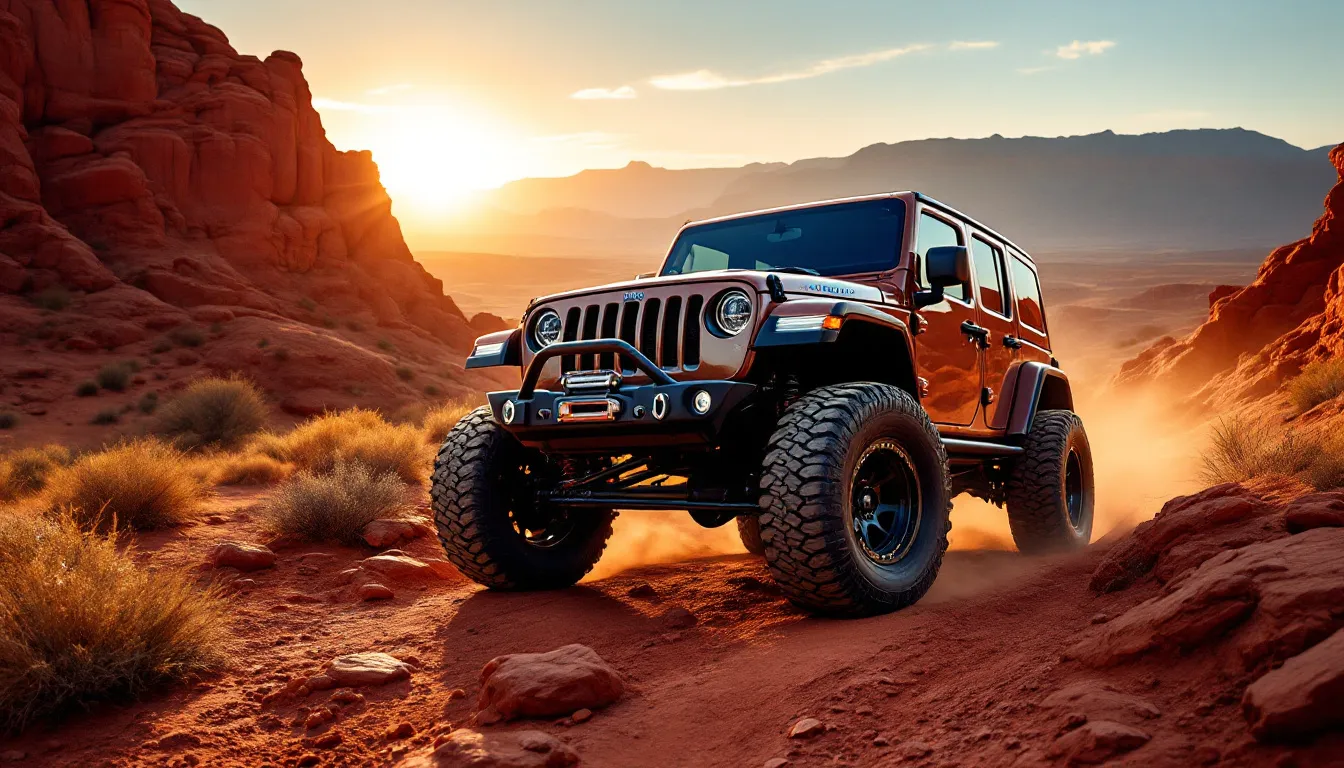
Best 37 Inch Tires for Jeep JK: Heavy-Duty Off-Road Options
Fitting 37-inch tires to a Jeep JK isn’t just about bolting on bigger rubber. It’s a commitment that ripples through your entire drivetrain — lift height, gear ratios, wheel fitment, and honestly, your wallet. But when done right, those tires fundamentally change what your Wrangler can do. You’ll clear rock gardens that would’ve sent your skid plate crunching into granite. You’ll pick lines that simply weren’t there before. The education comes fast, though. I learned that the hard way on a weekend trip into the Cederberg, pushing 35s through terrain that demanded actual tire pressure management and respect for what sidewall flex can do. Big tires only work if you actually let them work — and that means understanding the full picture before you mount a single one.
Quick Answer: The Falken Wildpeak MT01 is the top all-around 37-inch tire for JK Wranglers, balancing aggressive off-road traction with acceptable on-road manners. To run 37s on any JK, you need a minimum 3.5-inch lift and should strongly consider re-gearing to 4.88 axle ratios.
Affiliate Disclosure: JeepJK Guide earns a commission on qualifying purchases made through links on this page. This costs you nothing extra and helps keep our content free.
Whether you’re building a weekend trail rig or a daily-driven JKU, the right 37-inch tire depends on more than just tread pattern. You’re making a choice that affects how your Jeep feels on the highway, how much you’ll spend at the pump, and whether you’re genuinely prepared for what’s waiting on the trail. This guide walks through five tires that actually work on JKs, explains what lift and gearing really cost, breaks down the all-terrain versus mud-terrain math, and gives you the practical tips that only come from building these rigs. For context on your specific JK year and trim, check out JK model year differences (2007-2018) and our JK Wheels & Tires Guide.
Best 37 Inch Tires for Jeep JK: Quick-Pick Summary
These five tires made the cut after real-world testing feedback, owner reviews across JK forums, and honest evaluation of tread design against the specific fitment challenges of the 2007-2018 JK and JKU platform.
| Tire | Type | Best For | Price Range | Rating |
|---|---|---|---|---|
| Falken Wildpeak MT01 (Best Overall) | Mud-Terrain | All-around performance | $$$$ | ★★★★★ |
| BFGoodrich All-Terrain T/A KO2 | All-Terrain | Daily driver + trail | $$$$ | ★★★★★ |
| Nitto Ridge Grappler | Hybrid A/T-M/T | Versatile on/off-road | $$$$ | ★★★★☆ |
| Goodyear Wrangler DuraTrac | All-Terrain | Snow + moderate off-road | $$$ | ★★★★☆ |
| Mickey Thompson Baja Boss M/T | Mud-Terrain | Hard-core rock crawling | $$$$ | ★★★★☆ |
See also: best mud terrain tires for JK Wrangler | best all-terrain tires for JK Wrangler
The 5 Best 37-Inch Tires for Jeep JK Wrangler: Full Reviews
1. BFGoodrich All-Terrain T/A KO2 — Best for Daily Driving + Trail
The BFGoodrich KO2 is the tire you see on more JKs than anything else — and there’s a reason for that. Its interlocking tread design cuts through wet pavement without feeling squirrelly, while the CoreGard sidewall technology actually resists cuts on rocks and sharp trail debris. You get serious off-road capability without turning every commute into an assault of road noise. The 37x12.50R17 is the most popular fitment for stock-offset JK wheels, which means finding info and support is easy.
Pros:
- Excellent wet and dry pavement manners
- Aggressive enough for most rock and mud situations
- 3PMSF-rated for light winter use
- Long tread life relative to true mud-terrain peers
Cons:
- Struggles in deep mud compared to true M/T tires
- Heavy — noticeably affects braking distances and suspension feel
JK Fitment Note: Works on both 2-door JK and 4-door JKU with a 3.5-inch lift and proper backspacing. Runs cleanly on most OEM JK wheels at -12mm to 0mm offset without requiring spacers or trimming.
Price Range: $$$$
2. Nitto Ridge Grappler — Best Hybrid Tire for Versatility
The Nitto Ridge Grappler splits the difference between an all-terrain tire and a mud-terrain tire — which means it sacrifices nothing on the highway but still delivers genuine capability off-road. The variable-pitch tread blocks handle that annoying harmonic drone that kills highway drive days. Reinforced shoulder grooves actually grip in loose dirt, gravel, and moderate mud without the stiffness penalty you get from a dedicated M/T compound.
Pros:
- Noticeably quieter than most hybrid tires
- Excellent sidewall puncture resistance
- Strong on-road handling and wet traction
- Looks aggressive without screaming “mud tire”
Cons:
- Not as capable as a dedicated M/T in serious mud
- Premium price point
JK Fitment Note: The 37x12.50R17 and 37x13.50R17 sizes both fit well on JKU builds; the wider 13.50 benefits from a wheel with 4.5–5-inch backspacing to avoid inner fender contact on full droop.
Price Range: $$$$
3. Goodyear Wrangler DuraTrac — Best for Snow and Moderate Trails
If winter shows up where you live — and shows up with serious snow — the Goodyear DuraTrac is worth a hard look. The TractiveGroove Technology genuinely bites into packed snow and slush, and the 3PMSF rating isn’t marketing copy. On dry trails, it handles rocks, gravel, and hardpack confidently. It won’t dig through deep mud like a purpose-built M/T tire, but it doesn’t pretend to either.
Pros:
- Outstanding snow and ice performance for an off-road tire
- Self-cleaning tread design prevents stone buildup
- Quieter on pavement than comparable A/T tires
- Competitive pricing
Cons:
- Softer compound wears faster in hot, dry climates
- Less capable in technical rock crawling versus dedicated tires
JK Fitment Note: Works on both JK 2-door and JKU 4-door with a 3.5-inch lift. 2007-2011 model years with factory fenders may require minor trimming at the rear lower corner depending on wheel offset.
Price Range: $$$
4. Mickey Thompson Baja Boss M/T — Best for Hard-Core Rock Crawling
If your JK lives on the rocks and the highway is just the price of admission to the trailhead, the Mickey Thompson Baja Boss M/T was engineered for that mission. Massive 3/32-inch tread depth, sidebiters that extend across the entire sidewall, and a three-ply sidewall construction make this tire nearly impossible to kill on jagged terrain. Stone ejectors between every major tread block prevent the debris buildup that creates vibration at speed and degrades grip.
Pros:
- Exceptional sidewall strength and puncture resistance
- Aggressive self-cleaning tread
- Outstanding grip in mud, rock, and loose terrain
- Bold, purpose-built look that backs up its appearance
Cons:
- Loud on highway — noticeable drone above 55 mph
- Fuel economy penalty is real (plan on 5-10% worse MPG)
- Stiff ride on-road
JK Fitment Note: Due to aggressive tread design, this tire runs large. Size accordingly and plan for a minimum 4-inch lift on JK 2-door builds to clear the front trackbar and sway bar links without rubbing on full compression.
Price Range: $$$$
5. Falken Wildpeak MT01 — Best Overall 37-Inch Tire for Jeep JK
The Falken Wildpeak MT01 earns the Best Overall designation because it does what it promises without compromise. Its asymmetric tread compound — harder center for highway wear, softer shoulder blocks for off-road grip — gives you genuine trail performance on weekends and tolerable road behavior on weekday commutes. The Falken also weighs less than most direct competitors in the 37-inch class, which translates to less unsprung weight hitting your control arms and steering feel staying sharper longer.
Pros:
- Best balance of on-road and off-road performance in class
- Lower weight than most 37-inch M/T tires (makes a real difference in steering response)
- Aggressive enough for rocks, mud, and sand
- Good wet traction on pavement
Cons:
- Not the most aggressive M/T tread available for dedicated mud runners
- Premium pricing
JK Fitment Note: Fits cleanly on 2007-2018 JK and JKU with a 3.5–4-inch lift. Pairs well with 17x9 wheels at 4.5-inch backspacing without requiring wheel spacers on most builds.
Price Range: $$$$
Wheel Fitment and Clearance: The Detail That Matters
If you’re running stock or near-stock wheel offset and worried about inner fender contact, the smart move before committing to a full wheel swap is adding hub-centric wheel spacers. They push your 37s outboard just enough to eliminate interference without requiring new wheels. The Orion Motor Tech 5x5 Wheel Spacers are 1.5 inches of aluminum that sit between your hub and wheel — a practical first step if you’re tight on clearance.

Orion Motor Tech 5x5 Wheel Spacers Compatible with Jeep Wrangler JK Grand Cherokee Commander, 1.5" W
$102.99
Check Price on Amazon →For a detailed breakdown of offset math and backspacing calculations specific to your setup, see our guide on choosing the right backspacing for 37s.
What Lift Do You Actually Need to Run 37s on a Jeep JK?
The minimum lift to run 37-inch tires without constant rubbing is 3.5 inches. Anything less and you’ll hit the front lower control arm, sway bar end links, or fender liner on full droop. That’s not worst-case scenario — that’s normal driving. Here’s what each lift height buys you:
- 2.5-inch lift: Marginal and honestly not recommended. Expect rubbing at full lock and full droop. Requires trimming to be reliable.
- 3.5-inch lift: The practical minimum. Clears 37s on most JKU 4-door builds with minor trimming at the rear lower fender corner. Tighter on 2-door JKs, where you’ll do more work.
- 4-inch lift: Solid clearance on both 2-door and 4-door JK. Allows full steering lock without rubbing on properly offset wheels.
- 4.5-inch lift: Comfortable clearance with room for aggressive wheel fitment. Ideal for rock crawlers running the widest 37-inch sizes (37x13.50).
The entry-level lift option for builders on a budget is the Rough Country 2.5-inch lift kit. Understand upfront that at 2.5 inches you’re not in comfortable 37-inch territory — this is a foundation lift that you’ll supplement with longer control arms and suspension geometry work later. It works as a spacer lift to get you started, not as a finished 37-inch solution.

2.5" Suspension Lift Kit for 2007-2018 Jeep Wrangler JK Unlimited - 67930
$299.95
Check Price on Amazon →The 4-door JKU has a longer wheelbase and more fender clearance by design — it’s inherently more forgiving than the 2-door JK when fitting 37s at lower lift heights. Plan your lift height around your specific build, not based on what works for someone else’s rig.
Gearing and Drivetrain: The Part You Can’t Skip
Installing 37-inch tires without re-gearing your axles is the single most common mistake JK owners make. And it costs you in acceleration, fuel economy, and long-term drivetrain wear. Let me explain why.
Bigger tires act like a taller final drive ratio. Your engine has to work harder to spin that larger diameter, which bogs the powertrain and overworks the transmission at highway speeds. You’ll notice it immediately — sluggish acceleration, transmission hunting through gears, the engine wound up and laboring. Over time, you’re cooking your transmission fluid and accelerating wear on your axle bearings.
| Axle Setup | Stock 35” Tire Feel | 37” Tire Feel | Recommended Fix |
|---|---|---|---|
| 3.21 gears (base JK) | Acceptable power | Noticeably sluggish, bogging | Re-gear to 4.88 |
| 3.73 gears (Rubicon) | Good power | Sluggish, especially on hills | Re-gear to 4.88 |
| 4.10 gears | Good on 35s | Manageable on 37s but not ideal | 4.56 or 4.88 preferred |
| 4.88 gears | Slightly aggressive | Correct feel for 37s | ✓ Ideal pairing |
The sweet spot for 37-inch tires on a JK is 4.88 axle gearing. Some owners run 4.56 and find it acceptable, especially if they’re mostly off-road and don’t mind a higher RPM highway cruise. For daily-driven rigs covering highway miles, 4.88 is the right call.
When you pull the axles to re-gear, replace your rear axle bearings and seals while everything is apart. It’s a straightforward “while you’re in there” repair that prevents a catastrophic failure down the road when bearing wear finally gives way. The 2pcs Rear Axle Bearing and Seal Kit gives you everything needed for a professional install, and pairing it with quality synthetic gear oil ensures the re-gear lasts for years without degradation.

2pcs Rear Axle Bearing and Seal Kit Compatible with Jeep Wrangler JK/JKU 2007-2018
$77.88
Check Price on Amazon →Axle bearing wear accelerates with the added unsprung weight and stress of 37-inch tires, especially on JK years known for axle issues. Check out common JK drivetrain problems by year to know what to watch for on your specific model year.
All-Terrain vs Mud-Terrain 37s: The Real Difference
| Category | All-Terrain (AT) | Mud-Terrain (MT) |
|---|---|---|
| On-road noise | Low to moderate | Moderate to loud |
| Fuel economy | Better (5-10% penalty manageable) | Worse (10-15% penalty typical) |
| Highway handling | Confident | Acceptable but stiff |
| Mud performance | Moderate grip | Excellent grip |
| Rock crawling | Good grip | Excellent grip |
| Tread life | Longer (40-50k miles typical) | Shorter (25-35k miles typical) |
The decision framework comes down to honest assessment of how you use your JK. If you spend more than 60% of your miles on pavement — commuting, road trips, school runs, that kind of life — go with an all-terrain tire like the BFGoodrich KO2 or DuraTrac. Daily drivers benefit enormously from the noise reduction and fuel economy advantage of AT tires. The difference between 18 MPG and 15-16 MPG adds up fast over years of ownership. For a full breakdown, see our guide to best all-terrain tires for JK Wrangler.
If your JK lives on the trail — the highway is just the tax you pay to get there — a mud-terrain tire is worth the compromise. Deep lugs clean out in mud and grip in loose terrain the way no AT tire can. You’ll tolerate the road noise because the off-road performance justifies it. Browse our best mud-terrain tires for JK roundup for the full rundown on serious M/T options.
Hybrid tires like the Nitto Ridge Grappler are worth real consideration if your weekly use shifts significantly between trail and highway. They’re the compromise that actually works, not the half-measure that disappoints everyone.
💡 Tip: Look for the 3PMSF (Three-Peak Mountain Snowflake) rating if you ever drive in winter conditions. Not all off-road tires earn this rating, and it makes a real difference in cold-weather grip on both snow and wet pavement. It’s a legitimate safety credential.
37-Inch Tire Buying Guide for Jeep JK: What to Look For
Load Rating
Load rating determines whether your tire can safely handle the weight of your JK and everything in it. A fully loaded Wrangler JKU with a winch bumper, spare tire, roof rack, and recovery gear can push 5,500+ lbs without breaking a sweat. Look for at least a Load Range C, and consider Load Range D or E for heavily built rigs or those used for towing. This isn’t a number to guess on.
Tread Pattern and Compound
The tread pattern dictates where your 37s actually perform. An open, self-cleaning lug pattern excels in mud and rocks — it sheds debris and finds grip in the chaos. A tighter, siped pattern handles rain and light snow better because more edge makes contact with wet surfaces. Many 37-inch tires use an asymmetric compound — harder in the center rib for wear resistance, softer on the shoulders for grip — which is the best real-world compromise for a dual-purpose JK.
Wheel Width and Backspacing
Running 37-inch tires on the wrong wheel width creates handling, wear, and clearance problems that compound over time. For a 37x12.50 tire, you want a wheel between 8 and 10 inches wide. Backspacing should land between 4.25 and 4.75 inches for most JK builds. See the JK wheel backspacing and offset guide for the exact math on your setup.
Model Year Compatibility
2007-2011 JK models have slightly different fender geometry than 2012-2018 models, affecting how much trimming you need for 37s at the same lift height. The 2012+ refresh brought revised front fenders that clear aggressive tires more cleanly. Check JK model year differences before finalizing your tire and lift combination.
Tire Weight
Heavier 37-inch tires increase unsprung weight, which directly affects braking distance, steering feel, and suspension response. This isn’t theoretical — you actually feel it. Many owners notice that switching from a lighter AT tire to a heavy MT adds softness to steering that wasn’t there before. When comparing tires, check the listed weight. Differences of 8-12 lbs per tire add up to 40-60 lbs of additional unsprung mass around the vehicle.
Installing 37s on Your JK: Practical Tips Before You Mount
1. Check your clearance points before anything else mounts.
Rotate your steering to full lock in both directions and note every contact point — inner fender liner, sway bar end links, lower control arm, and differential cover. Addressing these points before mounting saves you a frustrating re-mount and potential damage to suspension components. If you’re running stock or near-stock offset wheels, 1.5-inch hub-centric wheel spacers are a cost-effective way to push the tire outboard and eliminate inner fender contact:
Orion Motor Tech 5x5 Wheel Spacers Compatible with Jeep Wrangler JK Grand Cherokee Commander, 1.5" W
$102.99
Check Price on Amazon →2. Torque your lug nuts in a star pattern and re-torque after 50 miles.
Wheel fasteners on heavier-than-stock tires can loosen after the initial heat cycle and seating. Skipping the re-torque is the leading cause of loose wheel issues after a tire upgrade. It takes 10 minutes and saves you a roadside disaster.
3. Get an alignment immediately after installation.
Larger tires change the scrub radius and lever arm on your steering components. Driving on a misaligned JK with 37s accelerates tie rod, track bar, and tire wear significantly. This isn’t optional.
4. Balance with road force balancing, not standard spin balancing.
Heavier 37-inch tires have more mass and are more sensitive to imbalance. Road force balancing accounts for tire stiffness variation and produces a much smoother result, especially above 55 mph. It costs more but eliminates vibration that cheaper balancing can’t touch.
5. Recalibrate your speedometer.
Every 37-inch tire installation on a JK requires a speedometer correction. Every single one. Options range from a simple PCM tune to an affordable inline calibrator. Without correction, your odometer and GPS-based speed will be off by roughly 5-7%, which affects fuel economy calculations and actual mileage tracking.
⚠️ TPMS Warning: Factory TPMS sensors are calibrated for stock tire size and pressure. After fitting 37s, verify your TPMS threshold pressures are adjusted or reprogrammed. Running 37s at stock-recommended inflation levels can result in false warnings or — worse — no warning when pressure is actually low on the trail.
Note: If you’ve been comparing the JK with newer options, check out the JK vs JL Wrangler comparison — JL owners face different TPMS, gearing, and fitment considerations when running 37s.
Frequently Asked Questions: 37-Inch Tires on Jeep JK
Will 37-inch tires fit a Jeep JK without a lift?
No. Running 37-inch tires on a stock-height Jeep JK will cause rubbing at the front fenders, lower control arms, and sway bar end links during normal steering inputs. A minimum 3.5-inch lift is required for reliable fitment on the JKU 4-door; the 2-door JK is tighter and benefits from a full 4-inch lift. This isn’t a soft limit — it’s what the geometry requires. See the complete JK Wheels & Tires Guide for lift pairing details specific to your model.
Do I need to re-gear for 37-inch tires on a JK?
Yes, and skipping the re-gear is one of the costliest long-term mistakes you can make. The stock 3.21 and 3.73 ratios found across most JK trims leave the engine bogging at highway speeds and cause the transmission to run hotter under load. You’re accelerating wear on internal components that cost thousands to replace. Re-gearing to 4.88 is the standard recommendation for 37-inch tires on any JK build. The investment in gearing pays for itself in transmission longevity.
What is the best 37-inch tire for a Jeep JK for daily driving?
For a JK that sees regular commuting and highway miles, the BFGoodrich All-Terrain T/A KO2 is the top daily-driver pick in the 37-inch class. It delivers excellent pavement manners, acceptable noise levels, and enough off-road capability for weekend trails without compromise. The Nitto Ridge Grappler is a close second if you want a slightly more aggressive tread pattern without the highway drone of a full mud-terrain tire.
How much does it cost to put 37-inch tires on a Jeep JK?
The tires themselves typically run $250-$400 each, putting a set of four at $1,000-$1,600 before mounting and balancing. Factor in a lift kit ($300-$1,500+ depending on quality and type), re-gearing ($800-$1,500 per axle with labor), new wheels if needed ($800-$1,500 for a quality set), and alignment work. Total budget for a proper 37-inch build on a JK typically runs $3,000-$5,000 when you include all companion modifications. The JK Buyer’s Guide breaks down upgrade costs by priority if you’re building incrementally.
What wheels are best for 37-inch tires on a JK?
For 37-inch tires, the ideal JK wheel is 17x9 with 4.5-inch backspacing, running the 5x5 (5x127mm) bolt pattern shared across all 2007-2018 JK and JKU models. This combination centers the tire in the wheel well, minimizes stress on front wheel bearings, and provides enough clearance at the inner fender without excessive poke. Steel beadlock wheels are popular for dedicated trail rigs; cast aluminum alloys are the smarter choice for daily drivers because they dissipate heat better and handle the unsprung mass more gracefully.
Final Verdict: Best 37-Inch Tires for Your Jeep JK
Running 37-inch tires fundamentally transforms your JK — not just visually, but functionally. The ground clearance, approach angles, and trail presence are genuinely different. You can pick lines that were impossible before. You can clear obstacles that would’ve scraped your skid plate into scrap metal. The key is building the whole system correctly.
The Falken Wildpeak MT01 tops the list as the best all-around pick — it balances everything without compromise. The BFGoodrich KO2 wins for daily-driven JKs where on-road manners matter. If snow is a factor where you live, spec the DuraTrac. For pure rock-crawling aggression, the Mickey Thompson Baja Boss M/T is hard to argue with.
Whatever tire you choose, pair it with the right lift (minimum 3.5 inches), 4.88 gearing, proper wheel backspacing, and a fresh alignment. Do that, and your JK becomes an entirely different machine — one that’s genuinely capable of terrain you’re only imagining now.
Ready to go deeper? The JK Wheels & Tires Guide covers every aspect of wheel and tire selection for your Wrangler — from sizing math to trail-specific builds. Also check out the JK Buyer’s Guide for a full priority-based upgrade roadmap if you’re building from the ground up.
Get the Free JK Build Planner
Complete PDF with mod checklists, gear ratios, tire sizing charts, and budget worksheets. Everything you need to plan your JK build.
No spam. Unsubscribe anytime. By subscribing, you agree to our Privacy Policy.
Allan
I'm Allan. I bought a 2014 Jeep Wrangler JKU and I research the hell out of every mod before I touch it. Everything here is tested or deeply researched on my own rig - no sponsored fluff, just honest findings.
Learn more about me →Get the JK Build Planner
Free PDF with complete build checklists, gear ratios, and tire fitment guides.
By subscribing, you agree to our Privacy Policy.
Related Articles
Best Wheels for Jeep Wrangler JK: Top 8 Picks for 2026
Find the best wheels for Jeep JK with expert picks for beadlocks, daily drivers, and budget builds. 4.5-inch backspacing, 1,500+ lb load ratings, verified fitment.
Best All-Terrain Tires for Jeep Wrangler JK: 2026 Top Picks
Find the best all-terrain tires for your Jeep Wrangler JK with our expert guide. Real-world testing, honest reviews, and size recommendations for stock to 35-inch builds.
Best 35 Inch Tires for Jeep Wrangler JK: Top 8 Picks for 2026
Discover the best 35 inch tires for Jeep JK with our expert comparison of 8 top options. Complete fitment guide, real-world reviews, and installation requirements.