Best Gear Ratio for 33 Inch Tires on Jeep JK: Complete Guide
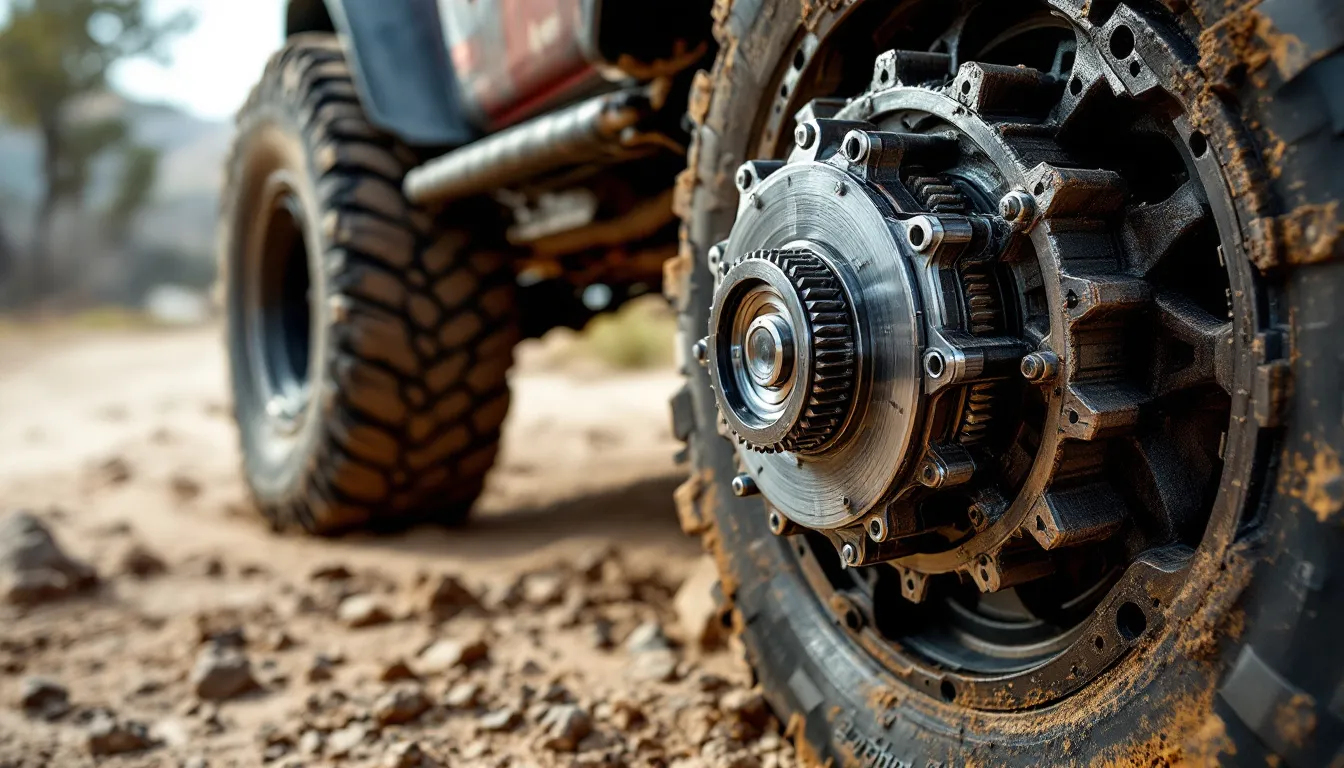
This article contains affiliate links. We may earn a commission at no extra cost to you.
Best Gear Ratio for 33 Inch Tires on Jeep JK: Complete Guide
The best gear ratio for 33 inch tires on Jeep JK is 4.88:1, with 4.56:1 as a close alternative for highway-focused driving. If you’ve just mounted 33s on your JK and immediately noticed sluggish acceleration, downshifting on mild hills, or your transmission hunting for gears, you’re experiencing the classic symptoms of mismatched gearing. Your factory 3.21 or 3.73 gears simply can’t spin those larger tires efficiently.
You upgraded to 33-inch tires for better ground clearance and more aggressive looks, but now your Jeep feels slower than it did on stock rubber. That’s not in your head—it’s physics. This guide covers everything you need to know about choosing the right tire size for your JK and matching it with proper gearing: which ratio works best, why the math matters, how much regearing costs, what symptoms tell you it’s time, and which gear sets deliver the best value.
We’ll break down the 4.56 versus 4.88 debate with real RPM calculations, explain why your transmission is the deciding factor, show you exactly what regearing costs (parts and labor), and help you avoid the $3,000-5,000 transmission rebuild that happens when you ignore the problem too long.
Why Gear Ratio Matters When You Upsize to 33-Inch Tires
When you install 33-inch tires on your JK, you’re increasing the diameter by roughly 23% compared to stock 27-28 inch tires. This means your engine has to work 23% harder to rotate each wheel through one full revolution. That’s like adding 500 pounds to your Jeep’s curb weight, except the added strain hits your drivetrain instead of your suspension.
Your gear ratio determines how many times the driveshaft rotates for each wheel rotation. Factory gearing (typically 3.21 or 3.73 on non-Rubicon models) was calibrated for those smaller stock tires. When you bolt on 33s without regearing, your engine spins at lower RPM at any given speed, which pushes it out of its powerhouse range where it makes peak torque.
Here’s what happens mechanically. A 3.6L Pentastar makes peak torque at 4,300 RPM. With stock 3.73 gears and 27-inch tires, you’re cruising at 70 mph around 2,400 RPM—when you need to accelerate or climb a grade, a quick downshift brings you near that torque peak. With 33-inch tires and those same 3.73 gears, you’re now at 2,000 RPM at 70 mph. Your transmission downshifts, but it still can’t get you into the efficient power band without dropping two gears.
The result: sluggish acceleration, excessive transmission shifting, reduced fuel economy, and premature wear on your automatic transmission’s clutch packs. Your engine lugs at low RPM under load, which creates heat and stress. Your transmission constantly searches for the right gear because none of them put your engine where it needs to be.
Most JK owners notice the problem immediately on highway on-ramps or when towing. Your Jeep feels gutless. The tachometer barely moves when you press the accelerator. The transmission shifts down, then down again, and your engine screams but doesn’t pull like it should. That’s the mismatch between tire size and gear ratio shouting at you through the drivetrain.
Want to know which factory gearing your JK model year came with? That’s your baseline for understanding how far out of spec you’ve gone with 33s.
Factory Gear Ratios by JK Model Year and Trim
2007-2011 JK (3.8L engine):
- Sport/Sahara automatic: 3.21
- Sport/Sahara manual: 3.73
- Rubicon (all): 4.10
2012-2018 JK (3.6L engine):
- Sport/Sahara automatic: 3.21
- Sport/Sahara manual: 3.73
- Rubicon (all): 4.10
If you’re running an automatic transmission Sport or Sahara with 3.21 gears and 33-inch tires, you’re experiencing the worst-case scenario. Even Rubicons with factory 4.10 gears feel the impact of 33s, though not as dramatically.
The Best Gear Ratios for 33-Inch Tires: 4.56 vs 4.88
For 33-inch tires on a Jeep JK, install 4.88 gears if you have an automatic transmission or frequently drive in hilly terrain. Choose 4.56 gears if you have a manual transmission and do mostly highway driving. Both ratios restore your engine’s RPM range to near-factory levels, but they deliver slightly different characteristics.
The 4.88 ratio is more aggressive. It spins your engine approximately 200-250 RPM higher at highway speeds compared to 4.56 gears. That keeps your 3.6L Pentastar in its sweet spot for instant throttle response. When you’re merging onto the highway or pulling a grade, you’re already at 2,600-2,700 RPM before you even downshift—one gear drop puts you right at peak torque.
Here’s the math for 33-inch tires at common highway speeds:
| Gear Ratio | 60 mph | 70 mph | 75 mph | Best For |
|---|---|---|---|---|
| 4.56 | 2,250 RPM | 2,625 RPM | 2,813 RPM | Manual transmission, mostly highway |
| 4.88 | 2,410 RPM | 2,810 RPM | 3,010 RPM | Automatic transmission, varied terrain |
| Stock 3.73 | 1,840 RPM | 2,145 RPM | 2,300 RPM | Underpowered with 33s |
Notice how stock 3.73 gears leave you at 2,145 RPM at 70 mph—well below the 2,400+ RPM range where the Pentastar delivers responsive power. Both 4.56 and 4.88 bring you back into that range, but 4.88 gives you more margin.
Automatic transmission owners should strongly favor 4.88 gears. The five-speed automatic (2007-2011) and eight-speed automatic (2012-2018) both rely on staying within optimal RPM ranges to select the right gear. With 4.88s, your transmission spends more time in top gear without hunting, and when it does downshift, it doesn’t have to drop two gears to find pulling power.
Manual transmission owners have more flexibility. The six-speed manual gives you complete control over RPM, so you can keep the engine in its power band regardless of gear ratio. The 4.56 ratio provides slightly better fuel economy on long highway stretches (you’ll see 1-2 mpg improvement compared to 4.88) while still delivering much better performance than stock gearing.
Rubicon models with factory 4.10 gears can theoretically run 33s without regearing, but you’ll still notice the performance drop. Going from 4.10 to 4.88 transforms the driving experience—suddenly your Rubicon pulls like it did on 32s.
I learned this lesson the expensive way. Four months of struggling with stock gears on 35s before regearing to 4.56 taught me what proper gearing feels like. The transformation in driveability was immediate and dramatic—the Jeep that had been gasping up hills suddenly climbed effortlessly. While my experience was with 35-inch tires (where regearing isn’t optional, it’s survival), the same principle applies even more to 33s on stock gearing. You’re not as severely undergeared as I was, but you’re still far enough out of spec that every drive reminds you something’s wrong.
If you’re upgrading from stock 3.21 or 3.73 gears to 4.88 with 33-inch tires, expect to feel like you bought a new transmission. The Jeep will pull strong from stops, cruise comfortably at highway speeds without excessive RPM, and handle grades without downshifting multiple times. That’s what proper gearing delivers.
5 Signs You Need to Regear After Installing 33s
1. Your transmission constantly hunts for gears on the highway
When you’re cruising at 65-70 mph on flat ground and your transmission keeps shifting between overdrive and direct drive, that’s hunting. The engine can’t maintain speed in top gear because it’s lugging at too low an RPM. Your transmission’s computer keeps downshifting to find power, then upshifting for economy, then downshifting again. This cycle heats up your transmission fluid and wears clutch packs prematurely.
2. Highway on-ramps require flooring the accelerator
You shouldn’t need wide-open throttle to merge safely into 70 mph traffic. If you’re burying the gas pedal and still accelerating slowly while your transmission frantically downshifts, your gearing is too tall for your tire size. You’re asking your engine to overcome a mechanical disadvantage it simply can’t handle efficiently.
3. Your Jeep feels gutless pulling hills that never used to be a problem
That grade on your commute that you used to cruise up in overdrive now requires one or two downshifts just to maintain speed. Worse, when you’re towing a small trailer, you’re watching the tachometer barely climb even when the transmission drops to third gear. Undersized gearing turns every moderate slope into a mountain.
4. Fuel economy dropped 2-3 mpg after installing 33s
Larger tires hurt fuel economy slightly (about 1 mpg) due to increased rotational mass and rolling resistance. But if you lost 2-3 mpg or more, your engine is working too hard at low RPM to maintain cruising speed. Proper gearing brings most of that fuel economy back because your engine operates in its efficient range instead of lugging under load.
5. You hear transmission whine or feel heat through the transmission tunnel
This is the danger sign. When your transmission runs hot because it’s constantly shifting and slipping clutches while trying to compensate for tall gearing, you’re on the path to a $3,000-5,000 transmission rebuild. Automatic transmissions create heat when they work harder than designed. That heat breaks down fluid and damages internal components. By the time you hear whining or feel excessive heat, you’ve already accumulated damage.
Don’t Gamble With Your Transmission
Replacing a JK automatic transmission costs $3,000-4,000 for a remanufactured unit plus $800-1,200 in labor. A full rebuild runs $3,500-5,000. Regearing both axles costs $1,200-2,000 installed. That math should be obvious—regearing is cheaper than transmission replacement, and it prevents the problem entirely.
Quality Ring and Pinion Gear Sets for JK Regearing
**FTC
When you’re investing $1,200-2,000 in professional regearing, the gear set quality matters enormously. A quality ring and pinion matched with a complete master install kit ensures proper setup, quiet operation, and long service life. Cheap gears and incomplete kits lead to whining, premature wear, and comebacks to the shop.
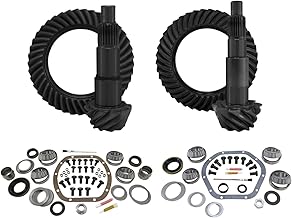
Yukon Gear & Axle - Gear & Install Kit for Jeep JK non-Rubicon 4.88 Ratio - includes ring and pinion (4.88 ratio) - YGK013
$620
Check Price on AmazonThe Yukon Gear & Axle master install kit is the gold standard for JK regearing. This complete package includes the 4.88 ring and pinion set, all bearings, seals, shims, marking compound, and pinion nut for one axle. You’ll need two kits (one front, one rear) for a complete regearing job. Yukon uses high-quality steel with precision machining that ensures proper gear mesh and quiet operation.
What makes this kit worth the premium? Every component you need for proper gear installation is included. Ring and pinion gears alone aren’t enough—bearings must be replaced because used bearings cause noise and premature failure when reinstalled. The master install kit includes carrier bearings, pinion bearings, races, crush sleeve, pinion seal, and all the small parts like marking compound that separate a professional job from a noisy disaster.
At roughly $620 per axle (prices vary), two Yukon kits plus labor puts you around $1,800-2,000 total. That’s a smart investment compared to the alternative of running mismatched gearing until your transmission fails.
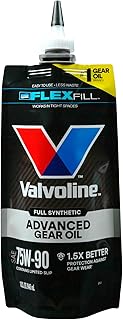
Valvoline FlexFill Advanced Full Synthetic 75W-90 Gear Oil 1 Quart Pouch
$15.48
Check Price on AmazonDon’t overlook gear oil. Regearing requires draining, cleaning, and refilling both differentials with fresh fluid. The Valvoline FlexFill 75W-90 synthetic gear oil is formulated for high-load applications and meets the GL-5 specification required for hypoid gears in JK axles. Each differential takes about 2-3 quarts depending on whether you have a limited-slip differential. Plan on purchasing 6-8 quarts total for both axles.
The FlexFill pouch system is brilliantly designed for axle service. The squeeze bottle with flexible spout lets you refill through the differential fill plug without a pump or messy funnels. At under $16 per quart, it’s cheap insurance for protecting your new $600 gear set.
Your shop may offer bearing kits like the
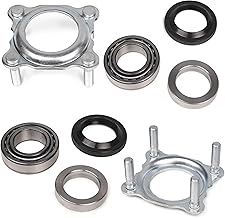
2pcs Rear Axle Bearing and Seal Kit Compatible with Jeep Wrangler JK/JKU 2007 2008 2009 2010 2011 2012 2013 2014 2015 2016 2017 Replaces 68008523AA 68003270AA 83503077 68499023AA
$77.88
Check Price on AmazonA master install kit includes everything a professional shop needs except specialized tools like bearing pullers, dial indicators, and torque wrenches. That’s why regearing is almost always a shop job rather than a driveway project. The precision required for proper gear mesh, backlash, and bearing preload takes experience and equipment.
Other Gear Ratio Options: When to Consider 4.10, 5.13, or Staying Stock
4.10 Ratio: The Compromise That Usually Disappoints
If your JK came with factory 4.10 gears (Rubicon models), you can technically run 33-inch tires without regearing. You’ll notice reduced performance compared to stock tires, but it won’t be as dramatic as running 3.21 or 3.73 gears with 33s. However, going from 4.10 to 4.88 still delivers a noticeable improvement in throttle response and transmission behavior.
The 4.10 ratio makes sense only if you’re planning to return to stock tire size or if you never drive in hilly terrain. For most owners, the performance compromise isn’t worth saving the regearing cost. You bought 33s for capability—don’t handicap them with inadequate gearing.
- Best for: Rubicon owners who rarely go off-road and want to keep factory gearing
- Skip if: You frequently tow, drive in mountains, or want responsive performance
5.13 Ratio: Too Aggressive for 33s
The 5.13 gear ratio is designed for 35-37 inch tires, not 33s. With 33-inch tires, 5.13 gears spin your engine unnecessarily high at highway speeds—you’ll be at 3,100+ RPM at 70 mph, which feels buzzy and hurts fuel economy. Your engine will be screaming on long highway trips.
Consider 5.13 gears only if you’re planning to upgrade to popular all-terrain tire options in 35-inch sizes within the next year or two. Otherwise, you’re overgearing for your current setup. The only exception is rock crawlers who rarely see highway speeds—ultra-low gearing provides incredible control at walking pace.
- Best for: Future plans for 35-37 inch tires, or dedicated rock crawlers
- Skip if: You primarily drive on roads or plan to keep 33-inch tires long-term
Staying Stock: When It Makes Financial Sense (Rarely)
If you’re planning to sell your JK within 6-12 months, staying with stock gears might make financial sense. The buyer gets to choose their preferred gear ratio when they eventually regear. But understand you’re driving a compromised vehicle every day for that entire period.
Staying stock also makes sense if you only installed 33s temporarily for a specific trip or season. Maybe you mounted aggressive mud-terrain tires in larger sizes for a week-long off-road expedition, but you’ll return to stock tires afterward. A temporary performance hit beats spending $1,800 on gears you’ll only use briefly.
- Best for: Short-term 33-inch tire use, or selling the Jeep very soon
- Skip if: You plan to keep the Jeep and 33s for more than a few months
For 95% of JK owners who installed 33-inch tires, regearing to 4.88 (or 4.56 for manual transmission highway drivers) is the correct answer. The alternatives are either too weak, too aggressive, or just kicking the problem down the road.
Regearing Process and Cost Breakdown
Here’s what regearing actually costs when you break down each component. These numbers reflect typical 2024 pricing from reputable shops:
| Item | DIY Cost | Shop Cost | Notes |
|---|---|---|---|
| Front gear set + install kit | $620 | $620 | Yukon or equivalent quality |
| Rear gear set + install kit | $620 | $620 | Match front brand and ratio |
| Gear oil (8 quarts) | $120 | $150 | Synthetic 75W-90 GL-5 spec |
| Front axle labor | $0 | $400-600 | 6-8 hours shop time |
| Rear axle labor | $0 | $400-600 | 6-8 hours shop time |
| Speedometer recalibration | $100-200 | Included | Programmer or dealer flash |
| Total Cost | $1,460-1,660 | $2,190-2,590 | Assumes no complications |
Professional installation from a reputable 4x4 shop is strongly recommended. Gear installation requires precise measurement of backlash (typically 0.006-0.008 inches), proper bearing preload, and correct gear mesh pattern. A dial indicator, inch-pound torque wrench, bearing pullers, and experience reading gear marking patterns are essential. Get any of these wrong and you’ll have whining gears or catastrophic failure within 5,000 miles.
The Shop Installation Process (What Your Money Buys)
1. Remove axle shafts and differential covers: The shop drains gear oil and pulls axle shafts to access the carrier assembly.
2. Extract the carrier and old gears: The carrier (housing the ring gear) is removed from the axle housing. Old ring and pinion gears are pressed off.
3. Install new pinion gear with correct shim stack: This is where expertise matters. The pinion depth must be set precisely using shims behind the pinion gear. Wrong depth causes noise and premature wear.
4. Set pinion bearing preload: The pinion bearings must be tightened to exact specifications—too loose causes noise, too tight causes friction and heat.
5. Install ring gear and set backlash: The new ring gear is bolted to the carrier, then the carrier is shimmed to achieve proper backlash between ring and pinion teeth.
6. Check gear mesh pattern with marking compound: The shop paints the gears with marking compound and rotates them to verify the contact pattern. Adjustments ensure the gears mesh correctly across the tooth face.
7. Reassemble, refill, and road test: Everything goes back together with new seals, fresh gear oil, and a test drive to verify quiet operation under load.
Most shops complete front and rear regearing in 1.5-2 days. You’ll need to arrange alternative transportation unless you’re willing to wait.
New Gear Break-In Procedure
First 500 miles are critical for gear longevity. New gears need a break-in period for the gear teeth to mate properly. Follow this procedure strictly:
- Avoid wide-open throttle and hard acceleration
- No towing or heavy loads
- Vary your speed—don’t cruise at constant RPM for extended periods
- Change gear oil at 500 miles (some metallic wear particles are normal during break-in)
- After 500 miles, drain, inspect oil for excessive metal, refill with fresh synthetic
Can You Install Gears Yourself?
Honestly? Unless you’re an experienced mechanic with proper tools and have regeared axles before, no. This isn’t a YouTube tutorial job. Incorrect gear setup leads to expensive failures—sometimes catastrophic pinion failures that destroy the entire axle housing. The $800-1,200 you’d save in labor isn’t worth the risk of a $2,000 replacement axle plus a tow truck ride.
If you have a fully equipped shop, the right tools, and a mentor who’s regeared dozens of axles, then maybe. But first-timers should let the professionals handle this one.
Related Modifications to Consider With Regearing
Since your Jeep is already at the shop for regearing, consider these complementary modifications that share labor costs or address related issues:
Lift kit installation: If you haven’t already lifted your JK to fit those 33s, doing it during regearing makes sense. The
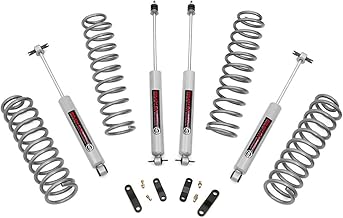
Rough Country 2.5" Lift Kit for 2007-2018 Jeep Wrangler JK Unlimited - 67930
$299.95
Check Price on AmazonWheel spacers for proper fitment: Many factory JK wheels have too much backspacing for 33-inch tires, especially wider aggressive treads.
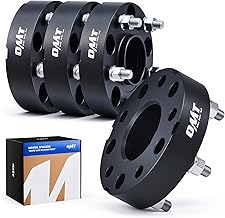
Orion Motor Tech 5x5 Wheel Spacers Compatible with Jeep Wrangler JK Grand Cherokee Commander, 1.5" Wheel Spacers with 1/2x20 Studs, 5x127 71.5 mm Hub Centric Wheel Spacer Kit, Set of 4, Black
$102.99
Check Price on AmazonSteering stabilizer upgrade: Larger tires and wheels—especially when pushed out with spacers—increase steering feedback and shimmy potential. The
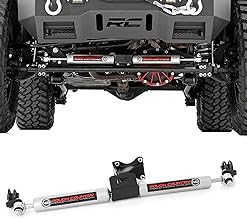
Rough Country N3 Dual Steering Stabilizer for 07-18 Jeep Wrangler JK - 8734930
$149.95
Check Price on AmazonDifferential covers: While your differentials are open for regearing, upgrading to aluminum finned covers improves heat dissipation and provides magnetic drain plugs to catch metal particles. They’re not essential, but they add protection if you frequently tow or do serious off-roading.
Front axle upgrade (for extreme use): If you’re running 33s now but planning on 35s or larger in the future, and you do serious rock crawling, consider upgrading from the factory Dana 30 front axle to a Dana 44. It’s expensive (adds $2,000-3,000 to the regearing job), but it eliminates the weak point in the JK drivetrain. For 33-inch tires on a weekend wheeler, the Dana 30 is fine.
Stacking these modifications during your regearing appointment reduces total shop time and cost. Your shop can quote bundled labor rates that save you money compared to bringing the Jeep back multiple times.
Frequently Asked Questions About Regearing for 33-Inch Tires
Can I run 33s without regearing?
Yes, but you’ll hate it. Your Jeep will be sluggish, your transmission will hunt for gears constantly, and you’ll put excessive wear on your drivetrain. Sport and Sahara models with 3.21 or 3.73 gears are severely undergeared for 33-inch tires. Rubicon models with 4.10 gears can technically run 33s, but performance still suffers noticeably compared to proper 4.88 gearing.
Will regearing improve my gas mileage?
Yes, by 1-2 mpg in most cases. Proper gearing allows your engine to operate in its efficient RPM range instead of lugging at low RPM under load. You’ll regain most of the fuel economy you lost when you first installed 33-inch tires. Don’t expect to match stock tire fuel economy—larger tires have more rolling resistance—but proper gears minimize the penalty.
How long does regearing take?
Expect 1.5-2 days at the shop. Front and rear axle regearing requires 12-16 hours of shop time for experienced technicians. Most shops prefer to keep your Jeep overnight to allow gear marking compound to dry and to road test after reassembly. Some shops can complete the work in one long day if you drop off early.
Do I need to regear front and rear together?
Yes, absolutely. Front and rear axles must have matching gear ratios or your 4WD system will bind and fail. The transfer case sends power equally to both axles—if they’re spinning at different speeds because of mismatched ratios, something has to give. That something is usually your transfer case or transmission. Always regear both axles to the same ratio.
What’s the difference between 4.56 and 4.88 for 33s?
About 250 RPM at highway speeds. The 4.88 ratio spins your engine higher (approximately 2,810 RPM at 70 mph) compared to 4.56 gears (approximately 2,625 RPM at 70 mph). That extra RPM provides better throttle response and helps automatic transmissions stay in the right gear. Manual transmission drivers who do mostly highway miles prefer 4.56 for slightly better fuel economy and lower engine noise.
Can I install gears myself?
Not recommended unless you have professional-level experience and tools. Gear installation requires precise measurement of pinion depth, backlash, and bearing preload using specialized tools like dial indicators and inch-pound torque wrenches. Incorrect setup causes noise, premature wear, or catastrophic failure. The $800-1,200 you’d save in labor isn’t worth the risk of a $2,000+ repair bill when you get it wrong.
Final Thoughts: Regearing Is Essential, Not Optional
Installing 33-inch tires without regearing to 4.88 (or 4.56 for manual highway drivers) is like buying a house and refusing to connect the electricity. You technically own it, but you’re not getting full functionality. Your JK will run on 33s with stock gearing, but it won’t run well, and you’re shortening your transmission’s life every time you drive.
The $1,800-2,000 investment in professional regearing isn’t an expense—it’s protection for the $3,000-5,000 transmission rebuild you’re preventing. More importantly, it transforms your Jeep from frustrating to fun. The sluggish acceleration disappears. The constant transmission hunting stops. Your engine pulls strong when you need it, cruises efficiently when you don’t, and operates in the RPM range the engineers intended.
If you’re building your JK into a capable off-road machine, regearing is the foundation. Check our JK buyer’s guide for comprehensive build planning, and review common JK problems to watch for to ensure your drivetrain is healthy before investing in gears.
Your next step: Get quotes from three reputable 4x4 shops in your area, specify quality gear sets (Yukon, Nitro, or equivalent), and schedule the work. Your Jeep—and your transmission—will thank you.
This article contains affiliate links. If you purchase through these links, we may earn a small commission at no extra cost to you. This helps support the site and allows us to continue creating content for the Jeep JK community.
Get the Free JK Build Planner
Complete PDF with mod checklists, gear ratios, tire sizing charts, and budget worksheets. Everything you need to plan your JK build.
No spam. Unsubscribe anytime. By subscribing, you agree to our Privacy Policy.
Allan
I'm Allan. I bought a 2014 Jeep Wrangler JKU and I research the hell out of every mod before I touch it. Everything here is tested or deeply researched on my own rig - no sponsored fluff, just honest findings.
Learn more about me →Get the JK Build Planner
Free PDF with complete build checklists, gear ratios, and tire fitment guides.
By subscribing, you agree to our Privacy Policy.
Related Articles
Best All-Terrain Tires for Jeep Wrangler JK: 2026 Top Picks
Find the best all-terrain tires for your Jeep Wrangler JK with our expert guide. Real-world testing, honest reviews, and size recommendations for stock to 35-inch builds.
Best 35 Inch Tires for Jeep Wrangler JK: Top 8 Picks for 2026
Discover the best 35 inch tires for Jeep JK with our expert comparison of 8 top options. Complete fitment guide, real-world reviews, and installation requirements.
Best Tires for Jeep JK: Complete 2026 Tire Selection Guide
Find the best tires for your Jeep Wrangler JK with our expert guide. Compare all-terrain, mud-terrain, and budget options with real-world testing and fitment advice.