How to Choose the Right Tire Size for Jeep JK: Complete Fitment Guide
This article contains affiliate links. We may earn a commission at no extra cost to you.
How to Choose the Right Tire Size for Jeep JK: Complete Fitment Guide
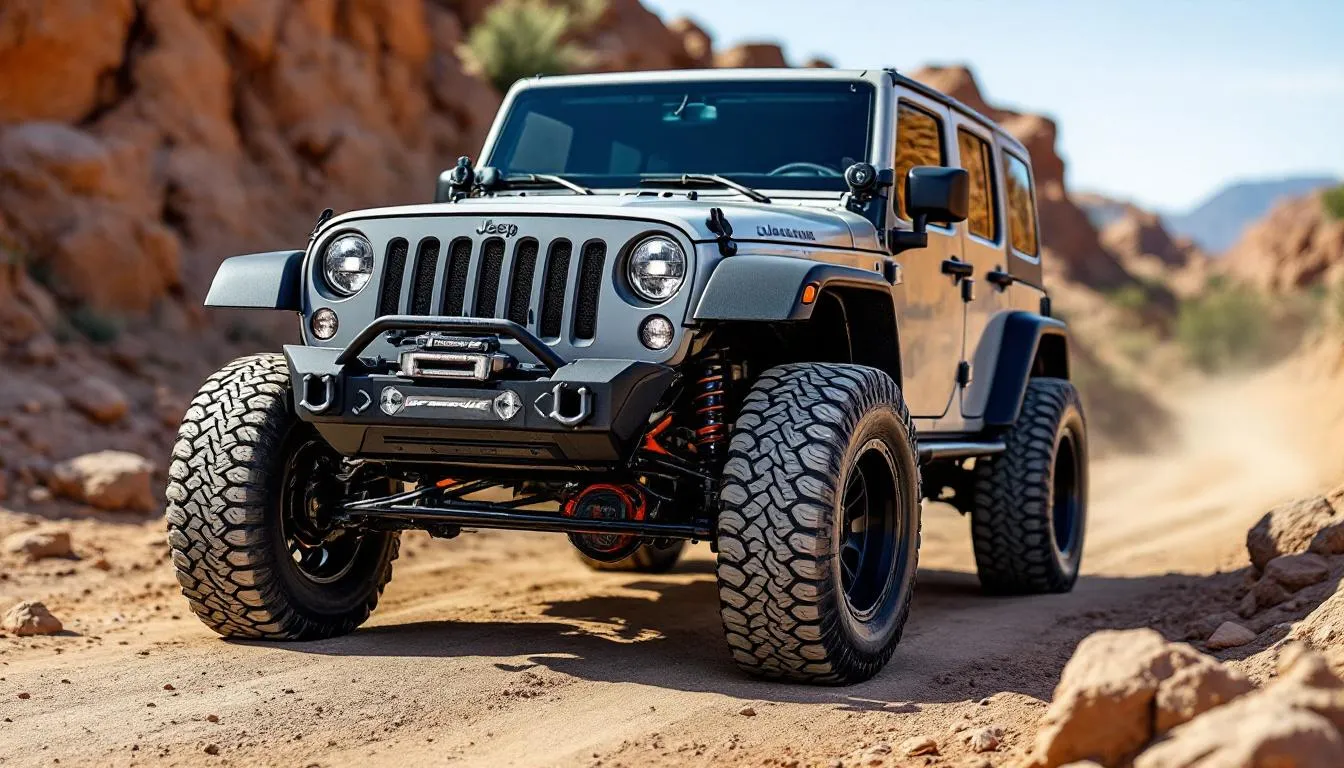
When I started researching tire upgrades for my JK, I quickly learned that manufacturer claims and spec sheets tell only part of the story. The real fitment data—what actually works without rubbing, what clears at full articulation, which combinations cause problems—lives in forum threads and trail parking lots. That’s where experienced JK owners share the truth about what 35x12.50 tires really look like on a 2.5” lift, or why some 37” setups rub despite “clearance” from calculations.
You want larger tires for your JK. That’s not surprising—bigger tires transform capability, stance, and trail performance. But choosing the right size means understanding the cascade of decisions that follow: lift height, backspacing, trimming, gearing, and supporting modifications. Pick poorly and you’ll fight rubbing, destroy fuel economy, or spend thousands correcting the setup.
This guide delivers what I wish I’d had: a lift-by-lift breakdown of proven tire sizes, specific backspacing requirements for different widths, real performance impact data, and honest cost analysis of the modifications you’ll need. We’ll cover everything from stock fitment through 40” builds, with detailed rubbing hotspot identification and modification requirements at each step.
For broader context on JK wheel and tire fundamentals, see our complete wheels and tires guide.
Understanding Tire Size Numbers: What 35x12.50R17 Actually Means
Tire sizing uses two formats that measure differently—and those differences matter when you’re planning clearance.
Flotation sizing (35x12.50R17) lists overall diameter × tread width × wheel diameter in inches. This format appears on most off-road tires and makes sense intuitively—a 35x12.50 is 35” tall with a 12.5” wide tread.
Metric sizing (315/70R17) lists tread width in millimeters / aspect ratio (sidewall height as percentage of width) × wheel diameter. A 315/70R17 has a 315mm tread width, sidewalls that measure 70% of that width (220.5mm or 8.7”), and fits a 17” wheel. Total diameter: (8.7” × 2) + 17” = 34.4”.
Here’s where it gets tricky: advertised diameter rarely matches actual measured diameter. Manufacturing variance, tread depth, and casing construction mean that 35” tire might measure 34.3” or 35.2” when mounted and inflated.
| Advertised Size | Metric Equivalent | Actual Measured Diameter | Tread Width |
|---|---|---|---|
| 33x12.50R17 | 285/70R17 | 32.7-33.2” | 11.2-12.5” |
| 35x12.50R17 | 315/70R17 | 34.3-35.1” | 12.1-12.6” |
| 37x12.50R17 | 315/75R17 | 36.5-37.3” | 12.3-12.8” |
| 37x13.50R17 | 38x13.50R17 | 36.8-37.6” | 13.1-13.7” |
Why actual diameter matters: When calculating lift requirements or gear ratios, use measured diameter, not advertised. That “35-inch” tire measuring 34.4” needs less lift than one measuring 35.2”. Check tire manufacturer specs or measure competitors’ mounted tires before committing to a size.
Tread width affects backspacing requirements more than diameter affects lift—we’ll cover that in detail shortly.
What Tire Sizes Fit Stock JK Wranglers (No Lift)
Factory tire sizes vary by trim level and model year, but the suspension geometry remains consistent for no-lift fitment limits.
| JK Trim | Factory Tire Size | Max Without Lift | Notes |
|---|---|---|---|
| Sport | 255/75R17 (32”) | 33x10.50R17 | Narrow tread only; 12.50 width rubs |
| Sahara | 255/70R18 (32”) | 33x10.50R17 | Same clearance as Sport |
| Rubicon | 285/70R17 (33”) | 33x12.50R17 | Factory fender flares accommodate width |
The Rubicon’s larger fender flares and higher factory ride height make it the only trim that clears 12.50-wide tires at stock height. Sport and Sahara models accommodate 33” diameter but require narrower tread widths—typically 10.50 maximum—to prevent rubbing at full lock and articulation.
Critical consideration: wheel offset and backspacing. Even if diameter clears, wrong backspacing pushes tires into fender liners, control arms, or frame rails. Stock JK wheels run 6.25” backspacing (roughly +44mm offset). Wider tires demand 4.5-5.0” backspacing to clear suspension components without spacers.
Rubbing on stock suspension typically occurs at:
- Front: Inner fender liner during full lock
- Front: Lower control arm at full compression
- Rear: Rear quarter panel pinch seam during articulation
Sport and Sahara models have slightly different fender profiles than Rubicons, creating marginally less clearance. For detailed trim differences, see our Rubicon vs Sport vs Sahara trim comparison. Model year variations in fender design matter too—check our model year differences guide if you’re working with a specific year.
Bottom line: 33x10.50 fits all stock JKs without modification. Anything wider or taller requires lift, trimming, or both.
Maximum Tire Size by Lift Height: The Definitive Chart
Lift height determines tire clearance during compression, articulation, and steering lock. This chart reflects real-world proven fitment—not theoretical calculations—with trimming and backspacing requirements noted.
| Lift Height | Max Tire Size | Required Backspacing | Trimming Needed | Major Components |
|---|---|---|---|---|
| Stock (0”) | 33x10.50 | 6.25” (stock) | None | Stock suspension |
| 1.5-2.0” | 33x12.50 | 4.5-5.0” | Minor pinch seam | Spacer lift or budget coil kit |
| 2.5” | 35x12.50 | 4.5” | Pinch seam, plastic tabs | Full coil springs, shocks |
| 3.5” | 37x12.50 | 4.0-4.5” | Pinch seam, fender liner, bumper | Coils, shocks, track bar, brake lines |
| 4.5”+ | 40x13.50 | 3.75-4.0” | Major fender trimming | Complete suspension overhaul |
2.5” lift with 35” tires represents the most popular JK modification—it balances capability improvement with manageable cost and daily driveability. This combination delivers serious off-road gains without requiring extensive supporting modifications.
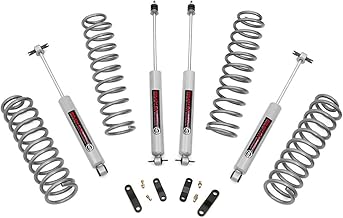
Rough Country 2.5" Lift Kit for 2007-2018 Jeep Wrangler JK Unlimited - 67930
$299.95
Check Price on AmazonAt each lift level, specific rubbing hotspots create clearance problems:
2.5” lift with 35” tires:
- Front lower control arm contact at full compression (hard trail hits)
- Front sway bar end link at extreme articulation
- Rear pinch seam during uptravel (rear axle compression)
- Front fender liner plastic tabs at full lock
3.5” lift with 37” tires:
- All 35” hotspots persist but with greater severity
- Rear quarter panel lower edge during articulation
- Front bumper corners at full lock (wider tires)
- Trackbar relocation bracket may require clearancing
4.5”+ lift with 40” tires:
- Frame rail at full lock (extreme width)
- Inner fender structure requires significant modification
- Bumpers must be trimmed or replaced with high-clearance options
- Rear wheel wells need extensive opening
Backspacing becomes more aggressive as tire size increases. The wider and taller the tire, the more you need to push it outboard to clear control arms and frame rails. For technical explanation of how backspacing and offset affect fitment, see our detailed wheel backspacing and offset guide.
Trimming progresses from simple pinch seam modification (hammer and heat gun) at 35” to cutting away fender structure at 40”. We’ll cover specific trimming procedures later in this guide.
Wheel Backspacing Requirements for Different Tire Widths
Backspacing—the distance from wheel mounting surface to inner wheel edge—determines how far inboard or outboard the tire sits. Too much backspacing pushes tires into suspension components. Too little creates excessive scrub radius and bearing stress.
| Tire Width | Recommended Backspacing | Without Trimming | With Trimming | Rubbing Risk |
|---|---|---|---|---|
| 10.50” | 5.0-5.5” | Safe on all lifts | Same | Low |
| 12.50” | 4.25-4.75” | Minor rub possible | Safe with pinch seam trim | Moderate |
| 13.50” | 3.75-4.25” | Definite rub | Safe with fender work | High |
| 14.50”+ | 3.5-4.0” | Severe rubbing | Extensive trimming required | Very High |
Stock JK wheels measure 6.25” backspacing—far too much for wider tires. If you’re upgrading to 12.50-wide tires but keeping stock or similar wheels, you’ll need wheel spacers to reduce effective backspacing.
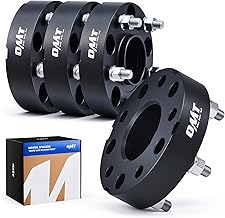
Orion Motor Tech 5x5 Wheel Spacers Compatible with Jeep Wrangler JK Grand Cherokee Commander, 1.5" Wheel Spacers with 1/2x20 Studs, 5x127 71.5 mm Hub Centric Wheel Spacer Kit, Set of 4, Black
$102.99
Check Price on AmazonSpacers effectively reduce backspacing by their thickness. A 1.5” spacer converts 6.25” backspacing to 4.75” effective backspacing—ideal for 35x12.50 tires. This allows you to run larger tires on stock wheels without immediate wheel replacement.
Spacer considerations:
- Hub-centric design mandatory (prevents vibration)
- Requires longer wheel studs beyond 1.5” thickness
- Adds stress to wheel bearings (minimal on quality installations)
- Some states have legal restrictions on spacer thickness
When shopping for aftermarket wheels specifically for large tires, target backspacing in the ranges above based on your planned tire width. Most off-road wheels designed for JKs come in 4.5” backspacing by default—perfect for 35x12.50 setups.
For comprehensive technical explanation of how backspacing, offset, and wheel width interact, see our detailed backspacing and offset breakdown.
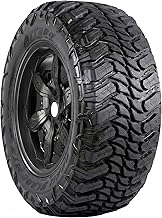
How Tire Size Affects Performance, MPG, and Driving Dynamics
Larger tires fundamentally change how your JK drives. The effects cascade through acceleration, braking, handling, and fuel economy.
Acceleration and throttle response:
- Stock 32” tires: Baseline performance with stock 3.21 or 3.73 gearing
- 35” tires: Noticeably slower acceleration, 15-20% reduction in low-end torque feel
- 37” tires: Significantly sluggish without regearing, struggles on highway onramps
Larger diameter acts as a taller effective gear ratio. Your engine works harder to rotate the increased rotational mass and overcome the longer lever arm. With 35” tires on stock 3.73 gears, performance feels like driving with 3.21 gears on stock tires.
Fuel economy impact:
- 32” stock tires: Baseline EPA ratings (16-18 combined typical)
- 35” tires: 2-4 MPG loss (12-15% decrease)
- 37” tires: 4-6 MPG loss (20-25% decrease)
Increased rotational mass, rolling resistance, and aerodynamic drag all contribute. Aggressive mud-terrain tread patterns compound losses—M/T tires in 35x12.50 typically cost 1-2 MPG more than A/T tires in the same size.
Total supporting modification investment: Budget $400-800 for essential supporting modifications when moving to 35” tires with a 2.5-3.0” lift. This covers steering stabilizer, brake lines, and tire repair kit. Larger tires or more aggressive builds increase costs substantially—37” setups often require $1,500-2,500 in supporting modifications beyond lift and regearing.
The pattern here: big tires create a cascade of additional modifications. Each one addresses a specific consequence of the larger tire size. Skipping these “extras” leads to poor performance, premature failures, or safety issues.
Frequently Asked Questions About JK Tire Sizing
What is the largest tire I can fit on a stock JK without lifting it?
33x10.50 on any trim, or 33x12.50 on Rubicon models only. Sport and Sahara models need at least 1.5-2.0” lift to clear 33x12.50 width due to narrower fender flares. Going larger than 33” diameter requires lift regardless of trim.
Do I need to regear if I install 35-inch tires?
You don’t technically need to regear—your JK will drive with 35” tires on stock gears. But it will drive poorly, with sluggish acceleration, struggling highway merges, and transmission constantly hunting for gears. Most JK owners regear to 4.56 or 4.88 ratios when moving to 35” tires, and report dramatically improved drivability afterward.
Can I run 37-inch tires on a 2.5-inch lift?
No. 37” tires require minimum 3.5” lift, aggressive backspacing (4.0” or less), and significant trimming. Even then, you’ll experience rubbing during extreme articulation. The 2.5” lift and 35” tire combination works well; jumping to 37” tires without adding lift height causes constant contact issues.
Will larger tires affect my JK warranty?
Tire size changes alone don’t void warranties—only related failures. If you install 37” tires without regearing and blow your transmission, expect Jeep to decline warranty coverage on that failure. But unrelated warranty claims (AC compressor, radio, etc.) remain valid. Lift kits may affect suspension component coverage.
How do I calculate the right gear ratio for my tire size?
Take stock tire diameter, divide by new tire diameter, multiply by current gear ratio. For example: (32” stock ÷ 35” new) × 3.73 stock gears = 3.41 effective ratio. To restore stock performance, you’d want 4.88 gears, which brings you back close to stock ratio. This is approximate—actual ratio selection depends on transmission type and preferences.
Can I mix tire brands or models on my JK?
Technically possible but not recommended. Different tread patterns and rubber compounds create inconsistent traction characteristics between axles, causing unpredictable handling and potential drivetrain binding in 4WD. If you must run different tires, match them by axle (same on front, different on rear), never diagonal or three-one splits.
Do I need to trim fenders for 35-inch tires?
On 2.5-3.0” lift with proper backspacing, yes—at minimum you’ll need to flatten rear pinch seams and remove front fender liner tabs. Without trimming, you’ll experience rubbing during articulation and full steering lock. The amount of trimming varies by exact tire dimensions, wheel backspacing, and lift height, but some trimming is nearly always required for 35” tires.
For broader JK wheel and tire information beyond just sizing considerations, see our complete wheels and tires overview.
Final Recommendations: Matching Tire Size to Your JK’s Mission
The right tire size balances your capability goals against practical considerations: budget, daily drivability, and modification complexity.
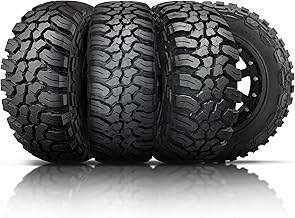
Daily driver with weekend trail use: 33-35” tires on 2.5” lift. This combination improves ground clearance and off-road capability noticeably while preserving acceptable fuel economy and street manners. You’ll need minimal trimming, possibly avoid regearing with 33” tires, and keep total modification costs under $2,500 including tires, wheels, and lift. Perfect for JK owners who drive to work Monday through Friday and hit trails on weekends.
Weekend wheeler with frequent trail time: 35-37” tires on 3.0-3.5” lift. Expect regearing (mandatory for 37” tires), aggressive fender trimming, and supporting modifications including steering stabilizer and brake lines. Total investment: $5,000-8,000. Daily driving becomes more compromised—worse fuel economy, more road noise, heavier steering—but trail capability jumps substantially. This setup handles moderate to difficult trails confidently.
Dedicated off-road rig: 37-40” tires on 4.0-5.0” lift. This is a purpose-built trail machine that happens to be street legal. Budget $12,000-20,000+ for comprehensive build including lift, tires, wheels, regearing, bumpers, armor, and countless supporting modifications. Performance on pavement suffers significantly, but you’ll drive over obstacles that stop lesser rigs.
Most JK owners land in the first category—improving capability while maintaining daily driver practicality. The 2.5” lift with 35” tires hits that sweet spot. You gain genuine off-road improvement without completely transforming your JK’s street character.
If you’re deciding whether to modify your current JK or upgrade to a newer platform entirely, see our JK vs JL comparison to understand how newer Wranglers stack up. And if you’re shopping for a JK to modify, our JK buyer’s guide helps you identify the best starting point.
The right tire size transforms your JK. It’s the single most visible and impactful modification you can make. Choose based on honest assessment of how you actually use your Jeep, budget realistically for supporting modifications, and don’t skip regearing when tire size demands it. Make those decisions thoughtfully and your JK will reward you with years of improved capability and enjoyment.
This article contains affiliate links. If you purchase through these links, we may earn a small commission at no extra cost to you. This helps support the site and allows us to continue creating content for the Jeep JK community.
Get the Free JK Build Planner
Complete PDF with mod checklists, gear ratios, tire sizing charts, and budget worksheets. Everything you need to plan your JK build.
No spam. Unsubscribe anytime. By subscribing, you agree to our Privacy Policy.
Jeep JK Guide
We're JK owners who've been building, breaking, and fixing Wranglers for years. Everything here is tested on our own rigs - no sponsored fluff, just honest recommendations.
Learn more about us →Get the JK Build Planner
Free PDF with complete build checklists, gear ratios, and tire fitment guides.
By subscribing, you agree to our Privacy Policy.
Related Articles
Best 37 Inch Tires for Jeep JK: Heavy-Duty Off-Road Options
Best 37 tires for Jeep JK balance rock traction and durability. Compare top options, required mods, and real costs for running 37s on your Wrangler.
Best Gear Ratio for 37 Inch Tires on Jeep JK: Complete Regearing Guide
Running 37s on your JK? Choose 5.13 gears for 3.6L engines or 5.38 for 3.8L and heavy builds. Complete regearing guide with real-world cost breakdown.
Best Gear Ratio for 35 Inch Tires on Jeep JK Manual: Expert Guide
4.56 gears are ideal for manual JK on 35s—balances highway rpm, acceleration, and torque. Learn why stock 3.73 fails and when to choose 4.88 instead.