Best Transfer Case Skid Plate for Jeep JK: Armor Your Drivetrain
Best Transfer Case Skid Plate for Jeep JK: Armor Your Drivetrain
Your Jeep JK’s transfer case sits just 8-10 inches off the ground on a stock suspension, making it one of the most vulnerable components when you venture off-pavement. A single solid impact on a rock ledge or buried obstacle can crack the aluminum case, draining your transfer case fluid and leaving you stranded miles from the trailhead. The factory skid plates on Sport and Sahara models offer minimal protection — they’re thin stamped steel designed more for splash guards than serious rock armor.
The best transfer case skid plate for Jeep JK applications provides a simple insurance policy that costs far less than a replacement transfer case. You’re looking at $300-500 for quality armor versus $2,500-3,500 for a new transfer case and installation. The right skid plate bolts directly to your frame rails, creating a sacrificial barrier between rocks and your drivetrain.
This guide breaks down the top transfer case skid plates for 2007-2018 JK Wranglers, comparing steel versus aluminum materials, installation requirements, and lift kit compatibility. You’ll learn exactly what protection you need based on your wheeling style, whether you’re hitting moderate trails or tackling serious rock crawling. If you’re building a capable JK for off-road use, transfer case armor should be among your first upgrades.
Top Transfer Case Skid Plates for Jeep JK: Quick Comparison
My research philosophy centers on real-world community knowledge rather than manufacturer spec sheets. I’ve spent hundreds of hours on JK forums analyzing trail damage reports, installation experiences, and long-term durability feedback from owners who actually use their rigs hard. These recommendations come from patterns I’ve seen across thousands of user experiences, not just marketing claims.
Best Overall: Artec Industries Bellypan — 3/16” steel, full coverage from oil pan to transfer case, 65 lbs, $450-500. Offers maximum protection with integrated transmission skid.
Best Budget: Rough Country Transfer Case Skid Plate — 1/4” steel, transfer case only, 28 lbs, $180-220. Solid basic protection without premium features.
Best Lightweight: Poison Spyder Brawler Lite — 3/16” aluminum, 18 lbs, $320-370. Half the weight of steel with 90% of the protection for daily drivers.
Most Coverage: LOD Signature Series Full Belly Skid — 3/16” steel, extends from radiator to transfer case, 95 lbs, $800-950. Ultimate protection for hardcore rock crawling.
Rubicon Upgrade: Savvy Off-Road Transfer Case Skid — 1/4” steel, replaces factory Rubicon plate, 32 lbs, $290-340. Thicker material than OEM with better ground clearance profile.

Westin Automotive Products 42-21025 Snyper Textured Black Transfer Case Skid Plate
$181.15
Check Price on Amazon →Why Your JK’s Transfer Case Needs Armor
The transfer case on your JK Wrangler hangs as the lowest point in your drivetrain, positioned directly between the front and rear axles. On a stock JK Sport or Sahara, it sits roughly 8.5 inches from the ground — lower than your differential pumpkins. A replacement transfer case runs $2,500-3,500 installed, while quality armor costs $200-500. That’s a 5-to-1 return on investment for a bolt-on upgrade.
Factory “skid plates” on non-Rubicon models are 16-gauge stamped steel, about 1/16” thick. They’re designed to deflect road debris and minor scrapes, not absorb direct rock impacts. I’ve seen dozens of forum posts showing cracked factory skids with damage transferred through to the transfer case housing underneath.
The aluminum transfer case housing itself presents the real vulnerability. Unlike cast iron differential covers that can take some abuse, the aluminum casting cracks on sharp impacts. Even a small crack means immediate fluid loss. Transfer cases don’t limp home like a leaking differential might — once the fluid drains, you’re done.
Off-road obstacles hit the transfer case from multiple angles. Ledges catch it on climbs. Buried rocks find it in ruts. Logs and stumps hammer it on forest trails. You need protection that covers the bottom and wraps partially up the sides. Many common JK weak points can be addressed with simple preventive upgrades, and transfer case armor ranks among the most cost-effective.
Steel vs Aluminum Transfer Case Skid Plates: Which Material is Right for You?
Steel and aluminum skid plates both protect your transfer case, but they serve different types of Jeep owners. Understanding the real-world trade-offs helps you choose the right material for your wheeling style.
Weight and Impact Resistance: 3/16” steel skid plates typically weigh 28-35 lbs for transfer case-only coverage. They absorb impacts by flexing slightly, then returning to shape. The same coverage in 3/16” aluminum weighs 15-20 lbs, cutting weight by nearly half. Aluminum dents more easily under sharp impacts but rarely cracks or penetrates. Both materials provide excellent protection — steel just stays prettier longer.
Daily Driving Considerations: If your JK serves as a daily driver, the 15-20 lb weight savings from aluminum adds up across your full armor package. Combine an aluminum transfer case skid with aluminum differential covers and an aluminum oil pan skid, and you’ve saved 50-60 lbs from the undercarriage. That’s measurable in fuel economy over 50,000 miles. Weekend wheelers won’t notice the difference on trail, but commuters feel it in their wallets.
Cost and Longevity: Steel skids run $180-450 depending on coverage and thickness. Aluminum costs $280-500 for comparable protection. The price gap narrows at the premium end. Powder coating on steel lasts 3-5 years in salt-exposed climates before showing rust spots. Aluminum doesn’t rust, though the raw metal oxidizes to a dull gray if left uncoated. Most manufacturers now offer ceramic coating on both materials, adding $50-80 but extending life significantly.
Modification and Repair: Steel welds easily in any shop, making modifications and repair straightforward. You can add d-ring mounts, trim for clearance, or weld cracks with basic equipment. Aluminum requires TIG welding and specialized skills — not every shop can work with it. If you like to modify gear, steel offers more flexibility.
The 17-63-030P1 Jk Mid Front Skid Black Powder Coat demonstrates the durability and reliability expected from modern armor solutions. The Rubicon’s factory rock rails and skid plates use steel for the transfer case and aluminum for the fuel tank, showing that even Jeep mixes materials based on application. Choose steel if you prioritize maximum impact resistance and plan to weld accessories later. Choose aluminum if you daily drive your JK and want to minimize weight penalty while maintaining excellent protection.

Installation: What to Expect When Mounting a Transfer Case Skid Plate
Installing a transfer case skid plate ranks as a straightforward afternoon project for most DIY Jeep owners. You’ll need basic hand tools, a floor jack, and jack stands — the same equipment required for an oil change. Plan for 2-3 hours for your first installation, though experienced wrenchers can complete it in 60-90 minutes.
-
Lift and Support the Jeep: Raise the front end high enough to slide under comfortably. You’ll be working directly underneath the transmission and transfer case area, so 18-24 inches of clearance makes the job much easier. Use jack stands on frame rails, never just a floor jack.
-
Remove Factory Skid Plate: Most JK transfer case skids replace the thin factory plate. You’ll find 6-8 bolts securing it to the frame rails and crossmember. These are typically 13mm or 15mm heads. Non-Rubicon models may have just a splash guard that pulls off easily.
-
Test Fit the New Skid Plate: Before installing bolts, hold the new plate in position to verify all mounting holes align. Some skid plates require minor adjustment of exhaust components or brake lines for clearance. Identify any interference issues now, not after you’ve started threading bolts.
-
Install Using Grade 8 Hardware: Most quality skid plates include Grade 8 bolts and washers. Torque specs typically run 35-45 ft-lbs for frame mounting bolts. Don’t overtighten — you’re threading into the frame rails, and stripped threads require helicoil repairs. The Region Offroad Crossmember Skid Plate Bolts Grade 8 Yellow ZINC provide reliable fastening hardware specifically engineered for JK skid plate installations.
-
Check Drain Plug Access: Quality designs include a cutout allowing transfer case drain plug access without removing the entire skid plate. Verify you can reach the drain plug with a ratchet and socket before calling the job complete. This matters for routine maintenance every 30,000 miles.
Difficulty Level: Moderate — comfortable for anyone who changes their own oil and has worked under a vehicle. You’re not disconnecting driveshafts or dropping the transfer case, just bolting armor to existing frame points. The main challenge is maneuvering heavy steel plates (28-35 lbs) into position while lying underneath the Jeep.

Region Offroad Crossmember Skid Plate Bolts Grade 8 Yellow ZINC 6035836 Compatible with Jeep Wrangle
$24.99
Check Price on Amazon →One installer tip: clean the frame rails with a wire brush before mounting. Years of trail mud and rust flakes prevent flush mounting, leaving gaps that reduce effective protection. You’ll also want to have the proper tools on hand — a quality torque wrench socket set ensures you apply the correct tension to mounting bolts without damaging frame threads.
Key Factors to Consider When Buying a Transfer Case Skid Plate
The right transfer case skid plate depends on six critical factors that determine long-term satisfaction. Use these criteria as a checklist when evaluating any option.
Material Thickness: Look for minimum 3/16” (0.188”) steel or 1/4” (0.250”) aluminum for serious trail use. Budget plates often use thinner material — 1/8” steel or 3/16” aluminum — that dents and bends on hard impacts. The weight difference between 1/8” and 3/16” steel is only 6-8 lbs, but the protection gap is significant. 3/16” steel or 1/4” aluminum provides the sweet spot of protection versus weight for most wheeling applications.
Coverage Area: Entry-level skids cover just the transfer case itself, mounting to the two frame rail points behind the transmission crossmember. Mid-level options extend forward to protect the transmission tail housing. Full belly skids integrate oil pan, transmission, and transfer case protection in one piece. More coverage costs more and adds weight, but you’ll never regret having it on a severe trail.
Frame Mounting Design: The best skid plates use existing frame holes plus add 2-4 additional mounting points for rigidity. Avoid designs that rely solely on the factory mounting locations — they allow too much flex under impact. Look for plates that span crossmembers and create a rigid structure across the frame rails.
Powder Coating Quality: Raw steel rusts within weeks in wet climates. Quality powder coating withstands years of salt exposure, trail mud, and rock abrasion. Black or gray powder coat shows wear less than bright colors. Ask about coating thickness (2-3 mil minimum) and whether the manufacturer offers recoating services. Some premium makers include a lifetime coating warranty.
Model Year Compatibility: Model year frame differences affect skid plate fitment primarily in 2012, when Jeep revised the frame slightly. Most manufacturers now offer “universal fit” plates for all 2007-2018 JKs, but verify your specific year before ordering. The mounting points remained consistent, but some exhaust routing changed in 2012+ models.
Transfer Case Access Points: You need to change transfer case fluid every 30,000-50,000 miles depending on use. The best skid plates include drain and fill plug access. Removing an entire skid plate for routine maintenance gets old fast — verify drain plug access before buying. Look for designs with removable panels or strategic cutouts that still maintain protection. Having a skid plate gasket and seal kit on hand ensures proper resealing during maintenance operations.
Weight matters more for daily drivers than weekend warriors. If you commute in your JK, every pound of armor affects fuel economy. If you trailer to trails, focus on maximum protection over weight savings. Consider your use case honestly when balancing these factors.
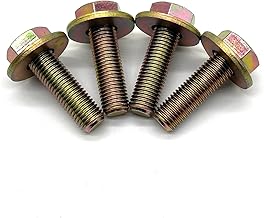
Region Offroad Gas Tank/Transfer Case Skid Plate Bolts Compatible with Jeep Wrangler JK JL Gladiator
$29.99
Check Price on Amazon →Transfer Case Skid Plates and Lift Kits: Compatibility Notes
Most transfer case skid plates work with suspension lifts up to 4 inches without modification. The skid bolts to frame rails, which maintain their relationship to the transfer case regardless of suspension height. You’re not dealing with the clearance issues that affect bumpers or rock sliders after a lift.
Stock to 2.5” Lifts: All skid plates install normally with no clearance concerns. The increased ride height actually improves ground clearance at the skid plate, giving you an extra 2-2.5 inches of rock clearance compared to stock.
3” to 3.5” Lifts: Still compatible with virtually all transfer case skid plates. Some full belly skid systems that integrate oil pan coverage may require minor exhaust routing adjustments, but the transfer case section mounts without issues.
4”+ Lifts: Larger lifts sometimes require longer brake lines or exhaust modifications that can interfere with skid plate mounting. The skid itself still bolts up, but you may need to reroute components that now hang lower relative to the frame. Check clearance around the exhaust crossover pipe — it’s the most common interference point on heavily lifted JKs.
Drop Brackets and Crossmember Lowering: If your lift kit includes transfer case drop brackets or crossmember lowering (common on 4”+ lifts to correct driveline angles), verify that your chosen skid plate accommodates the modified mounting points. Most reputable skid manufacturers specify compatibility with major lift brands.
The good news: transfer case skid plates are among the most lift-friendly armor upgrades you’ll install. Unlike front bumpers that may require trimming after a lift, or rock sliders with specific height requirements, transfer case armor just bolts to the frame and works across a wide range of suspension configurations.
Transfer Case Skid Plate FAQ
Do I need a transfer case skid plate if I have a mild lift?
Yes, a 2-3” lift actually increases your need for transfer case protection. The lift improves approach and departure angles, allowing you to tackle more aggressive obstacles that put your undercarriage at risk. The transfer case remains one of the lowest points on your JK regardless of lift height. Think of a skid plate as insurance — you’re more likely to use your Jeep’s new capabilities with a lift, which means more exposure to trail hazards.
Can I install a skid plate myself?
Most Jeep owners with basic mechanical skills can install a transfer case skid plate in 2-3 hours using hand tools. You need a floor jack, jack stands, and common metric sockets. The job involves removing 6-8 bolts from the factory skid plate and installing the new one to existing frame holes. It’s easier than installing rock sliders and comparable in difficulty to changing your own oil. If you’ve never worked under your Jeep, consider having a shop do your first armor installation so you can see the mounting points.
Will a skid plate affect my transfer case fluid changes?
Quality skid plates include drain plug access cutouts, allowing fluid changes without removing the entire plate. Check product specifications for “drain plug access” or “service cutout” before buying. Budget skids sometimes require full removal for maintenance, which turns a 20-minute fluid change into a 90-minute project. This matters more than most buyers realize — you’ll change transfer case fluid 4-6 times over your ownership, and easy access makes regular maintenance more likely.
Steel vs aluminum — which is better?
Steel offers maximum impact resistance and easier welding for modifications. Aluminum cuts weight by 40-50% while still providing excellent protection, making it ideal for daily drivers concerned about fuel economy. Steel dents less but can rust in salt climates. Aluminum never rusts but dents more easily under sharp impacts. Choose steel for hardcore rock crawling and frequent trail use. Choose aluminum for mild-to-moderate trails combined with daily driving duty.
Do transfer case skid plates fit both 2-door and 4-door JKs?
Yes, all JK Wranglers (2-door and 4-door JKU models) use the same transfer case and frame mounting points in the transfer case area. The wheelbase difference between 2-door and 4-door doesn’t affect transfer case skid plate compatibility. Verify the product lists both “JK” and “JKU” or states “fits all 2007-2018 Wranglers” to confirm universal compatibility.
How much ground clearance do I lose with a skid plate?
Most transfer case skid plates add 0.25-0.5 inches below your factory skid plate. This minimal loss is offset by the fact that you can now slide over rocks that would previously crack your transfer case housing. The skid creates a smooth sliding surface rather than a vulnerable catch point. Some aggressive designs actually improve ground clearance by tucking tighter to the transfer case body than the factory setup.
Final Thoughts: Protecting Your JK’s Drivetrain
A quality transfer case skid plate costs $200-500 and provides protection worth 5-10 times that investment. You’re defending against catastrophic failure that ends trail runs and leads to expensive towing and repair bills. The right choice depends on your wheeling intensity, daily driving needs, and budget — but any quality skid plate beats running without protection.
Steel offers maximum durability for hardcore rock crawling. Aluminum cuts weight for daily drivers who still want excellent trail capability. Both materials work when you choose appropriate thickness and coverage. Focus on 3/16” steel or 1/4” aluminum as your minimum threshold for serious protection.
Refer back to the quick comparison table to match your priorities with the right product. Installation takes an afternoon in your driveway, and the confidence you gain on trails pays back immediately. Once you’ve armored your transfer case, you’ll approach obstacles differently — sliding over rocks rather than picking careful lines around them.
Ready to build comprehensive undercarriage protection? This transfer case armor pairs perfectly with differential covers and rock sliders for complete trail confidence. Check out our complete JK buying and upgrade guide for the full roadmap to a properly protected Wrangler that handles anything you throw at it.
Get the Free JK Build Planner
Complete PDF with mod checklists, gear ratios, tire sizing charts, and budget worksheets. Everything you need to plan your JK build.
No spam. Unsubscribe anytime. By subscribing, you agree to our Privacy Policy.
Allan
I'm Allan. I bought a 2014 Jeep Wrangler JKU and I research the hell out of every mod before I touch it. Everything here is tested or deeply researched on my own rig - no sponsored fluff, just honest findings.
Learn more about me →Get the JK Build Planner
Free PDF with complete build checklists, gear ratios, and tire fitment guides.
By subscribing, you agree to our Privacy Policy.
Related Articles
Best Fender Flares for Jeep JK: Flat, Tube & High-Clearance Options Ranked
Affiliate Disclosure: JeepJK Guide earns a commission on qualifying purchases made through links on this page. This does not affect our editorial...
Best Front Bumper for Jeep JK: Complete 2026 Buying Guide
Find the best front bumper for your Jeep JK. Compare stubby vs full-width designs, steel vs aluminum materials, and budget to premium options for rock crawling and overlanding.
Best Gas Tank Skid Plate for Jeep JK: Armor Your Fuel System
Your Jeep JK's fuel tank sits exposed underneath the rear of your Wrangler, defended by nothing more than a thin plastic shield. One poorly placed rock...