Best Bumper for Jeep JK: Front, Rear & Complete Armor Systems
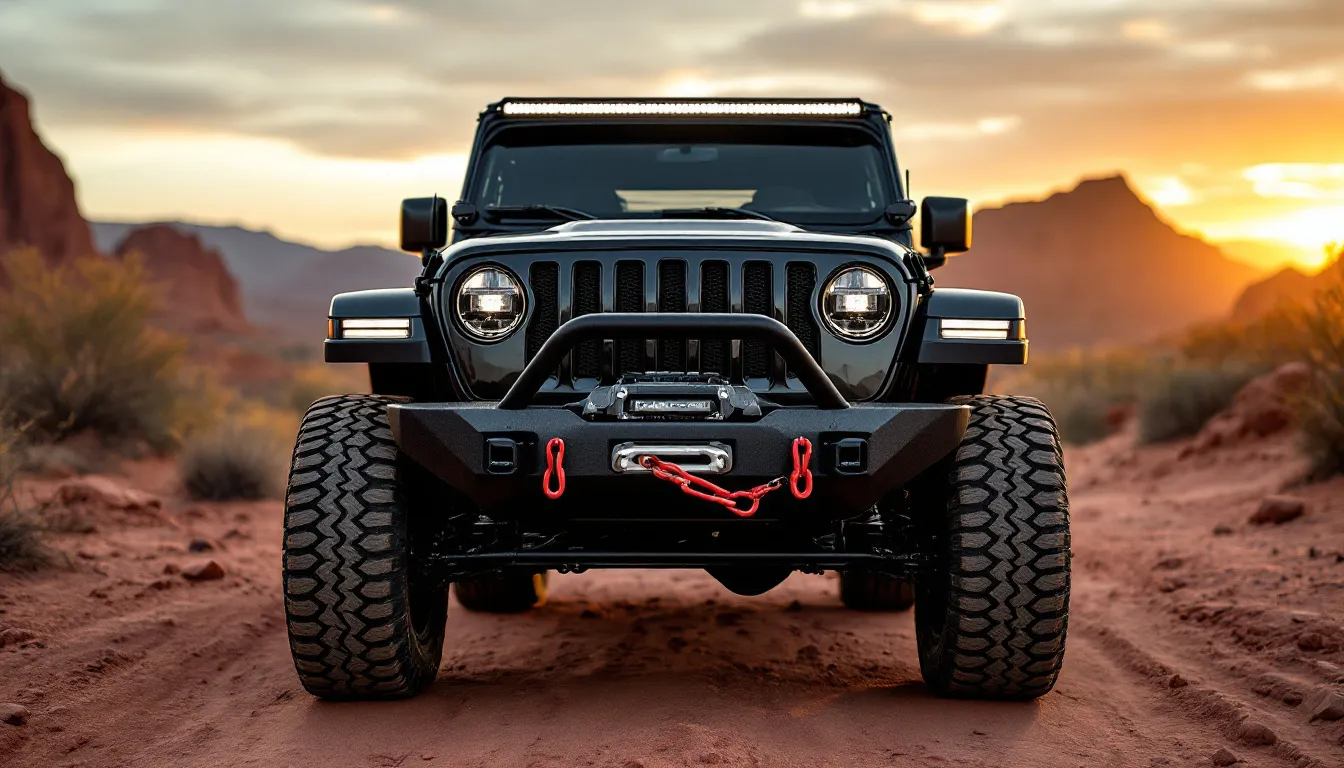
Best Bumper for Jeep JK: Front, Rear & Complete Armor Systems
As I mapped out my 2025 build plan with lift, bumpers, 35s, Raptor coat, and overland gear, bumper selection quickly became the most complex decision in the entire project. The options are overwhelming: stubby or full-width, steel or aluminum, front-only or complete system. But here’s what matters most for your decision.
The best bumper for your Jeep JK depends on three critical factors: your primary use case (daily driver vs rock crawler), your total weight budget (bumpers add 150-450 lbs), and whether you need winch capacity. A weekend trail runner needs different bumper geometry than a Moab regular, and a 2-door JK handles front weight differently than a 4-door JKU.
Bumper choice affects approach angles, breakover clearance, fuel economy, and handling characteristics. Get it wrong, and you’ll sacrifice on-road manners for trail capability you’ll never use—or vice versa. The right setup balances protection, functionality, and your specific model year differences between 2007-2018 JKs without turning your Wrangler into a nose-heavy pig.
This guide breaks down bumper types, compares materials, and walks through the complete system decision so you can build the perfect setup for your JK.
Understanding JK Bumper Types: Stubby vs Full-Width
Stubby bumpers sacrifice some protection for maximum approach angle and wheel clearance. They typically extend only to the outer edge of the frame rails, leaving the corners of the JK exposed but creating approach angles of 42-45 degrees (compared to 36-38 degrees with factory bumpers). Weight savings are significant: most stubby front bumpers range from 65-95 lbs, roughly half the weight of full-width options. You’ll give up some protection on the front quarters and lose integrated fog light mounting in most cases.
Full-width bumpers provide maximum protection and accessory mounting options but add weight and reduce approach angles slightly. These bumpers wrap around to protect the fender flares and quarter panels, typically weighing 120-180 lbs for the front. Approach angles still improve over factory (38-41 degrees), but you won’t match stubby performance. The benefit? Integrated fog lights, multiple D-ring positions, and full front-end protection when you clip a tree or boulder.
Material choice matters as much as width. Steel bumpers offer maximum strength and the lowest cost per pound of protection, typically using 3/16” to 1/4” wall thickness. They weigh more but handle winching loads and impacts without deformation. Aluminum bumpers save 30-40% of the weight using thicker material (often 1/4” to 3/8” wall), but cost 50-80% more and can’t be welded for trail repairs. Both materials offer equivalent protection if properly designed—the difference is weight budget and wallet impact.
For most JK owners, the sweet spot is a full-width front bumper if you’re adding a winch (you need the weight distribution and mounting support), or a stubby front if you’re keeping it light and prioritizing articulation over maximum protection.
Best Front Bumpers for Jeep JK
Since front bumpers directly affect your JK’s personality—both on the trail and on the highway—understanding the three buyer tiers helps you match capability to budget and use case.
Budget Tier (Under $500): Look for bumpers from established off-road manufacturers with specific JK fitment, not universal models that “adapt” to multiple vehicles. At this price point you’ll typically find:
- 3/16” steel construction with powder coat finish
- Basic winch plate (rated for 9,500-12,000 lb winches)
- Two D-ring recovery points
- Limited or no accessory mounting (no fog lights, light bar tabs)
- Weight: 95-135 lbs
- DIY installation required (no detailed instructions)
Budget bumpers sacrifice finish quality and long-term durability. Many use thinner steel that can flex under heavy winching loads, and powder coating often chips within the first season. But they’re functional protection if you’re building on a tight budget.
Mid-Tier ($500-$1,000): This category delivers the best value for most JK owners. Expect:
- 3/16” or 7-gauge steel with high-quality texture coating
- Winch plate rated to 12,000 lbs with proper frame connection
- Four D-ring positions (two main, two secondary)
- Integrated fog light mounts or modular light tabs
- Weight: 120-155 lbs
- Better documentation and customer support
- Bolt-on installation with minimal cutting (keeps factory crash bar in some cases)
Mid-tier bumpers from reputable manufacturers will outlast your ownership if properly maintained. The finish quality handles rock impacts and brush scratching better than budget options, and the engineering accounts for Rubicon models with factory rock rails and other trim-specific differences.
Premium Tier ($1,000+): High-end bumpers justify the cost through material choice, modular design, and finish durability:
- 1/4” steel or 3/8” aluminum construction
- Modular winch plate and end cap systems (customize width and features)
- Six or more recovery points with integrated fairlead
- Multiple light mounting options (fog, spot, flood, light bar)
- Weight: 140-180 lbs (steel) or 85-110 lbs (aluminum)
- Cerakote, zinc-rich primer, or marine-grade powder coat
- Detailed instructions with torque specs and frame reinforcement guidance
Premium bumpers are worth the investment if you’re building a long-term rig or need specific features like removable end caps (for changing from stubby to full-width configuration) or integrated air compressor mounting.
Critical buying note: Verify the bumper is designed specifically for 2007-2018 JK Wranglers, not “JK/JL compatible” universal designs. Frame mounting points and sensor locations differ, and universal bumpers often require modification or sacrifice fitment quality.
Rear Bumpers & Tire Carriers for JK Wrangler
The rear bumper decision centers on one question: do you need a swing-out tire carrier? If you’re running 35”+ tires or plan to upgrade beyond 33s, the factory tailgate hinge will eventually fail. The added weight and leverage create stress fractures in the tailgate and hinge mounting points over 12-18 months of regular use.
Swing-out tire carrier types:
-
Bumper-integrated carriers mount the tire swing directly to the rear bumper assembly. The entire bumper must be engineered to handle 80-120 lbs of tire weight plus the dynamic load when opening/closing. These systems weigh 150-220 lbs complete and cost $800-$1,500. Departure angles suffer slightly (typically 25-28 degrees vs 30+ for bumper-only designs).
-
Frame-mounted carriers with independent swing use a dedicated hinge assembly that bolts to the frame, with a separate rear bumper. This distributes weight better and allows you to upgrade the bumper independently. Total system weight: 180-250 lbs. Cost: $1,000-$1,800 for both components.
-
Hybrid systems integrate the carrier into the bumper but include frame reinforcement brackets. These offer the best of both approaches—single installation, proper weight distribution. Weight and cost fall between the two options above.
Consider soft top vs hard top weight considerations when planning rear armor—a hard top adds 150 lbs up high, affecting your center of gravity with heavy rear bumpers.
Beyond tire carrying capacity, rear bumpers provide recovery point mounting (D-rings or receiver shackle mounts), trailer hitch integration, and corner protection. Most quality rear bumpers add two to four D-ring positions in locations that provide better pulling angles than the factory tow hooks. Departure angles with aftermarket rear bumpers range from 26-32 degrees depending on design—stubby designs maximize clearance while full-width protection reduces angle slightly.
If you’re keeping factory tire size (32” or smaller) and don’t plan aggressive trail use, a simple rear bumper without tire carrier saves 80-120 lbs and $400-800. You’ll still gain better recovery points and hitch integration over the factory setup.
Complete Front & Rear Bumper Systems
When I started planning my build with lift, bumpers, 35s, and overland gear, the weight budget became the limiting factor. Complete bumper systems—matching front and rear from the same manufacturer—add 300-450 lbs total depending on material and features. That’s nearly 10% of the JK’s curb weight and directly impacts handling, braking, and fuel economy.
The four key considerations for complete systems:
Total cost: Buying front and rear as a system typically saves 10-15% vs purchasing separately. Budget $1,200-$1,800 for steel systems, $2,000-$3,200 for aluminum, and $2,500-$4,500 for premium modular setups with tire carriers. Factor in installation costs if you’re not doing it yourself—shops charge $400-$800 for complete bumper installation.
Weight impact: Steel systems add 300-380 lbs (140-180 lbs front, 160-200 lbs rear with basic carrier). Aluminum systems reduce this to 200-270 lbs total. On a 2-door JK, adding 350+ lbs of bumpers means you’ll likely need upgraded coil springs to maintain ride height and handling. The fuel economy hit ranges from 0.5-1.5 mpg depending on driving style and terrain.
Aesthetic continuity: Matching front and rear bumpers create visual cohesion, but more importantly, they ensure consistent protection levels. Pairing a heavy-duty front with a flimsy rear bumper creates an unbalanced protection strategy—one good hit on a rock garden damages your expensive rear quarter panel.
Installation efficiency: Complete systems often include shared hardware, unified mounting instructions, and coordinated frame reinforcement. Installing both bumpers in one session takes 8-14 hours for experienced DIYers, compared to 5-8 hours for front-only installation. You’ll save time overall by doing both at once rather than removing and reinstalling components twice.
What’s typically included in complete systems:
- Front bumper with winch plate and fog light provisions
- Rear bumper with D-ring mounts and hitch receiver
- Tire carrier swing arm (if specified)
- All mounting hardware and frame brackets
- Optional accessories (light bars, jerry can mounts, hi-lift jack mounts)
Compare the complete system weight to your total build plan. JK vs JL weight and payload differences matter less than understanding your specific JK’s payload rating (typically 800-1,000 lbs). Bumpers, lift components, larger tires, armor, and accessories add up quickly—especially on overland builds.
Steel vs Aluminum Bumpers: Which Material is Right for You?
Steel bumpers dominate the JK aftermarket for good reason. Using 3/16” to 1/4” wall thickness, steel bumpers handle repeated impacts, support winch loads during recovery operations, and can be repaired in the field with basic welding equipment. Cost ranges from $400-$1,200 for front bumpers depending on features and finish quality. Weight penalty: expect 120-180 lbs for a full-width front bumper and 160-220 lbs for a rear bumper with tire carrier.
The finish determines longevity. Basic powder coating chips within one season of moderate trail use. Texture-coated steel (bed liner-style finish) resists abrasion better but still requires touch-up over time. Premium finishes like Cerakote or zinc-rich primers provide the best corrosion resistance—critical if you live in snow belt states or coastal areas where road salt accelerates rust.
Aluminum bumpers save significant weight using thicker material—typically 1/4” to 3/8” wall thickness. Weight savings reach 30-40%: a full-width aluminum front bumper weighs 85-110 lbs compared to 120-180 lbs for steel equivalents. This matters tremendously on 2-door JKs where front weight affects handling balance. Cost ranges from $800-$2,000 for front bumpers, reflecting both material cost and the complexity of aluminum fabrication.
Aluminum’s advantages extend beyond weight. It won’t rust (though it can corrode in salt environments), requires no paint maintenance, and can be polished for a bright finish. The downsides: aluminum can’t be welded for field repairs without specialized TIG equipment, it shows rock chips and scratches more visibly than textured steel, and it costs 50-80% more than comparable steel designs.
Choose steel if you prioritize low cost, need field repairability, want maximum impact resistance, or you’re building a heavy-duty rig where 30-40 lbs of weight savings doesn’t matter. Steel makes sense for dedicated trail rigs, budget builds, and situations where you can’t justify aluminum’s premium.
Choose aluminum if you’re chasing every pound of weight savings (2-door builds especially), daily drive your JK and want better fuel economy and handling, have the budget for premium materials, or live in extreme corrosion environments where steel maintenance becomes a chore. Aluminum shines on overland builds and street-driven JKs that see occasional trail use.
The performance difference in actual protection is negligible when both materials are properly engineered. A 1/4” steel bumper and a 3/8” aluminum bumper both stop rocks and provide winch mounting—the choice comes down to weight budget and wallet depth.
Winch Mounting & Recovery Point Considerations
Winch plate specifications determine whether your front bumper can safely handle recovery operations. Look for plates rated to at least 12,000 lbs even if you’re installing a 9,500 lb winch—the rating accounts for dynamic loads during recovery when forces exceed the winch’s static capacity. Quality winch plates bolt directly to the frame rails with grade 8 hardware, not just to the bumper skin. The plate should accept both standard (10” bolt pattern) and wide-base (12” pattern) winch mounting.
Recovery point requirements go beyond simple D-ring mounts. Effective front recovery points should:
- Mount to frame-connected portions of the bumper, not unsupported outer sections
- Accept 3/4” shackles minimum (most quality bumpers accept 7/8” or 1”)
- Position at least 6” apart laterally for multiple pulling angles
- Include reinforcement gussets behind the mounting plate
Rear recovery points matter just as much. Many rear bumpers include D-ring mounts, but receiver-based recovery shackles often provide better pulling angles and can be removed when not needed. If your rear bumper includes a 2” receiver, invest in a rated recovery shackle (6,500 lb minimum) rather than relying on a tow ball for emergency recovery.
Hidden costs and considerations:
- Winch fairlead mounting requires a hawse fairlead (for synthetic rope) or roller fairlead (for steel cable). Budget $40-$120 depending on type. Some bumpers include fairleads, many don’t.
- Wiring and control adds $150-$300 if you’re not reusing an existing winch setup. Factor this into total front bumper system cost.
- Frame damage risk with bumper-skin-only mounts is real. Cheap bumpers bolt only to the bumper mounting points without frame reinforcement—these will bend or tear during serious recovery operations. Insist on frame-connected designs.
A properly engineered front bumper distributes winch loads across multiple frame mounting points. Look for designs with at least four mounting bolts per side, with reinforcement that extends back to the frame rails. The bumper should treat the frame as the primary structural member, not the bumper skin itself.
Installation Complexity & What to Expect
Front bumper installation on a Jeep JK is manageable for DIYers with basic mechanical skills and proper tools. Expect 3-5 hours for experienced wrenchers, 5-8 hours for your first install. The factory bumper removal takes 30 minutes—eight bolts plus fog light connectors on models equipped with factory fogs.
Tool requirements:
- Socket set with extensions (13mm, 15mm, 18mm most common)
- Torque wrench (critical for frame mounting bolts)
- Floor jack and jack stands
- Impact driver speeds the process but isn’t required
- Wire cutters and electrical tape for sensor relocation
- Grinder or reciprocating saw (only if removing factory crash bar)
Rear bumper installation varies dramatically based on tire carrier inclusion. Simple rear bumpers take 2-3 hours. Bumpers with integrated tire carriers require 4-6 hours due to alignment requirements—the swing must clear the tailgate and body with proper tension for vibration-free highway driving. Frame-mounted tire carrier systems add another 1-2 hours for the independent mounting assembly.
Following manufacturer torque specifications is non-negotiable for frame mounting points. Under-torqued bolts allow bumper movement that can crack frame welds or elongate mounting holes. Over-torqued bolts can strip threads in the frame (which requires helicoil repair). Most bumpers specify 45-65 ft-lbs for main frame bolts—use a calibrated torque wrench, not an impact gun on its lowest setting.
The most common installation challenges:
- Sensor relocation (parking sensors, airbag crash sensors on 2011+ models)
- Fog light wiring adaptation when factory fogs aren’t included in bumper design
- Factory crash bar retention vs removal (some bumpers work with it, some require removal)
- Front bumper alignment—passenger and driver sides must be level before final torque
Professional installation costs $200-$400 for front bumpers, $300-$500 for rear with tire carrier. This includes expertise with sensor relocation and proper torque procedures. If you’re uncertain about cutting factory crash bars or dealing with airbag sensors on 2011-2018 models, professional installation provides peace of mind and manufacturer warranty protection.
JK Bumper Buying Guide: Key Features to Prioritize
My approach to bumper research leaned heavily on real-world community knowledge from JK forums rather than manufacturer spec sheets. Brands can claim anything—actual JK owners reveal what holds up after three seasons of trail abuse and what rusts through after one winter.
1. Manufacturer reputation within the JK community: Search the JK-Forum and Jeep Wrangler Forum for build threads and long-term reviews. Look for manufacturers who respond to issues, provide replacement parts years later, and engineer specifically for JK frame mounting (not universal designs adapted to multiple vehicles). Names that consistently appear in successful builds matter more than flashy marketing.
2. Frame mounting design over bumper-only attachment: Quality bumpers use frame connection with reinforcement brackets. Cheap designs bolt only to the factory bumper mounting points—these flex, crack, and eventually fail. Look for at least four frame mounting points per side with grade 8 hardware included. The bumper instructions should specify torque specs and include reinforcement plates if needed.
3. Winch plate integration (if applicable): If you’re adding a winch now or in the future, verify the bumper includes a rated winch plate—not just “winch compatible” with a flat mounting surface. The plate should bolt through the bumper to the frame and accept standard 10” or 12” winch patterns. Some budget bumpers require you to purchase the winch plate separately, adding $100-$200 to the real cost.
4. Evaluate finish quality for your environment:
- Powder coat works in dry climates but chips easily
- Texture coating (truck bed liner style) resists abrasion and hides scratches
- Cerakote or zinc-rich primers provide maximum corrosion protection (worth it in salt belt states)
- Bare aluminum requires periodic cleaning but never rusts
5. Warranty and customer support: A lifetime structural warranty matters less than responsive customer support. Can you call them with a fitment question? Do they provide replacement parts for damaged sections? Some manufacturers offer crash replacement programs—discounted replacement if you damage a bumper on the trail. That’s a signal they stand behind their products.
Additional factors: Consider whether the bumper design allows access to your factory horn, washer fluid reservoir, and radiator without full removal. Some designs make routine maintenance unnecessarily difficult. Also verify compatibility with other planned modifications—certain lift kits affect bumper clearance, and larger tires may require trimming even with aftermarket bumpers.
Keep your factory bumpers even after upgrade. If you sell the JK, some buyers prefer returning to stock appearance. Factory bumpers in good condition add $100-$200 to resale value when included with the sale. Store them in your garage or basement—they take up minimal space.
For more comprehensive JK buying guidance, see our complete JK buyers guide and common JK problems by model year to understand model-specific considerations.
Frequently Asked Questions About JK Bumpers
What’s the best bumper type for a daily driver JK?
Full-width front bumpers balance protection with on-road manners better than stubby designs for daily driving. You’ll maintain better approach angles than factory (38-40 degrees vs 36 degrees) while getting integrated fog lights and a refined look. Weight penalty of 120-150 lbs is noticeable but acceptable. For the rear, skip the tire carrier unless you’re running 35”+ tires—it’s unnecessary weight and complexity for a street-driven JK.
Do I need to upgrade my suspension when adding bumpers?
It depends on total added weight and your existing suspension. Adding 300-350 lbs of bumpers (front + rear) on a factory suspension will cause 1-2” of sag, especially in the front. If you’re already running a lift kit with upgraded coils, you’re usually fine. Factory suspension JKs benefit from upgraded coil springs (not a full lift) when adding heavy steel bumpers. Aluminum bumpers rarely require suspension changes due to lower weight impact.
Can I install a bumper without removing the factory crash bar?
Some bumpers are designed to retain the factory crash bar (2007-2018 JKs have a steel bar behind the plastic bumper cover), while others require removal for clearance and weight savings. Check the manufacturer’s installation instructions specifically. Retaining the crash bar adds about 30 lbs but maintains factory crash protection—important for insurance and safety considerations if your JK is a daily driver.
What’s the difference between 2-door and 4-door JK bumper fitment?
Bumpers fit identically—the frame mounting points are the same on 2-door JK and 4-door JKU models. The difference is weight impact: 2-door JKs are 300-400 lbs lighter than JKU variants, so heavy front bumpers affect steering and handling more noticeably. A 150 lb steel bumper is 4.5% of a 2-door’s curb weight vs 3.7% on a 4-door. Shorter wheelbase also makes the 2-door more sensitive to weight distribution changes.
How much do bumpers affect fuel economy?
Steel bumper systems (300-380 lbs total) reduce fuel economy by 0.5-1.5 mpg depending on driving conditions. Highway driving shows less impact than city driving where acceleration requires moving the extra weight repeatedly. Aluminum systems (200-270 lbs) cut this impact roughly in half. The aerodynamic penalty is minimal—bumpers don’t significantly increase frontal area or drag compared to factory.
Are aluminum bumpers worth the extra cost?
Aluminum bumpers justify their 50-80% premium in three scenarios: 2-door JKs where weight matters for handling balance, daily drivers where fuel economy and on-road manners are priorities, and coastal/snow belt vehicles where corrosion resistance prevents long-term maintenance. If you’re building a dedicated trail rig or have a tight budget, steel bumpers provide equivalent protection at lower cost. The weight savings are real, but the performance difference in actual trail use is negligible.
Final Recommendations: Choosing Your JK Bumper Setup
Match your bumper to your primary use case first, then select material based on budget and weight priorities. Trail-focused JKs benefit from stubby front bumpers that maximize approach angles and reduce weight for better articulation. Daily drivers and overland rigs perform better with full-width protection and integrated accessory mounting. Your use case drives every other decision.
Choose steel for budget builds, maximum strength, and trail repairability. Choose aluminum when weight savings justify the premium—particularly on 2-door JKs or when fuel economy matters. Both materials protect equally well when properly engineered. The real difference is cost per pound and maintenance requirements over time.
Complete front/rear systems make sense when you’re building a cohesive rig with matching protection levels and aesthetics. But don’t force it—many successful builds pair a heavy-duty front bumper with a lighter rear setup or even retain the factory rear if tire size stays at 33” or smaller. Total build weight matters more than matching brand names.
Plan your total build weight before committing to bumpers. Add up lift components, bumpers, sliders, skid plates, larger tires, roof rack systems, and interior modifications. A JK’s 800-1,000 lb payload capacity disappears quickly when you’re also planning to carry camping gear, recovery equipment, and spare parts. Bumpers that add 350+ lbs might force compromises elsewhere—or require more bumper and armor guides for your JK to balance protection with capability.
Your next step: measure your budget, finalize your tire size choice (which drives rear tire carrier requirements), and determine whether a winch is part of your immediate build or future addition. Those three decisions narrow your options to a manageable shortlist of bumpers that actually fit your specific JK build plan.
Get the Free JK Build Planner
Complete PDF with mod checklists, gear ratios, tire sizing charts, and budget worksheets. Everything you need to plan your JK build.
No spam. Unsubscribe anytime. By subscribing, you agree to our Privacy Policy.
Allan
I'm Allan. I bought a 2014 Jeep Wrangler JKU and I research the hell out of every mod before I touch it. Everything here is tested or deeply researched on my own rig - no sponsored fluff, just honest findings.
Learn more about me →Get the JK Build Planner
Free PDF with complete build checklists, gear ratios, and tire fitment guides.
By subscribing, you agree to our Privacy Policy.
Related Articles
Best Fender Flares for Jeep JK: Flat, Tube & High-Clearance Options Ranked
Affiliate Disclosure: JeepJK Guide earns a commission on qualifying purchases made through links on this page. This does not affect our editorial...
Best Front Bumper for Jeep JK: Complete 2026 Buying Guide
Find the best front bumper for your Jeep JK. Compare stubby vs full-width designs, steel vs aluminum materials, and budget to premium options for rock crawling and overlanding.
Best Gas Tank Skid Plate for Jeep JK: Armor Your Fuel System
Your Jeep JK's fuel tank sits exposed underneath the rear of your Wrangler, defended by nothing more than a thin plastic shield. One poorly placed rock...