Best 35 Inch Tires for Jeep Wrangler JK: Top 8 Picks for 2026

Why 35-Inch Tires Are the Sweet Spot for JK Wranglers
The best 35 inch tires for Jeep JK include the BFGoodrich KO3 for overall balance, Nitto Trail Grappler for serious off-road use, and Falken Wildpeak AT3W for budget-conscious buyers. Running 35s requires 2.5-3.5 inches of suspension lift, proper wheel backspacing (3.75-4.5 inches), and often regearing to 4.56 or 4.88 ratios, especially with the 3.8L engine.
Ask any group of JK owners what tire size they’re running or planning to run, and ”35s” will dominate the conversation. It’s not hype — it’s the result of thousands of owners finding that sweet spot where capability, daily drivability, and cost intersect. Moving from stock rubber (225/75R16 on Sport models, 255/75R17 on Sahara and Rubicon) to 35-inch tires transforms your JK’s off-road ability without turning it into a garage queen that’s miserable on the highway.
Here’s what makes 35s the most popular JK upgrade: you gain 2-3 inches of ground clearance, dramatically improve breakover angle, and open up trails that were sketchy or impossible on stockers. You also get the aggressive look that most of us picture when we think “Jeep.” Yet unlike moving to 37s or larger, you can run 35s with moderate suspension lifts (2.5-3.5 inches), reasonable regearing costs, and acceptable daily driving manners.
The 3.6L Pentastar engine (2012-2018 models) handles 35s fairly well, especially if you’re not towing or rock crawling at altitude. The earlier 3.8L? It’ll turn 35s, but you’ll feel the power loss and likely want to regear sooner rather than later. Either way, 35-inch tires represent the largest practical tire for a JK before you’re looking at significant drivetrain modifications.
This guide covers eight tire options across different categories — all-terrain, mud-terrain, budget, hybrid terrain, heavy-duty, winter-rated, high-mileage, and lightweight. Every tire here has been vetted through real JK owner experiences, not just manufacturer spec sheets. I’ll be honest about what each tire does well and where it compromises.
This blog is my research journal. When I needed to figure out which 35-inch tire would work for my build, I dug through JK forum threads, watched real-world test videos, read owner feedback from people who’ve put 30,000+ miles on these tires, and synthesised what the community actually reports. What you’re reading is an aggregation of that research — some products I’ve tested personally, others I’m documenting based on consistent community feedback. Either way, I’m sharing my homework because I needed these answers myself.
For broader context on JK tire upgrades and fitment basics, check out our complete wheels and tires guide.
What You Need to Know Before Buying 35-Inch Tires
Let’s get the requirements clear before you start shopping. You can’t just bolt 35-inch tires onto a stock JK. Well, you can, but you’ll spend your first trail ride listening to rubber eat fender liner and watching your turning radius disappear.
Lift requirements vary by trim. Rubicon models can sometimes squeeze 35s on a 2.5-inch lift thanks to their factory Dana 44 front axle and slightly better suspension geometry. Sport and Sahara models typically need 3 inches minimum, and 3.5 inches is safer if you want full steering articulation without cutting. That’s because the Dana 30 front axle placement and lower front differential create tighter clearance at full lock and full compression.
Wheel backspacing is non-negotiable. Stock JK wheels have around 6.25 inches of backspacing, which pushes tires too far inboard for 35s. You need wheels with 3.75-4.5 inches of backspacing to push the tire outward and avoid inner fender contact. Get this wrong and you’ll rub at full lock even with a big lift. For the full technical breakdown of backspacing and offset math, see our dedicated wheel backspacing and offset guide.
Fender modifications depend on your setup. A well-lifted Rubicon with proper wheels can often run 35s without cutting. Sport and Sahara models usually need flat fenders or trimming, especially if you wheel hard and cycle the suspension fully. Some owners skip fender work initially and add it later after discovering exactly where contact happens — not the approach I recommend, but I understand the budget phasing.
Regearing isn’t always required, but it’s often necessary. Here’s the reality: 3.8L engines (2007-2011) struggle with 35s on stock 3.73 or 3.21 gears. You’ll lose highway passing power, lug the engine, and likely see transmission temps climb on long grades. Regearing to 4.56 or 4.88 ratios restores performance and protects the drivetrain. The 3.6L Pentastar (2012-2018) has more grunt and can handle 35s on stock gearing for moderate use — daily driving and light trails. But if you tow, haul heavy gear, or climb steep mountain passes regularly, regear even with the 3.6L.
Regearing both axles typically costs $1,500-2,500 depending on shop labor rates and whether you upgrade to limited-slip or locking differentials at the same time. It’s expensive, but it’s also the difference between enjoying 35s and constantly wishing you’d stayed smaller.
Speedometer recalibration is mandatory unless you enjoy watching your GPS speed diverge from your dash speed by 8-10%. Options include a Tazer JL Mini ($150), Superchips Flashpaq ($300-400), or dealer programming ($100-150). Some programmers also let you adjust shift points and disable annoying features, which is worth considering.
Braking performance takes a hit. 35-inch tires add rotating mass — typically 15-25 pounds per tire over stock. That extra weight increases stopping distance and puts more heat into your brake components during hard use. Stock JK brakes can handle 35s for normal driving, but serious wheelers or anyone who drives aggressively should consider upgrading to larger rotors and performance pads. Our brake upgrade guide covers options.
Load range selection matters. Most 35-inch tires come in Load Range D (8-ply) or Load Range E (10-ply). Load Range D offers better ride quality and lighter weight — fine for daily driving and moderate off-road use. Load Range E has stiffer sidewalls, higher load capacity, and better puncture resistance — necessary if you tow, carry heavy roof racks, or rock crawl where sidewall impacts are common. The tradeoff? Load Range E tires ride harsher on-road and require higher tire pressures (35-38 PSI vs 32-35 PSI).
Tire pressure management is more critical with 35s. On-road, you’ll run 32-36 PSI depending on load range and weight. Off-road, airing down to 15-20 PSI transforms traction and ride quality on trails — but you’ll need a quality air compressor to reinflate before hitting pavement again. Running aired-down pressures on the highway destroys tires fast and creates dangerous handling.
Expect fuel economy to drop 2-4 MPG compared to stock tires. The exact hit depends on your engine, driving style, gearing, and tire choice. Heavier, more aggressive tread patterns cost more MPG than lighter all-terrains. If you’re coming from the Rubicon model with stock 32-inch tires, the drop will be less than upgrading a Sport from 29-inch tires.
Running 35s on a JK is more than bolting on bigger rubber. It’s a system upgrade — suspension, wheels, possibly gears, definitely recalibration. Budget accordingly and you’ll love the results.
How We Selected These 35-Inch Tires

I don’t base tire recommendations on manufacturer marketing claims or magazine reviews that tested one set on a weekend press trip. Every tire in this guide has been vetted through months or years of real JK owner feedback from forums like Wrangler Forum, JK-Forum, and active Facebook groups.
The methodology is simple: find tires that JK owners actually run, dig through their experience threads, and note what they praise and what they complain about after 20,000, 40,000, or 60,000 miles. I’m looking for consistent patterns — does the tire chunk in rocky terrain? Does tread wear evenly or feather? Does it get louder as it wears? How does it handle in rain after 50% tread wear?
This research approach reflects how I tackle every build decision — I’m sharing my homework because I needed these answers for my own rig. Some of these tires I’ve personally mounted and wheeled. Others I’m documenting based on overwhelming community consensus from owners who’ve put serious mileage on them.
I focused primarily on the 35x12.50R17 size since it’s the most common fitment for JK owners with aftermarket 17-inch wheels. That said, many of these tires are also available in 35x11.50R17 (slightly narrower), LT315/70R17 (metric equivalent, very close to 35x12.50), and occasionally 35x12.50R18 if you’re running 18-inch wheels.
The categories covered here span the full range of JK use cases: daily-driven all-terrains, serious mud-terrains, budget options, hybrid/rugged terrain tires, heavy-duty load range E options, winter-rated tires for snow belt drivers, high-mileage tires for long commuters, and lightweight options for performance-focused builds. Every tire has a specific purpose — there’s no universal “best” tire, only the best tire for your driving style and priorities.
Prices listed are per tire, approximate as of 2026, and fluctuate by retailer and sales. Shipping, mounting, balancing, and disposal fees add $100-200 to your total out-the-door cost for a set of five.
All eight tires are confirmed to fit JK Wranglers with proper lift and wheel backspacing. I’m not including tires that require extreme modifications or have widespread fitment issues.
Top 8 Best 35-Inch Tires for Jeep Wrangler JK
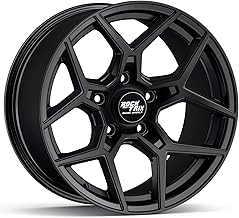
Here’s the complete comparison covering all eight options. These aren’t ranked 1-8 overall because that would be misleading — the “best” tire depends entirely on how you use your JK. Instead, each tire wins in a specific category based on real-world owner feedback.
| Tire Name | Category | Price | Weight | Load Range | Tread Depth | Warranty | Best For |
|---|---|---|---|---|---|---|---|
| BFGoodrich KO3 | Best Overall | $350-400 | 65 lbs | D/E | 15/32” | 50,000 mi | Balanced on/off-road daily driver |
| Nitto Trail Grappler | Best Off-Road | $380-420 | 70 lbs | E | 18.5/32” | 45,000 mi | Weekend wheelers, serious trails |
| Falken Wildpeak AT3W | Best Budget | $260-300 | 62 lbs | D/E | 15.5/32” | 55,000 mi | First 35” upgrade, moderate use |
| Nitto Ridge Grappler | Best Hybrid | $360-400 | 67 lbs | E | 16/32” | 50,000 mi | Aggressive looks, daily civility |
| Goodyear Wrangler MT/R Kevlar | Best Heavy-Duty | $400-450 | 75 lbs | E | 17/32” | 50,000 mi | Towing, overlanding, heavy loads |
| Toyo Open Country AT III | Best Winter | $340-380 | 64 lbs | D/E | 15/32” | 65,000 mi | Year-round snow belt driving |
| Cooper Discoverer AT3 XLT | Best Longevity | $300-340 | 63 lbs | D/E | 16/32” | 70,000 mi | High-mileage commuters |
| Falken Wildpeak AT Trail | Best Lightweight | $320-360 | 55 lbs | D | 13/32” | 55,000 mi | Performance-focused, minimize weight |
All prices are per tire, approximate, and exclude mounting/balancing. Weights and specs are for 35x12.50R17 size where available.
Best Overall 35-Inch Tire: BFGoodrich All-Terrain T/A KO3
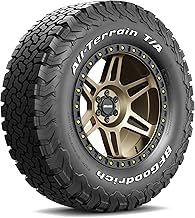
The KO3 earns the “best overall” designation because it delivers that rare balance — genuinely capable off-road while remaining civilized enough for daily highway driving. It’s the tire I see most often on JKs that serve dual duty: commuter vehicle Monday through Friday, trail rig on weekends.
Key specs: 35x12.50R17, available in Load Range D (lighter, softer ride) or Load Range E (stiffer, higher load capacity), 65 lbs in Load Range D, 15/32” tread depth, 50,000-mile treadwear warranty. BFG backs this tire aggressively — they know it’ll last.

BFGoodrich All Terrain T/A KO2 Radial Car Tire for Light Trucks, SUVs, and Crossovers, 35x12.50R17/E
$402.99
Check Price on Amazon →On-road performance is where the KO3 separates from pure mud-terrains. Road noise is noticeable but not intrusive — you’ll hear it if you’re used to passenger car tires, but it’s quieter than any M/T and comparable to other premium all-terrains. Wet traction on pavement is excellent thanks to deep siping across the tread blocks. Highway stability at 75+ MPH is solid with proper balancing. The tire tracks straight, doesn’t wander in grooves, and doesn’t transmit every pavement imperfection into the cabin.
Daily driving comfort is where the KO3’s compound tuning shows. The tire remains compliant over road imperfections without feeling vague or mushy. You can run these on a daily commute without counting down the days until you switch back to stockers.
Off-road capability is serious for an all-terrain. The KO3’s tread design features large, interlocking blocks that bite in loose terrain — mud, sand, gravel, forest service roads. The sidewall tread extends low for aired-down traction and cut protection. I’ve seen JK owners run these through everything from desert washes to Rocky Mountain passes to Eastern muddy trails with consistent praise.
Rock crawling isn’t where the KO3 dominates compared to dedicated mud-terrains — the tread blocks are slightly closer together, which means less bite on slick rock — but it’s competent. For technical rock trails where sidewall contact is likely, the Load Range E version adds puncture resistance worth considering.
Aired down to 15-18 PSI, the KO3 conforms to obstacles well and delivers noticeable traction improvements. The sidewall construction handles low-pressure use without excessive flex or feeling unstable.
Real-world JK owner feedback from forums is overwhelmingly positive. Common praise: balanced performance, predictable handling both on and off-road, wears evenly with proper rotation, quieter than expected. Common complaints: slightly less aggressive bite than dedicated M/Ts in deep mud, premium price point, some reports of faster wear if you drive aggressively on pavement or skip rotations.
Competitor comparison: The KO3 competes directly with the Goodyear Wrangler DuraTrac RT and the Toyo Open Country AT III. The KO3 is quieter on-road than the DuraTrac and slightly more aggressive off-road than the Toyo. All three are excellent — the KO3 wins for me because of BFG’s proven track record and stronger sidewall construction in Load Range E.
Who this tire is for: Daily drivers who trail on weekends. JK owners who want 35-inch capability without sacrificing highway manners. Anyone looking for proven reliability and consistent performance across all conditions. If you only have budget for one set of tires and need them to do everything reasonably well, the KO3 is the safe bet.
For more context on all-terrain tire options across sizes, see our best all-terrain tires guide.
Best Off-Road 35-Inch Tire: Nitto Trail Grappler M/T
If maximum off-road traction is your priority and you’re willing to accept on-road compromises, the Trail Grappler earns its reputation. It’s a true mud-terrain that delivers exceptional bite in the conditions where all-terrains struggle — deep mud, loose rock, steep climbs.
Key specs: 35x12.50R17, Load Range E (10-ply sidewall), 70 lbs, 18.5/32” tread depth (deeper than most competitors), 45,000-mile warranty. The deep tread and aggressive void ratio give this tire staying power even after significant wear.

BFGoodrich Mud Terrain T/A KM3 Radial Car Tire for Light Trucks, SUVs, and Crossovers, 35x12.50R17/E
$429.99
Check Price on Amazon →Off-road performance is where the Trail Grappler justifies its weight and price. The tread pattern features large, blocky lugs with massive voids between them — this design self-cleans in mud instead of packing up and skating. I’ve read dozens of forum threads from JK owners who specifically chose this tire after watching their buddies with less aggressive rubber struggle through the same mud holes.
Rock crawling grip is excellent. The tread blocks bite on slick sandstone and granite surfaces. The reinforced sidewall handles sidewall contact with sharp edges without puncturing. Aired down to 15-18 PSI, the Trail Grappler conforms to rock surfaces and delivers predictable traction.
Sand performance is solid — the tire floats well at 12-15 PSI and doesn’t dig as easily as some narrower mud-terrains. The reinforced shoulder adds confidence when you’re sideways on a sand dune.
On-road tradeoffs are real. Road noise is noticeable — it’s a mud-terrain, so there’s no hiding that aggressive tread pattern. At highway speeds, you’ll hear a low-frequency hum that’s louder than any all-terrain. It’s not unbearable, but it’s there. Some owners report the noise decreases slightly after the first few thousand miles as the tread blocks wear in.
Ride quality is firm, especially in Load Range E. The stiff sidewalls transmit more road texture into the cabin than an all-terrain would. Wet pavement traction is adequate but not impressive — the large tread voids mean less rubber contacts the road in rain. This isn’t a tire you’ll want to hustle through sweeping highway on-ramps in wet conditions.
Longevity and wear depend heavily on driving style and rotation schedule. Mud-terrain tires generally wear faster than all-terrains due to softer compounds and more aggressive tread blocks. The Trail Grappler does better than some M/Ts — owners report 40,000-50,000 miles with consistent rotations every 5,000 miles. Skip rotations or drive aggressively on pavement, and you’ll see 30,000 miles or less.
Compare to other popular M/T options: The Trail Grappler is quieter and more daily-drivable than the BFG KM3 but slightly less aggressive in the absolute worst mud. It’s more durable and better on-road than budget M/Ts like the Thunderer Trac Grip. It competes directly with the Goodyear MT/R Kevlar — both are excellent, with the Trail Grappler edging ahead slightly in longevity.
Who this tire is for: Weekend warriors who prioritize trail capability over on-road comfort. Dedicated trail rigs that see occasional highway miles to reach trailheads. Anyone who’s been stuck in mud or struggled on technical climbs with less aggressive tires. If your JK sees legitimate off-road use regularly and you can tolerate the on-road compromises, the Trail Grappler delivers.
For a broader comparison of mud-terrain options, check our mud-terrain tire guide.
Best Budget 35-Inch Tire: Falken Wildpeak AT3W
The Wildpeak AT3W delivers about 90% of premium all-terrain performance at roughly 60% of the cost. That value proposition makes it the smart choice for budget-conscious JK owners or anyone making their first jump to 35-inch tires without committing $2,000+ to premium rubber.
Key specs: 35x12.50R17, available in Load Range D or E, 62 lbs in Load Range D, 15.5/32” tread depth, 55,000-mile warranty. The warranty is competitive with much more expensive options — Falken stands behind this tire.
Real-world durability from JK owners is strong. I’ve read countless forum threads from owners who’ve put 40,000-50,000 miles on these tires with even wear and no major issues. The key: rotate every 5,000-6,000 miles religiously. Skip rotations and you’ll see uneven wear that kills any tire prematurely.
Performance on and off-road is solidly mid-pack. The Wildpeak AT3W handles daily driving with acceptable road noise and decent wet traction. It’s not as quiet as the BFG KO3, but it’s quieter than you’d expect given the aggressive tread pattern. Off-road, it delivers respectable traction in mud, sand, and rock — not at Trail Grappler levels, but competent enough for fire roads, forest trails, and moderate rock crawling.
The 3-peak mountain snowflake (3PMSF) rating means this tire meets standards for severe snow service. If you live in the snow belt and want year-round capability, the AT3W delivers better winter traction than most competitors at this price point.
Common concerns with budget tires like quality control and availability don’t plague the Wildpeak. Falken’s manufacturing quality is consistent. Availability is good — most tire shops stock them or can get them within a few days. Road hazard warranties are available through most retailers at reasonable cost.
Cost savings are significant. A set of five Wildpeak AT3Ws (including spare) runs roughly $1,300-1,500 mounted and balanced. Compare that to $1,750-2,000 for premium options like the KO3. For a first 35-inch tire upgrade where you’re already spending money on lift and wheels, that $400-500 savings matters.
Where the Wildpeak compromises vs premium options: tread depth is slightly shallower (15.5/32” vs 18.5/32” on the Trail Grappler), sidewall protection is adequate but not reinforced with Kevlar or extra plies, tread compound may wear slightly faster under aggressive driving. None of these compromises are deal-breakers for moderate use.
Who this tire is for: First-time 35-inch tire buyers who want to test the size before committing to premium rubber. Budget-conscious builders who drive more pavement than trails. Daily drivers who need decent off-road capability but don’t require maximum performance. Anyone building a JK on a tight budget who still wants legitimate quality.
The Wildpeak AT3W proves you don’t need to spend premium prices for solid all-around performance. For moderate use — daily driving with weekend trail trips — it’s hard to beat the value.
Best Hybrid/Rugged Terrain 35-Inch Tire: Nitto Ridge Grappler
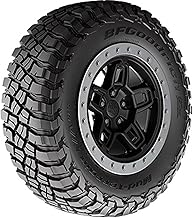
The Ridge Grappler occupies the sweet spot between all-terrain and mud-terrain — more aggressive than the KO3, quieter than the Trail Grappler. It’s the tire for daily-driven JKs where you want the aggressive look of a mud-terrain without accepting full M/T compromises.
Key specs: 35x12.50R17, Load Range E, 67 lbs, 16/32” tread depth, 50,000-mile warranty. The hybrid tread design features large shoulder blocks for off-road bite and smaller, tightly-spaced center blocks for on-road manners.
Why hybrid/rugged terrain tires exist: Many JK owners want 35-inch tires primarily for appearance — they want the aggressive stance and capability for occasional trail use, but they drive on pavement 80% of the time. Pure mud-terrains are overkill and uncomfortable for that use case. The hybrid category delivers.
On-road noise is the Ridge Grappler’s standout feature compared to traditional M/Ts. Nitto uses variable pitch tread blocks and sound-dampening technology to reduce road noise. The result: noticeably quieter than the Trail Grappler or BFG KM3, nearly matching premium all-terrains. You can have a conversation at highway speeds without raising your voice.
Ride quality is firm but not harsh. The Load Range E construction means stiffer sidewalls than Load Range D alternatives, but the tire doesn’t beat you up over pavement imperfections. Wet traction is good — better than traditional M/Ts, slightly behind dedicated all-terrains.
Off-road performance is legitimately capable. The shoulder lugs bite in mud and loose terrain. The reinforced sidewall handles aired-down rock crawling. It’s not at Trail Grappler levels in the absolute worst mud, but it’s far more capable than you’d expect from something this civilized on-road.
Real-world JK owner feedback consistently mentions the balance. Owners praise the aggressive appearance — the Ridge Grappler looks like a mud-terrain from 10 feet away. They appreciate the on-road manners that let them daily drive without fatigue. Common complaints: premium price point (it costs as much as the KO3), Load Range E is the only option in most sizes (no Load Range D for softer ride), and availability can be spotty at smaller tire shops.
Compare to other hybrid options: The Ridge Grappler competes with the Toyo Open Country RT and the Goodyear Wrangler DuraTrac RT. All three are excellent. The Ridge Grappler is slightly quieter on-road than the DuraTrac and slightly more aggressive off-road than the Toyo. Pick based on availability and price — you can’t go wrong with any of them.
Who this tire is for: Daily drivers who want the aggressive look of mud-terrains without the noise penalty. JK owners who drive 70-80% pavement but want legitimate off-road capability for the other 20%. Anyone who’s been burned by loud M/Ts in the past and wants a second chance at aggressive styling.
If you’ve hesitated to run mud-terrains because of noise concerns, the Ridge Grappler is worth serious consideration.
Best Heavy-Duty 35-Inch Tire: Goodyear Wrangler MT/R Kevlar

Load Range E construction with Kevlar-reinforced sidewalls makes the MT/R Kevlar the choice for JK owners who tow, carry heavy roof racks, or rock crawl where sidewall damage is likely. It’s built for abuse — and priced accordingly.
Key specs: 35x12.50R17, Load Range E (10-ply), 75 lbs (heaviest tire in this comparison), 17/32” tread depth, 50,000-mile warranty. The Kevlar reinforcement adds weight but dramatically improves puncture resistance.
Load Range E construction explained: The 10-ply sidewall rating means this tire can handle significantly higher air pressures and loads than Load Range D alternatives. Maximum load capacity at 80 PSI is over 4,000 lbs per tire. For JK owners, this matters if you’re towing a trailer, carrying 300+ lbs of gear on the roof, or running heavy bumpers and armor.
The stiffer sidewalls also resist flexing under heavy loads — your JK will track straighter and feel more stable when loaded compared to running Load Range D tires at max capacity.
Sidewall durability is where Kevlar reinforcement shines. Sharp rock impacts that would slice through a standard tire’s sidewall often bounce off the MT/R Kevlar. I’ve read multiple accounts from JK owners who’ve hit sharp obstacles hard enough to expect a flat, only to find minor scuffing on the sidewall with no air loss.
This durability comes at a cost: the tire is heavy (75 lbs vs 62-65 lbs for Load Range D alternatives) and rides firmly even at appropriate pressures.
Off-road performance is aggressive. The tread pattern features large, widely-spaced lugs that clear mud and bite in loose terrain. The reinforced sidewall handles aired-down pressures for rock crawling without excessive sidewall roll or instability. Sand performance is solid once you air down to 12-15 PSI.
On-road ride quality is the tradeoff. The stiff sidewalls transmit more harshness from pavement irregularities. Road noise is noticeable — this is a mud-terrain, and the aggressive tread makes its presence known at highway speeds. Optimal on-road tire pressure for Load Range E is typically 35-38 PSI for daily driving (higher than Load Range D’s 32-35 PSI).
Who this tire is for: Towing — if you regularly pull a trailer with your JK, Load Range E capacity is worth the ride quality penalty. Overlanding — heavy roof racks, full armor, dual spare tires, and weeks of gear push JK weight toward GVWR limits. Rock crawlers — sidewall impacts are inevitable, and the Kevlar reinforcement could save you from a trailside tire change in a remote location.
If your JK is lightly modified and sees mostly trail driving without heavy loads, you’ll be happier with a Load Range D tire. But if you push your JK hard or load it heavy, the MT/R Kevlar’s extra capability justifies the cost and weight.
For related modifications when running heavy tires and loads, see our brake upgrade guide.
Best Winter 35-Inch Tire: Toyo Open Country AT III
The AT III earns the winter crown by delivering legitimate 3-peak mountain snowflake (3PMSF) certification while maintaining year-round capability. It’s the tire for JK owners in the snow belt who refuse to swap to dedicated winter rubber but still want safe traction in serious winter conditions.
Key specs: 35x12.50R17, available in Load Range D or E, 64 lbs in Load Range D, 15/32” tread depth, 65,000-mile warranty (one of the highest in this comparison). The 3PMSF certification means this tire has been tested and certified for severe snow service — it’s not just marketing.
Siping pattern is what separates winter-capable all-terrains from standard A/Ts. The AT III features dense siping across all tread blocks — hundreds of tiny slits that open and close as the tire rolls, creating biting edges on ice and packed snow. The siping density is significantly higher than the KO3 or Ridge Grappler.
Performance in winter conditions is genuinely impressive for an all-terrain. JK owners in Colorado, Utah, and the Northeast report confident traction on snow-covered highways, icy morning commutes, and steep snow-covered forest service roads. The tire bites in loose snow and provides predictable braking on ice — not at dedicated winter tire levels, but far better than standard all-terrains.
Sub-zero temperatures don’t harden the tread compound excessively. Some all-terrains lose pliability in extreme cold and skate on ice — the AT III maintains grip down to -20°F and below.
The tire is studdable for extreme ice conditions. If you live somewhere that allows studded tires and face serious ice regularly, adding studs transforms winter traction.
Warm-weather performance remains solid. Unlike dedicated winter tires that wear rapidly in warm conditions, the AT III handles summer heat without excessive wear or tread squirm. Road noise is moderate — quieter than mud-terrains, similar to other premium all-terrains. Off-road capability in mud, rock, and sand is competent, though not at Trail Grappler levels.
Real-world JK owner feedback from snow belt states consistently praises winter traction. Common praise: confidence in snow, predictable ice braking, year-round usability, long tread life (many owners report 50,000-60,000+ miles). Common complaints: premium price, slightly less aggressive off-road than dedicated M/Ts, Load Range E versions ride firmly.
Who this tire is for: Year-round JK drivers in snow belt states — Colorado, Utah, Wyoming, Montana, upper Midwest, Northeast. Anyone who commutes in winter conditions and wants safe traction without swapping to dedicated winter tires. Ski resort access and mountain pass drivers who face unpredictable winter weather.
If you live somewhere that sees significant winter weather and you’re tired of sketchy traction on standard all-terrains, the AT III delivers peace of mind.
Best for Longevity: Cooper Discoverer AT3 XLT
The AT3 XLT’s 70,000-mile treadwear warranty is the highest in this comparison — and real-world owner reports back up that claim. It’s the tire for high-mileage commuters who want to maximize their tire investment.
Key specs: 35x12.50R17, available in Load Range D or E, 63 lbs in Load Range D, 16/32” tread depth, 70,000-mile warranty. Cooper backs this warranty aggressively with pro-rated replacement for early wear.
Tread compound and construction features that promote even wear: silica-reinforced rubber compound that resists chunking and irregular wear, stone ejector ribs in the tread grooves to prevent embedded rocks from drilling into the casing, and optimized void ratio that balances on-road wear with off-road traction.
Real-world mileage reports from JK forum members consistently show 50,000-65,000+ miles with proper maintenance. The key word is “proper” — rotating every 5,000 miles and maintaining correct alignment. Skip rotations or drive with toe misalignment, and any tire will wear prematurely.
Several owners report exceeding the 70,000-mile warranty, with one thread documenting 78,000 miles on a set before replacing due to age (tires should be replaced at 10 years regardless of tread depth).
On-road performance is where the AT3 XLT shines. Road noise is low for an aggressive all-terrain — comparable to the KO3 and quieter than most competitors. Wet traction is excellent thanks to deep siping. Highway stability and tracking are confidence-inspiring even at 75+ MPH.
Off-road capability is solid for an all-terrain — mud, sand, gravel, and forest roads are no problem. It’s not a mud-terrain, so deep mud and serious rock crawling aren’t where it excels, but for fire roads and moderate trails it delivers.
Cost-per-mile calculation shows the value proposition. At $300-340 per tire and 65,000 miles average lifespan, you’re paying roughly $0.026 per mile per tire, or $0.13 per mile for all five tires. Compare that to a 40,000-mile tire at $400 each: $0.05 per mile per tire, or $0.25 per mile for five. Over the life of ownership, choosing the high-mileage tire saves hundreds of dollars.
Rotation requirements to achieve maximum mileage: every 5,000 miles without exception. This includes the spare in the rotation pattern. Skipping rotations or excluding the spare from rotation will kill tread life and void warranty claims.
Who this tire is for: High-mileage daily commuters putting 15,000+ miles per year on their JK. Long-distance road-trippers who want reliable performance across thousands of highway miles. Budget-conscious owners who want to minimize long-term tire costs. Anyone prioritizing tire life over maximum off-road aggression.
For context on maintenance schedules that complement high-mileage tire use, see our oil change intervals guide.
Best Lightweight 35-Inch Tire: Falken Wildpeak AT Trail

At 55 lbs, the AT Trail is 10-20 pounds lighter per tire than typical 35-inch options. That weight difference affects daily driving feel, acceleration, fuel economy, and suspension wear — noticeable improvements if you’re coming from heavier rubber.
Key specs: 35x12.50R17, Load Range D only, 55 lbs (lightest in this comparison), 13/32” tread depth (shallower than competitors), 55,000-mile warranty. The lighter weight comes from thinner tread depth and less aggressive sidewall construction.
Weight impact on JK performance: Every pound of rotating mass at the wheel has a multiplied effect on acceleration, braking, and suspension response compared to static weight. Reducing 15-20 lbs per corner (60-80 lbs total unsprung weight) delivers noticeable improvements.
Acceleration feels more responsive, especially with the 3.8L engine or if you’re running stock gearing. Braking distances shorten slightly due to less rotational inertia. Suspension components experience less wear over time — ball joints, wheel bearings, and shocks last longer when they’re not constantly fighting heavy wheels and tires.
Fuel economy improvement is real but modest. Expect 0.5-1 MPG improvement over heavier 35-inch tires. It’s not dramatic, but over 15,000 miles per year, that’s 30-60 gallons of fuel saved.
On-road performance is excellent — the AT Trail feels closer to stock tire handling than any other 35-inch option. Ride quality is compliant, road noise is minimal, wet traction is solid. Daily driving with the AT Trail doesn’t feel like a compromise.
Off-road performance tradeoffs are where lighter weight shows. The shallower tread depth (13/32” vs 15-18/32” on competitors) means less bite in deep mud and less tread life overall. The lighter sidewall construction is adequate for moderate trail use but not as puncture-resistant as Load Range E alternatives.
This tire is designed for the 80/20 use case — 80% on-road, 20% moderate trails. If your JK sees serious rock crawling or extreme terrain regularly, choose a heavier-duty option.
Who this tire is for: Performance-focused JK owners who want to minimize the weight penalty of moving to 35s. Daily drivers concerned about maintaining acceleration and fuel economy. Anyone running a 3.8L engine on stock gearing who wants to reduce drivetrain strain. JK owners with lower mileage examples who want to minimize suspension wear.
If you’re worried about how 35-inch tires will affect your JK’s daily drivability — especially if you’re coming from a best year JK with lower mileage — the lightweight AT Trail is the least-compromising option.
For more context on how different JK model years handle modifications like 35-inch tires, see our model year differences breakdown.
35-Inch Tire Installation: What to Expect
Installing 35-inch tires isn’t as simple as mounting them and driving off. The process requires multiple steps, some of which add significant cost and time. Here’s what to budget for and expect.
Start with suspension first. You can’t properly assess tire fitment without the lift installed. Most JK owners go with 2.5-3.5 inches of lift depending on trim — Rubicons can sometimes run 2.5”, while Sport and Sahara models typically need 3-3.5”. Budget $800-2,000 for a complete lift kit with shocks, depending on quality and whether you DIY or pay for installation.
Wheels come next. Stock JK wheels won’t work with 35s due to backspacing issues. You need aftermarket wheels with 3.75-4.5 inches of backspacing. When selecting wheels, popular options include the RockTrix RT109 17 inch Wheel with positive offset for outward positioning, the RockTrix RT110 17 inch Wheel with negative offset for a deeper look, and the RockTrix RT105 17 inch Wheel for versatile fitment. Budget $800-1,500 for a set of five wheels depending on brand and finish. For the technical details on choosing correct wheel specs, see our wheel backspacing and offset guide.

RockTrix RT109 17 inch Wheel Compatible with Jeep Wrangler JK JL 17x9 5x5 Wheels (+12mm Offset, 5.5i
$178.29
Check Price on Amazon →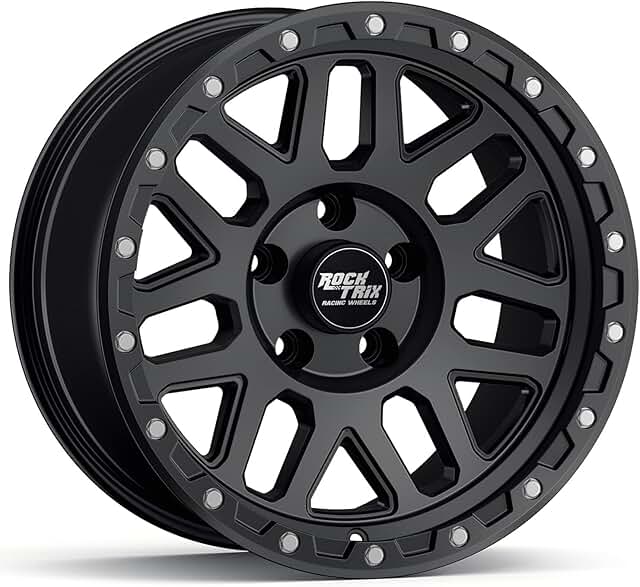
RockTrix RT110 17 inch Wheel Compatible with Jeep Wrangler JK JL 17x9 5x5 Wheels (-12mm Offset, 4.5i
$211.29
Check Price on Amazon →
RockTrix RT105 17 inch Wheel Compatible with Jeep Wrangler JK JL 17x9 5x5 Wheels (-12mm Offset, 4.5i
$224.39
Check Price on Amazon →Fender modifications depend on your specific setup. Some combinations clear without cutting — a well-lifted Rubicon with proper wheels can often run 35s with only minor trimming of inner fender liner. Sport and Sahara models usually need more aggressive work: flat fender flares ($400-800), or DIY cutting and heat-forming of stock fenders (free but requires skill and nerve).
You won’t know exactly where you’ll rub until you cycle the suspension fully at full steering lock. The smart approach: install everything, drive it, identify contact points, then modify as needed. Many JK owners end up doing fender work in phases as they discover exactly where contact happens.
Speedometer recalibration is mandatory unless you enjoy inaccurate speed readings and incorrect odometer mileage. Options include a Tazer JL Mini ($150), Superchips Flashpaq ($300-400), or dealer programming ($100-150 per visit). Some programmers also unlock other features like adjusting shift points, disabling ESP nanny controls, or changing DRL behavior.
Regearing timeline and costs: If you’re regearing, do it after running the tires for a few weeks so you know exactly what gear ratio you want. Going too aggressive (4.88 vs 4.56) makes highway RPMs higher than necessary and costs fuel economy. Too conservative (staying at 3.73) leaves you wanting more power. Most 3.8L JK owners with 35s land at 4.56 or 4.88 ratios. Most 3.6L owners with 35s either stay stock for daily driving or go 4.56 for maximum versatility.
Regearing both axles costs $1,500-2,500 depending on shop labor rates and whether you’re upgrading differentials at the same time (adding lockers, for example).
Break-in period matters. New 35-inch tires need 500-1,000 miles to fully break in — the tread blocks wear slightly, releasing mold compound and settling into their final shape. The suspension also needs time to settle, typically dropping 0.25-0.5 inches from initial install height over the first month. Plan for an alignment after 500 miles to account for this settling.
Rough cost breakdown for the complete upgrade:
- Tires (5): $1,500-2,000
- Wheels (5): $800-1,500
- Lift kit: $800-2,000
- Installation (tires, wheels, lift): $500-800
- Alignment: $100-150
- Speedometer recalibration: $150-400
- Fender modifications: $0-800
- Optional regearing: $1,500-2,500
Total: $5,350-10,150 depending on choices and whether you DIY portions.
What rubbing sounds like and where to check: Rubbing produces a scraping or grinding sound at full steering lock, during suspension compression (hitting bumps), or during articulation off-road. Common contact points include upper control arm brackets hitting the tire at full lock, inner fender liner contacting the tire during compression, and front bumper or fender edge rubbing at full turn.
After installation, test by turning the wheels full lock left and right while stationary, then driving over speed bumps slowly while turned. Listen and feel for any contact. If you detect rubbing, mark the contact point with chalk and address it before wheeling hard.
First tank of gas expectations: Your fuel economy will drop noticeably — expect 2-4 MPG worse than stock, possibly more if you’re running the 3.8L on stock gears. The first tank is typically the worst as the drivetrain adapts to the new load and the tires break in. Fuel economy may improve slightly after 1,000 miles but won’t return to stock levels.
Installing 35-inch tires is a multi-step, multi-thousand-dollar commitment. Budget realistically and phase the upgrades if necessary — but don’t cut corners on critical components like lift quality or wheel backspacing.
Maintaining 35-Inch Tires on Your JK
Bigger tires require more aggressive maintenance than stock rubber. Skip these steps and you’ll pay for it in shortened tire life, uneven wear, and potentially dangerous handling issues.
Rotation schedule is non-negotiable: Every 5,000-6,000 miles, no exceptions. Larger tires wear faster and more unevenly than stockers, especially on a modified JK with aftermarket suspension geometry. Include the spare in the rotation pattern — five-tire rotation extends life by 20% compared to four-tire rotation.
The correct rotation pattern for JK with non-directional tires: rearward cross (front left to rear right, front right to rear left, rear left to front left, rear right to front right, spare into rotation). For directional tires, side-to-side isn’t possible — use front-to-rear rotation and pay close attention to wear patterns.
Tire pressure monitoring becomes critical. On-road, run 32-36 PSI depending on load range and vehicle weight. Load Range D tires typically run 32-34 PSI for daily driving. Load Range E needs 35-38 PSI due to stiffer sidewalls. Under-inflation causes excessive sidewall flex, overheating, and premature wear. Over-inflation creates a harsh ride and causes center tread wear.
Off-road, airing down to 15-20 PSI transforms traction and ride quality on trails. Lower pressures increase the tire’s contact patch, improve grip, and allow the tire to conform to obstacles. But you MUST reinflate to proper street pressures before hitting pavement — running aired-down on the highway destroys tires within miles.
Invest in a quality tire pressure gauge (digital, accurate to 0.5 PSI) and a portable air compressor. Budget $200-400 for a good onboard compressor that can refill four 35-inch tires from 15 PSI to 35 PSI in under 15 minutes. If you need to transport a full-size spare with your 35-inch tires, a Heavy Duty Spare Tire Carrier rated for up to 40 inches ensures safe mounting and visibility.

Heavy Duty Spare Tire Carrier Up to 40 inches Spare Wheel Compatible with 2007-2018 Jeep Wrangler JK
$80.75
Check Price on Amazon →TPMS (Tire Pressure Monitoring System) sensors will need recalibration after tire installation. Some JKs throw TPMS warning lights with aftermarket wheels — you can either install new sensors ($200-300 for five) or live with the warning light if you’re diligent about manual pressure checks.
Alignment frequency increases with 35-inch tires. Schedule alignment every 10,000 miles or after any hard off-road use where you’ve hit obstacles or cycled the suspension aggressively. Misalignment causes rapid, uneven tire wear — especially toe misalignment, which can kill a set of tires in 15,000 miles.
After installing 35s and lift, get a professional alignment that sets caster, camber, and toe within spec. If your shop can’t align your lifted JK properly, find a different shop — proper alignment is critical for tire life and handling safety.
Wear pattern monitoring: Inspect tires every oil change for unusual wear. Center wear indicates over-inflation. Edge wear indicates under-inflation. Feathering (saw-tooth pattern on tread blocks) indicates toe misalignment. Cupping (scalloped dips) indicates worn shocks or improper balancing.
Catch wear issues early and you can correct them. Ignore them and you’ll replace tires prematurely.
Balancing matters more with 35-inch tires. The larger diameter and increased weight amplify any imbalance. If you experience vibration at highway speeds, get the tires road-force balanced — this measures lateral and radial force variations that standard spin balancing misses. Budget $150-200 for road-force balancing all five wheels.
Some mud-terrains require rebalancing after 10,000-15,000 miles as tread blocks wear and weight distribution changes.
Suspension component wear increases. 35-inch tires put more stress on ball joints, tie rod ends, control arm bushings, and wheel bearings than stock tires. Inspect these components during every tire rotation. Replace worn parts immediately — a failed ball joint with 35-inch tires is dangerous.
Replacement timing: Replace tires when tread depth reaches 4/32” (measured at the shallowest point). Some all-terrains remain usable down to 3/32” in dry conditions, but wet and snow traction drop off sharply below 4/32”.
Also replace tires at 10 years old regardless of tread depth. Rubber degrades over time from UV exposure, ozone, and temperature cycling. The manufacturing date is stamped on the sidewall as a four-digit code (week and year).
Maintaining 35-inch tires costs more time and money than stock tires, but it’s the price of increased capability. Stay on top of rotations, pressure checks, and alignment, and you’ll get full life from your investment.
Frequently Asked Questions

Can I fit 35s on a stock JK?
No. You’ll need a minimum 2.5-inch lift on a Rubicon model, and 3-3.5 inches on Sport or Sahara trims. Even with a lift, you’ll likely need wheels with 3.75-4.5 inches of backspacing and possibly fender modifications. Attempting to run 35s on a stock JK results in rubbing at full steering lock, suspension compression, and articulation. The contact damages tires and fender liners quickly. Proper fitment requires suspension lift, correct wheels, and often trimming. For the technical details on wheel requirements, see our wheel backspacing and offset guide.
Do I need to regear with 35-inch tires?
It depends on your engine and how you use the JK. The 3.8L engine (2007-2011) struggles with 35-inch tires on stock gearing — you’ll experience sluggish acceleration, transmission hunting for gears, and increased engine strain. Regearing to 4.56 or 4.88 ratios restores performance and is strongly recommended. The 3.6L Pentastar (2012-2018) handles 35s on stock gearing for daily driving and light trails, but serious wheelers or those who tow should still regear. Expect to spend $1,500-2,500 for professional regearing of both axles.
Will 35s fit on stock JK wheels?
Technically yes — the bolt pattern matches — but practically no. Stock JK wheels have approximately 6.25 inches of backspacing, which positions 35-inch tires too far inboard. You’ll experience rubbing against the inner fender at full steering lock and during suspension compression. Aftermarket wheels with 3.75-4.5 inches of backspacing push the tire outward, providing necessary clearance. Using stock wheels with 35-inch tires also increases scrub radius, which negatively affects steering feel and increases wear on steering components.
How much does fuel economy drop with 35s?
Expect a 2-4 MPG decrease compared to stock tires, with the exact amount depending on several factors: engine type (3.8L loses more than 3.6L), tire weight (heavier options cost more MPG), tread aggressiveness (mud-terrains worse than all-terrains), gearing (stock gears see larger drops), and driving style (highway driving affected more than city). The 3.8L engine on stock gears with heavy 35s can see 4-5 MPG drops. The 3.6L with lighter all-terrains and regearing might see only 2 MPG loss. Budget accordingly — over 15,000 miles annually, a 3 MPG drop costs roughly $300-400 extra in fuel.
What’s the best tire pressure for 35s on-road and off-road?
On-road: 32-36 PSI depending on load range and vehicle weight. Load Range D tires typically run 32-34 PSI for optimal ride quality and wear. Load Range E requires 35-38 PSI due to stiffer sidewall construction. Check the tire sidewall for maximum pressure ratings and start at the lower end, adjusting up if you carry heavy loads. Off-road: 15-20 PSI for trails, sand, and rock crawling. Lower pressures increase the contact patch and improve traction dramatically. Some extreme terrain benefits from 12-15 PSI, but be cautious of bead separation below 12 PSI. Always reinflate to proper street pressure before driving on pavement — running low pressure at highway speeds generates excessive heat and can cause catastrophic tire failure.
Do 35-inch tires require bigger brakes?
Not required but strongly recommended for most owners. 35-inch tires add 60-100 lbs of rotating mass compared to stock rubber, increasing stopping distance and brake fade during aggressive driving or repeated trail braking. Stock JK brakes are adequate for normal daily driving with 35s, but they’re marginal for hard use. If you tow, drive aggressively, or descend steep trails frequently, upgrade to larger rotors and performance brake pads. Budget $1,000-1,500 for a quality brake upgrade. For detailed brake upgrade options and recommendations, see our brake upgrade guide.
Can I run 35s without a lift if I remove fenders?
Technically possible but not recommended. Removing fenders (or installing high-clearance flat fenders) increases static clearance at full lock, but it doesn’t address clearance during suspension compression and articulation. On trails, your suspension will cycle through full travel, causing tires to contact the body, frame, or control arms. This creates unsafe driving conditions and damages components. Proper suspension lift provides clearance in all suspension positions — full droop, full compression, and everywhere between. If you’re going to the effort and cost of 35-inch tires, do the supporting modifications correctly.
What’s the difference between load range D and E?
Load Range D: 8-ply sidewall construction, lighter weight (typically 62-67 lbs for 35x12.50R17), softer ride quality, maximum air pressure around 50-65 PSI, sufficient load capacity for daily-driven JKs with moderate modifications. Best for owners prioritizing ride comfort and daily drivability. Load Range E: 10-ply sidewall construction, heavier (68-75 lbs), firmer ride, maximum air pressure around 80 PSI, higher load capacity (4,000+ lbs per tire), superior sidewall puncture resistance. Required for towing, heavy overlanding setups, rock crawling where sidewall impacts are common. Choose E if you carry heavy loads or need maximum durability. Choose D if your JK is lightly modified and sees mostly moderate use.
How long do 35-inch tires last?
Expected lifespan varies widely: 40,000-70,000 miles depending on tire model, driving style, maintenance, and use case. All-terrain tires with high-mileage warranties (like Cooper AT3 XLT at 70,000 miles) can exceed expectations with proper care. Aggressive mud-terrains typically wear faster — 35,000-50,000 miles is common. Key factors affecting lifespan: rotation schedule (every 5,000 miles extends life significantly), alignment (toe misalignment destroys tires quickly), tire pressure (under-inflation causes edge wear, over-inflation causes center wear), driving surface (pavement wears faster than dirt), and driving style (aggressive acceleration and braking shortens life). To maximize tire life, rotate religiously, maintain proper pressure, align regularly, and avoid burnouts.
Are 35x12.50R17 and LT315/70R17 the same size?
Very close but not identical. 35x12.50R17 is flotation sizing (diameter × width R wheel diameter): approximately 35 inches tall, 12.5 inches wide. LT315/70R17 is metric sizing: 315mm section width, 70% aspect ratio (sidewall height as percentage of width), 17-inch wheel. When calculated, LT315/70R17 measures approximately 34.4 inches tall and 12.4 inches wide — slightly smaller than 35x12.50R17. In practice, the difference is minimal. Most mounting and fitment advice applies to both sizes. Tire manufacturers sometimes list both sizing conventions for the same tire. Check actual measured diameter and width rather than relying solely on size designation.
For more context on common JK issues that can be affected by larger tires like death wobble and steering wear, see our common JK problems guide.
Final Thoughts: Choosing the Right 35-Inch Tire for Your JK
Stepping up to 35-inch tires transforms your JK’s capability without crossing into “built rig” territory. It’s the sweet spot — meaningful gains in clearance and traction without requiring major drivetrain modifications or accepting unlivable daily driving compromises.
The right tire depends entirely on how you use your Jeep. Daily driver who trails on weekends? The BFGoodrich KO3 or Nitto Ridge Grappler deliver the best balance. Serious weekend wheeler? The Nitto Trail Grappler or Goodyear MT/R Kevlar provide maximum off-road bite. Budget-conscious first-timer? The Falken Wildpeak AT3W proves you don’t need premium prices for solid performance. High-mileage commuter? The Cooper AT3 XLT stretches your investment across 60,000+ miles.
Every tire has a specific purpose — there’s no universal “best” tire, only the best tire for your driving style and priorities.
Get the Free JK Build Planner
Complete PDF with mod checklists, gear ratios, tire sizing charts, and budget worksheets. Everything you need to plan your JK build.
No spam. Unsubscribe anytime. By subscribing, you agree to our Privacy Policy.
Jeep JK Guide
We're JK owners who've been building, breaking, and fixing Wranglers for years. Everything here is tested on our own rigs - no sponsored fluff, just honest recommendations.
Learn more about us →Get the JK Build Planner
Free PDF with complete build checklists, gear ratios, and tire fitment guides.
By subscribing, you agree to our Privacy Policy.
Related Articles
Best 37 Inch Tires for Jeep JK: Heavy-Duty Off-Road Options
Best 37 tires for Jeep JK balance rock traction and durability. Compare top options, required mods, and real costs for running 37s on your Wrangler.
Best Gear Ratio for 37 Inch Tires on Jeep JK: Complete Regearing Guide
Running 37s on your JK? Choose 5.13 gears for 3.6L engines or 5.38 for 3.8L and heavy builds. Complete regearing guide with real-world cost breakdown.
Best Gear Ratio for 35 Inch Tires on Jeep JK Manual: Expert Guide
4.56 gears are ideal for manual JK on 35s—balances highway rpm, acceleration, and torque. Learn why stock 3.73 fails and when to choose 4.88 instead.