Jeep JK Maintenance Schedule PDF: Complete Service Guide (All Years)
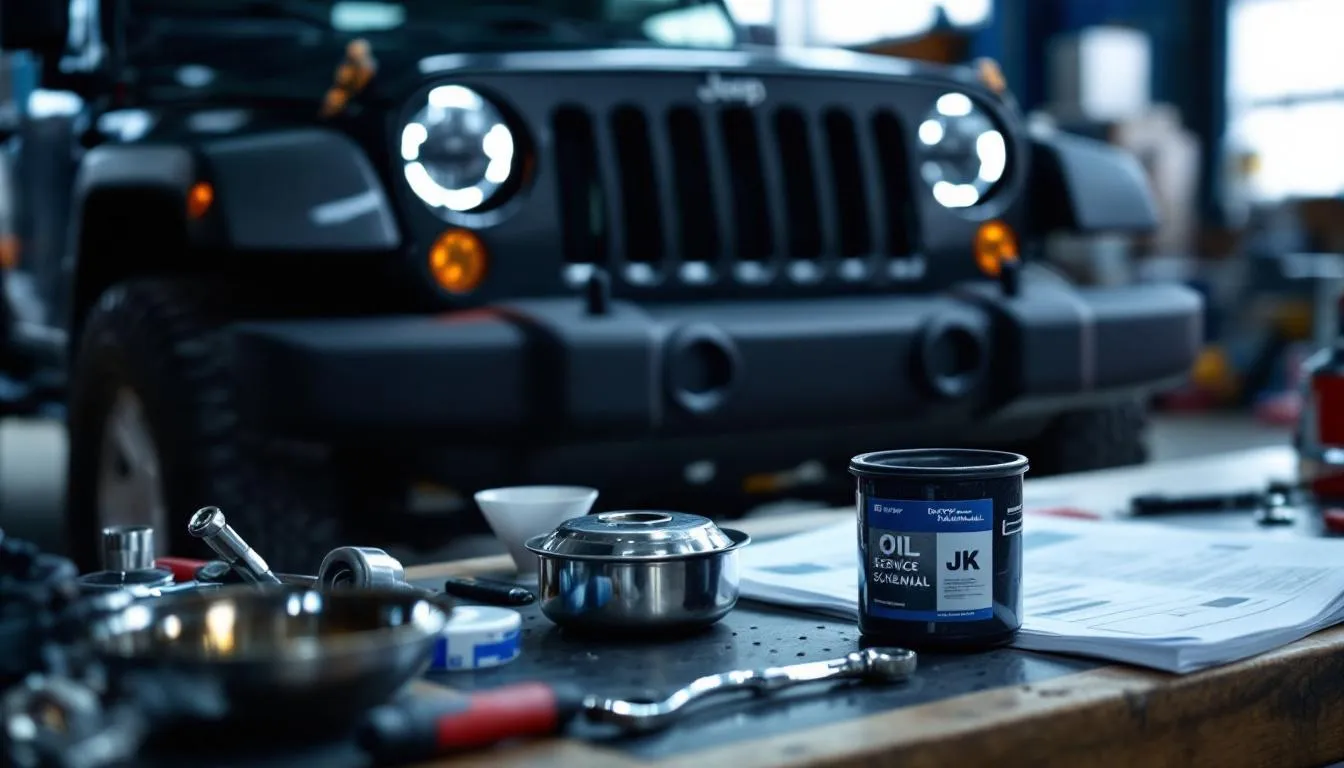
The Jeep JK maintenance schedule varies by driving conditions: severe duty (most JK owners) requires oil changes every 3,000-4,000 miles, differential service every 15,000 miles, and transfer case service every 30,000 miles. Normal duty intervals are longer but apply to very few JK owners. Use 5W-20 synthetic oil, 75W-90 gear oil for diffs, and ATF+4 for the transfer case and automatic transmission.
Here’s the reality: if you off-road, tow, drive short trips, or sit in traffic regularly, you’re severe duty. That’s not Jeep being pessimistic — it’s physics. Your fluids work harder, components heat up more, and contaminants build up faster.
I learned this the hard way starting from zero mechanical experience. My first oil change seemed simple until I overtightened the drain plug and spent an hour fixing what should’ve been a 20-minute job. Torque specs exist for a reason. Since then, I’ve kept a repair journal tracking every service — what I did, what parts I used, what I’d do differently next time. That journal became the foundation for this guide.
This article is your comprehensive jeep jk maintenance schedule reference for all 2007-2018 Wranglers. You’ll get exact service intervals for both engine generations (3.8L and 3.6L), fluid specifications with part numbers, torque specs, and the tools that make DIY maintenance actually manageable. No upselling. No dealer nonsense. Just the schedule your JK needs to run for 200,000+ miles.
Whether you bought your JK new or picked up a used one with questionable service history, following this schedule is the single biggest factor in long-term reliability. Let’s break it down.
Normal vs Severe Duty Maintenance: Which Schedule Do You Need?
Jeep’s owner’s manual lists two maintenance schedules: “normal duty” and “severe duty.” Most JK owners glance at the normal schedule, see intervals like “oil changes every 8,000 miles,” and assume that applies to them. Wrong.
Jeep defines severe duty as any vehicle that regularly experiences:
- Short trips under 10 miles (especially in freezing weather)
- Frequent off-roading or operation on rough, dusty, or muddy roads
- Towing a trailer or using a camper/car-top carrier
- Extended idling or stop-and-go traffic
- Operating in temperatures consistently above 90°F or below 0°F
- Driving in dusty or sandy conditions
Read that list again. If you do ANY of those things regularly, you’re severe duty. That covers most Jeep owners — daily commuters in traffic, weekend trail riders, occasional towers, anyone in the Southwest or deep South. The normal duty schedule assumes ideal conditions that almost nobody experiences: long highway cruises at steady speeds in moderate climates with no payload.
The severe duty jeep wrangler jk maintenance schedule cuts most intervals by 30-50%. Oil changes drop from 8,000 to 3,000-4,000 miles. Differential service goes from 30,000 to 15,000 miles. Transfer case fluid drops from 60,000 to 30,000 miles. These aren’t suggestions — they’re what your JK needs to survive real-world use.
There’s one more variable: engine generation. The 2007-2011 3.8L V6 and 2012-2018 3.6L Pentastar have slightly different service intervals. The 3.8L needs more frequent oil changes due to known oil consumption issues. The 3.6L allows longer spark plug intervals thanks to better ignition components. We’ll note these differences as they come up. Check the JK model year differences guide to see how maintenance varies across generations.
Simple decision tree: If you off-road, tow, drive short trips, sit in traffic, or live in extreme climates, use the severe duty schedule. That’s the default assumption for the rest of this guide.
JK Maintenance Schedule Overview: Key Service Intervals at a Glance
Here’s your quick-reference jeep jk maintenance schedule with major service intervals. This assumes severe duty — which, again, applies to most owners.
| Service Task | Severe Duty Interval | Normal Duty Interval | Notes |
|---|---|---|---|
| Engine oil & filter | 3,000-4,000 miles / 6 months | 8,000 miles / 12 months | 3.8L: stick to 3,000 miles |
| Tire rotation | 6,000-8,000 miles | 10,000 miles | 5-tire rotation pattern |
| Air filter (engine) | Inspect 10k, replace 20-30k miles | Replace every 30,000 miles | Sooner if dusty conditions |
| Cabin air filter | 15,000-20,000 miles / annually | 20,000 miles | Often overlooked |
| Differential service (front & rear) | 15,000 miles | 30,000 miles | More often if water crossings |
| Transfer case fluid | 30,000 miles | 60,000 miles | NV241 = ATF+4, NV241OR = 75W-140 |
| Transmission fluid | 60,000 miles | 120,000 miles (manual) / “lifetime” (auto) | Change auto at 60k regardless |
| Coolant flush | 10 years / 150,000 miles | 10 years / 150,000 miles | HOAT-spec coolant only |
| Brake fluid | 2 years / 24,000 miles | 3 years / 36,000 miles | Absorbs moisture over time |
| Spark plugs | 30,000 miles (3.8L), 100,000 miles (3.6L) | Same | 3.8L more prone to fouling |
The mileage-OR-time rule matters. Even if you only drive 2,000 miles per year, oil still degrades from heat cycling and moisture contamination. Change it every 6-12 months minimum.
The biggest mistake JK owners make? Treating the normal duty schedule as gospel because it’s cheaper and easier. Then they wonder why their Dana 30 front axle grenades at 80,000 miles or their 3.8L burns a quart of oil every 500 miles. Your JK will run 200,000+ miles if you follow this schedule. It won’t if you don’t.
Oil Changes: Intervals, Specs & Best Practices
Oil changes are your most frequent maintenance task — and the most important. Here’s how to do them right.
Intervals:
- Severe duty: 3,000-4,000 miles or 6 months
- Normal duty: 8,000 miles or 12 months
Most JK owners should stick with the 3,000-4,000 mile interval. The 3.8L engine (2007-2011) especially benefits from frequent changes due to known oil consumption issues — these motors can burn a quart between changes if you’re not careful. The 3.6L Pentastar (2012-2018) is more reliable but still works hard under severe duty conditions. For detailed guidance on this critical service, check out the JK oil change interval guide.
Specifications:
- Oil: 5W-20 full synthetic (6 quarts with filter)
- Filter: Mopar MO-090 or equivalent (Wix 57060, Fram XG7317 work fine)
- Drain plug torque: 25 ft-lb
- Crush washer: Replace every change (Dorman 65273)
Use full synthetic. It costs $10-15 more per change but handles heat better, resists breakdown longer, and flows better at cold startup. Given how hard JK engines work (especially with lifts and larger tires), synthetic is cheap insurance.
My first DIY oil change ended with an overtightened drain plug. I cranked it down hard, figuring tighter was safer. Wrong. I stripped the threads slightly and had to chase them with a tap. That’s when I learned torque specs aren’t suggestions — they’re engineering calculations. 25 ft-lb feels surprisingly light when you’re used to gorilla-gripping everything.
Since then, I’ve logged every oil change in a repair journal: date, mileage, oil brand, filter part number, observations. That journal caught a slow oil leak from the valve cover gasket around 95,000 miles — I noticed consumption creeping up over three changes before it became obvious. Patterns matter.
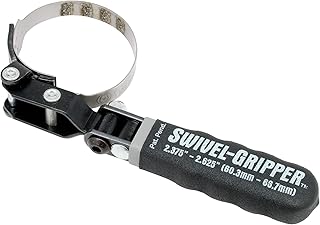
The 57010 Import Oil Filter Swivel Wrench makes JK oil changes significantly easier. The filter sits in a tight spot on the passenger side of the block, and standard cap-style wrenches don’t always grip well. A chain-style swivel wrench works every time and costs under $20.
Best practices:
- Always warm the engine before draining (flows better, suspends more contaminants)
- Replace the crush washer every single time — they’re 50 cents and prevent leaks
- Check oil level between changes, especially on the 3.8L — add if below the halfway mark on the dipstick
- Write the next oil change mileage on a piece of tape stuck inside your driver’s door frame
Oil changes take 30 minutes once you’ve done a few. You’ll save $40-80 per change versus shop rates, which adds up to $400-800 per year on the severe duty schedule. That’s a set of new shocks or a quality winch after two years of DIY changes.
Tire Rotation & Wheel Maintenance
Tire rotation is the second-most frequent maintenance task. JKs wear tires unevenly if you skip rotations — especially with lifts and larger tires that put more stress on suspension geometry.
Rotation interval: Every 6,000-8,000 miles. I rotate at every other oil change to keep it simple. That’s roughly every 6,000-8,000 miles on the severe duty schedule.
Rotation pattern: Five-tire rotation (including the spare). Move the spare to the right rear, right rear to right front, right front to left front, left front to left rear, left rear becomes the spare. This evens wear across all five tires instead of destroying four while the spare sits pristine for a decade.
Lug nut torque: 95-130 ft-lb depending on model year. Most JKs spec 95-115 ft-lb, but always check your owner’s manual. This is NOT negotiable — over-torqued lugs warp rotors and snap studs, under-torqued lugs let wheels walk loose.
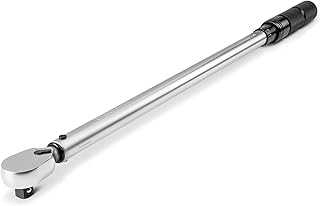
You need a torque wrench. Not a breaker bar. Not an impact gun with a “feel for it.” An actual calibrated torque wrench. The 1/2 Inch Drive 90-Tooth Dual-Direction Micrometer Torque Wrench covers the 40-300 ft-lb range, which handles JK lug nuts (95-130 ft-lb) and most suspension fasteners. The 90-tooth ratchet mechanism is clutch for the tight spaces around JK hubs — you can work with just 4 degrees of swing instead of the 20+ degrees a standard ratchet needs.
While you’re rotating, inspect the wheel bearings. Jack up one corner, grab the tire at 12 and 6 o’clock, and rock it. Any play or clunking means the bearing is going. JK wheel bearings typically last 60,000-100,000 miles but can fail earlier with aggressive off-roading or water crossings. Catching a bad bearing early prevents the hub assembly from grenading on the highway.
Tire pressure: 37 PSI front and rear for stock tires (225/75R16 or 255/75R17). Adjust for larger tires — a good starting point is 32-35 PSI for 33s and 30-32 PSI for 35s, then fine-tune for ride quality and wear patterns. Check pressure monthly and before any trail run.
Tire rotations take 45 minutes with a decent jack and a torque wrench. Skip them, and you’ll replace tires 20,000 miles early because the fronts cupped or the rears feathered. Even wear extends tire life by 30-40%.
Differential Service: Front & Rear Axle Fluid Changes
Differential service is the most overlooked maintenance task on JKs. It’s also one of the most critical for longevity, especially if you off-road or tow.
Service interval: Every 15,000 miles (severe duty) or 30,000 miles (normal duty). If you off-road regularly, do deep water crossings, or tow heavy loads, stick with 15,000 miles. The Dana 30 front axle is particularly sensitive to contaminated fluid — it runs hotter and sees more stress from turning.
Fluid specifications:
- Dana 30 front axle: 2.1 quarts 75W-90 synthetic gear oil
- Dana 44 rear axle: 2.7 quarts 75W-90 synthetic gear oil
- Limited-slip rear (Trac-Lok on Sahara/Rubicon): Add 4 oz friction modifier
Use synthetic gear oil. It handles heat better than conventional fluid, which matters when you’re grinding through rocks in 4-Low or towing a trailer up a mountain pass. Royal Purple, Valvoline, or Mopar-branded fluid all work fine — just make sure it meets GL-5 spec.
The friction modifier is critical for limited-slip differentials. Without it, you’ll get chattering and binding during tight turns. The Trac-Lok limited-slip comes standard on Sahara and Rubicon trims. Sport models have an open rear diff and don’t need friction modifier. For trim-specific details on differential features, see the Rubicon vs Sport vs Sahara comparison.
Why differential service matters: Gear oil breaks down from heat and contamination. If you do water crossings, moisture gets past the breather tubes and emulsifies the oil into a milky mess that destroys bearings and gears. Even without water, heat cycling and metal wear particles turn fresh oil into abrasive sludge after 15,000-20,000 miles of hard use.
I learned this lesson from forum threads, not personal experience — thankfully. JK owners who skip diff service for 50,000+ miles consistently report pinion bearing whine, ring gear wear, and eventual catastrophic failure. A $60 fluid change prevents a $2,000 ring-and-pinion replacement.
Rubicon note: The electronic front and rear lockers don’t change the fluid type or interval. However, check the actuator seals for leaks during service — a leaking actuator can let diff fluid into the electronics, which is expensive and annoying to fix.
Service procedure: Drain from the bottom, refill from the top. Remove the diff cover, scrape the old gasket, install a new gasket (Mopar or Felpro), torque the bolts to 30-35 ft-lb in a crisscross pattern. It’s a messy job but straightforward. Budget 90 minutes per axle if you’re doing it yourself.
If you’re not comfortable with diff service, shops charge $150-250 per axle. Not cheap, but necessary. Front and rear together every 15,000 miles means you’re looking at $300-500 every 15k at a shop, or $120 in fluids and gaskets if you DIY. Over 150,000 miles, that’s a $3,000 difference.
Change your diff fluid every 15,000 miles if you use your JK like a Jeep. Your axles will thank you.
Transfer Case Service
The transfer case shifts your JK between 2WD, 4-High, and 4-Low. It works hard — especially if you actually use 4WD — and needs regular fluid changes to stay reliable.
Service interval: Every 30,000 miles (severe duty) or 60,000 miles (normal duty). If you use 4-Low regularly for off-roading or towing, stick with 30,000 miles. Heat breaks down transfer case fluid faster than most people realize.
Fluid specifications — this is critical:
- NV241 Command-Trac (base model, part-time 4WD): ATF+4, 2.0 quarts
- NV241OR Rock-Trac (Rubicon, full-time 4WD with 4-Low): Synthetic 75W-140 gear oil, 2.0 quarts
Do NOT mix these up. The NV241 Command-Trac in Sport and Sahara models uses automatic transmission fluid (ATF+4), not gear oil. Using gear oil in the NV241 causes hard shifts, grinding, and binding. I’ve seen this mistake cost JK owners hundreds in transfer case rebuilds.
The Rubicon’s NV241OR Rock-Trac uses synthetic 75W-140 gear oil — the same spec as the rear differential. Rubicon owners can buy in bulk and use the same fluid for both the transfer case and rear axle.
Why transfer case service matters: The transfer case takes abuse in 4-Low. It’s handling full engine torque multiplied by the low-range gear reduction (2.72:1 in the NV241), which generates heat and breaks down fluid. Old fluid loses its viscosity, and metal particles from the chain and gears turn it into grinding paste.
The rear output seal is a common leak point on JKs over 100,000 miles. Check for fluid drips on your driveway or garage floor near the rear driveshaft. Catching a small leak early means a $30 seal replacement. Ignoring it means running the transfer case low on fluid until the chain wears out.
Service procedure: Drain plug on the bottom, fill plug on the side. Remove the drain plug with a 3/8” ratchet (it’s a square drive, not a bolt). Let it drain completely. Replace the crush washer. Refill from the side fill plug until fluid runs out. It’s a 20-minute job once you find the plugs.
Transfer case fluid changes at 30,000-mile intervals cost about $25 in fluid and 20 minutes of time. Shops charge $100-150. Over the life of your JK, you’ll do this service 5-7 times. DIY saves $500-750.
Use ATF+4 in the NV241. Use 75W-140 in the NV241OR. Write this on a piece of tape and stick it inside your oil change reminder. The number of JK owners who’ve blown up transfer cases by putting the wrong fluid in would shock you.
Transmission Service: Manual vs Automatic
Transmission service intervals depend on whether you have the NSG370 6-speed manual or the W5A580 5-speed automatic. Both transmissions are reliable when properly maintained. Neither is reliable when neglected.
Manual transmission (NSG370):
- Severe duty interval: 60,000 miles
- Normal duty interval: 120,000 miles
- Fluid spec: 75W-90 GL-4 synthetic gear oil, 2.3 quarts
- Drain and fill procedure: single drain plug on bottom, fill from side plug
The manual is straightforward. Drain, refill, done. Use GL-4 spec oil, not GL-5 — the additives in GL-5 can damage brass synchronizers in the NSG370. Redline MT-90, Amsoil, or Mopar-branded manual trans fluid all work. Expect to spend $40-50 in fluid per service.
Manual transmission fluid doesn’t break down as fast as automatic fluid because there’s no torque converter generating constant heat. If you’re mostly highway driving, you can stretch the interval to 80,000-100,000 miles. If you’re trail riding in 4-Low or towing heavy, stick with 60,000 miles.
Automatic transmission (W5A580):
- Severe duty interval: 60,000 miles
- Normal duty interval: “lifetime” (which is a lie)
- Fluid spec: ATF+4, approximately 8.0 quarts for full service
- Service procedure: drop pan, replace filter, refill
Here’s the controversial part: Jeep calls the automatic transmission fluid “lifetime” in normal duty service. That’s marketing, not engineering. Automatic transmission fluid breaks down from heat. The torque converter operates at 180-220°F during normal driving and higher during towing or off-roading. By 60,000 miles, that fluid is oxidized and contaminated with clutch material and metal particles.
Change it at 60,000 miles regardless of what the owner’s manual says. A full service (pan drop, new filter, fresh fluid) costs $80-120 in parts and takes 90 minutes if you DIY. Shops charge $200-300. A transmission rebuild costs $2,500-4,000. You do the math.
Service procedure for the automatic: You can’t just drain and refill the W5A580 because the torque converter holds 4-5 quarts that don’t drain out. A proper service requires dropping the pan, replacing the filter (Mopar part 5179267AC or equivalent), cleaning the magnet, and refilling. Some shops do a “fluid exchange” where they pump fresh fluid through the cooler lines while the engine runs — this gets closer to a complete fluid change but doesn’t replace the filter.
JK automatics are reliable. The valve body occasionally acts up after 100,000+ miles (hard or delayed shifts), but that’s usually fixable with a fluid change and solenoid cleaning. Treat it right, and the W5A580 will outlast the rest of the truck.
Change your automatic transmission fluid every 60,000 miles. Don’t believe the “lifetime” claim. Lifetime means “lifetime of the warranty period,” not “lifetime of the vehicle.”
Cooling System Maintenance: Coolant, Radiator & Hoses
Every used Jeep has a story. Mine had a few it hadn’t finished telling yet.
The radiator was done — swapped it out clean. Then came the AC. We found out it wasn’t working properly on a drive up to the Cederberg in 112°F heat, with our two-month-old baby boy in the back seat. Not ideal. Got that sorted the moment we got home.
Then came the big one: the cylinder heads. The 3.6L Pentastar’s heads were warped — a known issue on this generation. Rather than skimming them again, we sourced brand new replacement heads. It’s done right, or it’s done twice.
None of this was glamorous. But it’s the foundation. You can’t put 35” mud tyres on a Jeep with blown head gaskets and call it an overland rig. Mechanical integrity before cosmetic ambition.
That experience taught me to take cooling system maintenance seriously. JK cooling systems are generally reliable, but they’re not invincible — especially as vehicles age past 10 years and 100,000 miles. Understanding common issues is easier when you know what to watch for; see the common JK problems by year guide for more details.
Coolant flush interval: Every 10 years or 150,000 miles, whichever comes first.
Coolant specification: HOAT (Hybrid Organic Acid Technology) coolant, Mopar 10-Year/150K formula, prediluted 50/50 mix. Total capacity: 3.7 gallons.
Why HOAT? It prevents corrosion in aluminum engine components, which is critical for the Pentastar 3.6L. The engine block, cylinder heads, and intake manifold are all aluminum. Regular green coolant (IAT) or older orange coolant (OAT) don’t provide adequate corrosion protection for aluminum. Use the correct coolant or risk internal corrosion that leads to head gasket failures, water pump failures, and heater core leaks.
Mopar HOAT coolant is available prediluted or concentrated. Buy prediluted — it’s easier and eliminates the risk of mixing the wrong ratio. You want 50/50 for freeze protection down to -34°F and boil-over protection up to 265°F.
Hose inspection: Check radiator hoses, heater hoses, and clamps at every oil change. Squeeze the hoses — they should feel firm but slightly flexible. If they’re rock-hard, cracked, or soft and spongy, replace them before they burst. Hose failures are common on JKs over 10 years old, especially in hot climates where heat cycling accelerates rubber degradation.
Upper and lower radiator hoses are easy to replace. Heater hoses are more annoying because they route behind the engine. Budget $60-80 for a complete hose set and 90 minutes of work.
Radiator cap: The cap maintains system pressure (13 PSI on most JKs). Test it at 100,000 miles with a cooling system pressure tester. A weak cap lets coolant boil at lower temperatures, which causes overheating and air pockets in the system. Replacement caps are $15. Testing is free at most auto parts stores.
Cooling system failures strand you and damage engines. The 3.6L Pentastar is particularly sensitive to overheating — cylinder head warpage happens fast once temperatures spike above 240°F. Flush coolant on schedule, inspect hoses regularly, and replace the cap if it fails the pressure test.
A $50 coolant flush prevents a $3,000 head gasket job. Take cooling system maintenance seriously.
Brake System Maintenance: Fluid, Pads & Rotors
Brakes are your most critical safety system. JKs stop fine with stock brakes — until you add a lift and 35” tires, which add 200-300 lbs of unsprung weight and reduce braking effectiveness by 15-20%. Even stock JKs need regular brake maintenance.
Brake fluid flush interval: Every 2 years or 24,000 miles (severe duty). Normal duty is 3 years or 36,000 miles, but severe duty is safer.
Fluid specification: DOT 3 brake fluid. Don’t use DOT 5 or DOT 5.1 unless you’ve converted to a completely silicone-based system (which you haven’t).
Why flush brake fluid? It’s hygroscopic — it absorbs moisture from the air over time. Water contamination lowers the boiling point, which causes brake fade (spongy pedal) during hard braking or long descents. Water also corrodes the inside of brake lines, calipers, and the master cylinder. Flushing every 2 years removes moisture and contaminants before they cause problems.
Brake fluid flushes cost $80-120 at a shop or $15 in fluid if you DIY with a friend to pump the pedal. It’s tedious but straightforward: bleed each caliper in sequence (passenger rear, driver rear, passenger front, driver front) until fresh fluid runs clear.
Pad and rotor inspection: Check pad thickness at every tire rotation. Replace pads at 3mm remaining — waiting until they’re down to the metal backing damages rotors and costs you an extra $200-300 in rotor replacements.
Typical pad life on a JK: 30,000-50,000 miles depending on driving style and terrain. Heavier Rubicon models (especially 4-door Unlimiteds) wear brakes faster due to extra weight. Lifted JKs with 35” tires wear brakes 20-30% faster than stock. For comprehensive brake guidance, reference the brake service and upgrade guide.
Brake maintenance is non-negotiable. Flush fluid every 2 years and inspect pads at every tire rotation. Your stopping distance depends on it.
Air Filters: Engine & Cabin
Air filters are the easiest maintenance task on your JK. They’re also the most frequently skipped. Don’t skip them.
Engine air filter:
- Inspection interval: Every 10,000 miles
- Replacement interval: Every 20,000-30,000 miles (sooner if dusty/off-road conditions)
- Part numbers: Mopar 53034051AB (OEM paper) or K&N 33-2364 (reusable oiled)
The engine air filter sits in a box on the driver’s side fender. Remove four clips, lift the lid, pull out the old filter, drop in the new one. Five-minute job. Cost: $15-25 for a paper filter, $60-80 for a reusable K&N.
Paper filters are single-use. K&N filters are washable and reusable — you clean them every 50,000 miles with K&N cleaner and oil. Over the life of your JK, a K&N saves money and reduces waste. However, some people report that oiled filters can contaminate the MAF sensor if over-oiled. Use paper if you want zero risk.
A clogged engine air filter reduces power and fuel economy. It also lets fine dust past the filter element and into the throttle body and intake manifold. If you off-road in dusty conditions (Southwest deserts, dry trails), inspect the filter every 5,000 miles and replace it as soon as it’s visibly dirty.
Cabin air filter:
- Replacement interval: Every 15,000-20,000 miles or annually
- Part numbers: Mopar 68052292AA or Wix 24484
The cabin air filter lives behind the glove box. Remove the glove box (four screws, two clips), slide out the old filter, slide in the new one. Ten-minute job. Cost: $10-20.
Cabin air filters trap pollen, dust, and debris before they enter the HVAC system. A clogged cabin filter reduces AC and heater airflow and causes musty smells. It’s the filter everyone forgets about until their AC barely blows and their Jeep smells like a gym sock.
If you drive in dusty conditions or with the windows down frequently, replace the cabin filter every 10,000 miles. It’s cheap and makes a noticeable difference in air quality.
Air filter maintenance costs $25-45 per year and takes 15 minutes total. There’s no excuse to skip it.
Spark Plugs & Ignition System
Spark plug replacement intervals depend heavily on which engine generation you have. The 3.8L and 3.6L are night-and-day different.
3.8L V6 (2007-2011):
- Replacement interval: Every 30,000 miles
- Part number: Champion RC12YC or equivalent
- Gap: 0.043-0.053 inches
The 3.8L needs frequent spark plug changes because it’s prone to oil fouling. These engines burn oil — not catastrophically, but enough that oil residue builds up on spark plug electrodes and causes misfires. By 30,000 miles, the plugs are usually fouled enough to affect idle quality and fuel economy.
Replacing plugs on the 3.8L is straightforward on the driver’s side. The passenger side requires patience — you’re reaching between the firewall and engine block with limited clearance. Budget 90 minutes for a full set of six if it’s your first time.
3.6L Pentastar (2012-2018):
- Replacement interval: Every 100,000 miles
- Part number: Mopar 5149637AA or equivalent (iridium)
- Gap: 0.043 inches
The 3.6L runs long-life iridium plugs that are good for 100,000 miles. This engine doesn’t have the oil consumption issues of the 3.8L, so plugs stay clean longer. However, ignition coils are the weak point. The 3.6L uses a coil-on-plug design — one coil per cylinder. If one coil fails (common around 100,000-120,000 miles), replace all six for even wear.
A single coil failure causes a misfire code (P0300-P0306) and rough idle. Coils cost $25-40 each. Replacing all six costs $150-240 in parts and takes 30 minutes. It’s cheaper to replace them all at once than to do it one at a time as they fail.
Why spark plug maintenance matters: Misfires from worn plugs damage the catalytic converter. The cat tries to burn unburned fuel from the misfire, which overheats and eventually destroys the catalyst. A $40 spark plug change prevents a $1,200-1,800 catalytic converter replacement.
3.8L JKs need spark plugs every 30,000 miles. 3.6L JKs can go 100,000 miles but should replace all six ignition coils when one fails. Don’t skip this maintenance — misfires cost you money and drivability.
Battery & Electrical System Maintenance
JK electrical systems are reliable. Batteries and alternators are wear items. Here’s how to maintain them.
Battery inspection: Check terminals for corrosion at every oil change. White or blue-green powder around the terminals is corrosion from sulfuric acid fumes. Clean it with a wire brush and baking soda solution. Coat terminals with dielectric grease to prevent future corrosion.
Test battery voltage annually with a multimeter. A healthy battery reads 12.6V at rest (engine off, no accessories). Anything below 12.4V means the battery is partially discharged or weak. Below 12.0V and it’s failing.
Battery life: 3-5 years in hot climates (Southwest, Southeast), 5-7 years in moderate climates. Heat kills batteries faster than cold. If your JK sits outside in 100°F+ summers, expect to replace the battery every 3-4 years.
Group size for JKs: H6 (LN2) or H7 (LN3) depending on model year. Most auto parts stores carry both. Expect to pay $120-180 for a quality battery (Interstate, DieHard, Optima).
Alternator: The stock JK alternator is 160 amps (2012+ models) or 136 amps (2007-2011 models). It’s adequate for stock electrical loads but marginal if you add a winch, auxiliary lights, upgraded stereo, or dual batteries.
Test charging voltage with the engine running: 13.8-14.5V at idle is healthy. Below 13.5V means the alternator is weak. Above 15.0V means the voltage regulator is failing (overcharging damages batteries and electronics).
Alternators typically last 80,000-120,000 miles. Symptoms of failure: dim headlights at idle, slow cranking, battery warning light, flickering gauges. A failing alternator costs $150-250 for a rebuilt unit or $300-450 for a new Mopar unit.
If you add heavy electrical accessories (winch, lights, fridge), upgrade to a 220-amp or 270-amp high-output alternator. A winch alone can draw 400+ amps under load, which drains a battery fast without adequate charging capacity.
OBDII scanner for diagnostics: A Bluetooth OBDII scanner connects to your smartphone and reads diagnostic trouble codes from the ECU, ABS, airbag, and other modules. It’s invaluable for diagnosing battery and charging issues (codes like P0562 for low system voltage or P0563 for high system voltage) before they strand you. The Bluetooth Pro OBDII Scan Tool works with both iPhone and Android, covers all major systems (check engine, ABS, SRS, airbag), and has no ongoing subscription fees. It reads and clears trouble codes, monitors live data, and helps you catch problems early.
Test your battery voltage annually, clean terminals regularly, and replace the battery every 3-7 years depending on climate. A $15 OBDII scanner catches electrical problems before they become roadside emergencies.
Severe Duty Maintenance Extras: Off-Road & Towing
If you actually use your JK like a Jeep — off-roading, towing, rock crawling, desert running — you need additional inspections and shorter service intervals beyond the standard severe duty schedule.
For regular off-roading (monthly or more):
- Inspect driveshafts, CV boots, and U-joints every 5,000 miles. Look for torn CV boots, dry U-joints, or play in driveshaft yokes. U-joints typically need replacement every 50,000-80,000 miles with hard off-road use.
- Inspect steering components (tie rods, drag link, track bar) every 5,000 miles. Look for loose bolts, worn bushings, or bent links. Jeep death wobble is almost always caused by worn steering or suspension components.
- Check shocks for leaks after every hard trail run. Leaking shocks lose damping and cause poor handling and tire cupping.
- Grease slip yokes and driveshaft splines every oil change. Use lithium-based grease and pump until fresh grease purges old grease from the fitting.
For regular towing:
- Change transmission and differential fluid every 15,000 miles instead of 30,000 miles. Towing generates heat, and heat destroys fluid.
- Inspect brake pads every 5,000 miles. Towing wears brakes faster than normal driving.
- Check trailer wiring and brake controller function before every trip. Corroded wiring causes brake malfunctions and electrical shorts.
For deep water crossings:
- Inspect differential breather tubes after every water crossing. Make sure they’re clear and routed high enough to prevent water ingestion.
- Change differential fluid immediately after any water crossing where water reached the axle centerline. Water contamination turns gear oil into a milky emulsion that destroys bearings and gears within a few thousand miles.
- Inspect wheel bearings for water contamination. Pull the hubs and repack bearings with fresh grease if you crossed deep water.
For snow and salt exposure:
- Inspect frame rails, body mounts, and brake lines annually for rust. Salt accelerates corrosion. Spray undercoating or fluid film on exposed metal to slow rust.
- Wash the undercarriage after every drive on salted roads. A $5 DIY undercarriage wash at a coin-op car wash removes salt before it does damage.
For extreme heat (desert running):
- Check coolant level weekly. Heat causes coolant to evaporate faster.
- Inspect radiator hoses and clamps monthly. Heat accelerates rubber degradation.
- Monitor engine oil consumption. High ambient temperatures increase oil consumption on both the 3.8L and 3.6L.
Severe duty isn’t just a suggestion. If you off-road, tow, or drive in extreme conditions, these extra inspections and shorter intervals are required to keep your JK reliable. The alternative is unexpected failures on the trail or highway.
Essential Tools for DIY JK Maintenance
I didn’t grow up wrenching on cars. In Switzerland, you take your car to the dealer and pay whatever they ask. Moving to Cape Town and buying a Jeep forced me to learn — partly out of interest, partly out of necessity. JK specialists here are good, but they’re busy, and some jobs just aren’t worth paying shop rates for.
My first DIY job was an oil change. Sounds simple — it is simple — but I still managed to overtighten the drain plug the first time. Torque specs exist for a reason.
Since then I’ve worked up to brake pads, fluid flushes, spark plugs, and basic suspension work. Each job taught me something about the JK platform. The brake caliper slides on the front axle are almost impossible to access without the right combination of extensions and universal joints. The spark plugs on the passenger side require the patience of a monk.
You don’t need a full shop to maintain a JK. You need a few key tools. Here’s the essentials list.
Must-have tools:
- Torque wrench (40-300 ft-lb range): The 1/2 Inch Drive 90-Tooth Dual-Direction Micrometer Torque Wrench covers lug nuts (95-130 ft-lb) and most suspension fasteners. The 90-tooth ratchet mechanism works in tight spaces where standard ratchets can’t swing.
- Oil filter wrench: The 57010 Import Oil Filter Swivel Wrench grips JK oil filters reliably. Chain-style wrenches work better than cap-style in the tight JK engine bay.
- Socket set (SAE and metric): JKs use both. You need 3/8” and 1/2” drive sockets from 8mm to 22mm and 5/16” to 3/4” SAE. A quality set costs $80-150 and lasts forever.
- Jack and jack stands: A 3-ton floor jack and four 3-ton jack stands. Never work under a vehicle supported only by a jack.
- Drain pan: 8-10 quart capacity for oil and fluid changes. Costs $15 and saves your driveway.
Recommended tools:
- OBDII scanner: The Bluetooth Pro OBDII Scan Tool reads trouble codes from all major systems (engine, ABS, airbag) and helps diagnose problems before they strand you. No subscription fees. Works with iPhone and Android.
- Multimeter: For electrical diagnostics (battery voltage, charging voltage, sensor testing). A basic Fluke or Klein multimeter costs $40-80 and pays for itself the first time you diagnose a bad sensor.
- Breaker bar (18-24 inches): For stuck fasteners. Provides more leverage than a ratchet without breaking sockets.
Nice-to-have tools:
- Impact wrench (cordless): Speeds up tire rotations and makes suspension work easier. Milwaukee M18 or DeWalt 20V Max are solid choices. Expect to spend $150-250.
- Fluid extractor pump: For extracting transmission fluid, transfer case fluid, or differential fluid from fill holes without dropping pans. Costs $30-50.
- Inspection mirror and flashlight: For seeing tight spaces (behind the engine, under the dash, inside wheel wells). A magnetic LED light is invaluable.
Total investment for must-have and recommended tools: $250-500. That’s two oil changes and one brake pad replacement at dealer labor rates. You’ll pay this off in the first year of DIY maintenance.
Start with oil changes and air filters. Work your way up to brake pads and fluid flushes. Most JK maintenance is learnable with YouTube tutorials and the right tools.
Maintenance Record Keeping: Tracking Service History
I keep a repair journal now — what I did, what torque specs I used, what I’d do differently. It’s become one of the most valuable documents I own, and it directly feeds into the guides on this site.
Tracking maintenance sounds tedious. It’s not. It’s a 60-second task after every service that preserves resale value, helps you catch patterns, and gives you confidence you’re staying on schedule.
Why track maintenance:
- Preserves resale value: A documented service history adds $1,000-2,000 to resale value. Buyers pay more for JKs with proof of maintenance.
- Helps diagnose patterns: If you notice oil consumption creeping up over three oil changes, you catch a valve cover gasket leak before it becomes a quart-per-week problem.
- Ensures nothing is missed: A log reminds you that diff service is due at 90,000 miles even if you skipped it at 75,000 because life got busy.
What to record:
- Date and mileage
- Task performed (oil change, tire rotation, diff service, etc.)
- Parts used (oil brand, filter part number, fluid type)
- Labor cost if you paid a shop
- Observations (leaks, noises, wear patterns, anything unusual)
- Next service due (mileage and date)
Tools for tracking:
- Physical logbook: Keep it in the glove box. Write in it immediately after every service. Simple and reliable. You can buy a generic vehicle maintenance log on Amazon for $10, or use a blank notebook.
- Spreadsheet: Google Sheets works great. Create columns for date, mileage, task, parts, cost, and notes. You can sort by date or mileage and calculate annual costs.
- App: Car Minder, Fuelly, or Driversnote track maintenance, fuel economy, and trips. Free versions are adequate for most people.
I use a physical notebook. It lives in the center console. I write in it immediately after finishing a job — while I’m still sweaty and covered in oil. That’s when details are fresh: which parts I used, what broke or went wrong, what I’d do differently next time.
That journal helped me catch a pattern of increasing oil consumption around 95,000 miles. Over three oil changes (3,000 miles each), consumption went from 1/4 quart to 1/2 quart to 3/4 quart. By tracking it, I diagnosed a leaking valve cover gasket before it became a major problem.
Tip: Save receipts for parts and fluids. Staple them to logbook pages or scan them into a folder on your phone. Proof of maintenance helps with warranty claims (if you’re still under warranty) and resale.
Start a maintenance log today. You’ll thank yourself in five years when you’re selling your JK and a buyer asks, “Do you have service records?”
When to DIY vs When to Pay a Shop
I started from zero mechanical experience and worked my way up to most routine maintenance tasks. You can too. But you don’t have to do everything yourself — some jobs are faster, cheaper, or safer when done by a professional.
Easy DIY tasks (anyone can do these):
- Oil changes
- Air filters (engine and cabin)
- Tire rotations (if you have a jack and torque wrench)
- Battery checks and terminal cleaning
- Coolant top-offs
- Wiper blade replacement
These tasks require minimal tools, minimal experience, and minimal risk. Start here. You’ll save $500-800 per year on basic maintenance.
Moderate DIY tasks (with tools and some experience):
- Differential service
- Brake pad replacement
- Spark plug replacement
- Transmission fluid change (manual)
- Transfer case fluid change
These tasks require more tools (torque wrench, sockets, drain pan) and basic mechanical knowledge. Watch YouTube tutorials first. Budget extra time for your first attempt. You’ll save $1,000-2,000 per year once you’re comfortable with these jobs.
Pay a shop for these:
- Major engine work (head gaskets, timing chains, internal repairs)
- A/C service (requires specialized equipment and EPA-certified refrigerant handling)
- Wheel alignments (requires alignment rack and specialized equipment)
- Transmission rebuilds or major repairs
- Welding and fabrication (unless you have a welder and experience)
- Anything involving airbags or safety systems (steering column, crash sensors)
Some jobs require specialized tools, certifications, or expertise that don’t make financial sense for DIY. A/C service is a perfect example: the equipment costs $2,000+, and the refrigerant requires EPA certification. Pay a shop $150-250 and move on.
Cost comparison (rough estimates):
- DIY oil change: $40 in parts, 30 minutes. Shop: $80-120.
- DIY diff service (one axle): $30 in fluids, 90 minutes. Shop: $150-250.
- DIY brake pads (front): $60-120 in pads, 90 minutes. Shop: $200-350.
- DIY transmission fluid (auto): $80 in fluid and filter, 90 minutes. Shop: $200-300.
Over five years and 75,000 miles, DIY maintenance saves $5,000-8,000 compared to shop labor rates. That’s a lift kit, winch, and bumper upgrade. Or a month-long road trip. Or just peace of mind that you know how your JK works.
Start small. Do your own oil changes. Then move up to air filters and tire rotations. Then try a brake pad replacement with a friend who’s done it before. Each job builds confidence and saves money.
You don’t have to DIY everything. But if you own a JK for a decade, learning basic maintenance is the best investment you’ll make.
Maintenance Costs: Budgeting for JK Ownership
Let’s talk money. JK ownership is affordable compared to newer vehicles, but only if you follow the maintenance schedule and budget appropriately.
Annual maintenance costs (severe duty, DIY):
- Oil changes (4-5 per year): $160-200
- Tire rotations: $0 (DIY with oil changes)
- Air filters (engine and cabin): $35-45
- Differential service (every 15k miles, ~1x per year if you drive 15k): $60
- Transfer case service (every 30k miles, ~1x every 2 years): $25
- Brake fluid flush (every 2 years): $15
- Spark plugs (3.8L every 30k, 3.6L every 100k): $40 (3.8L annually), $80 (3.6L every 7-10 years)
- Tires (every 40,000-60,000 miles): $800-1,200 per set, prorated annually = $200-300/year
Total annual DIY maintenance (severe duty, 15,000 miles/year): $800-1,200
Annual maintenance costs (severe duty, shop rates):
- Oil changes (4-5 per year at $80-120 each): $400-600
- Tire rotations: $80-120 (or free with oil changes at some shops)
- Air filters: $80-120 (shop markup on parts)
- Differential service: $300-500 (both axles)
- Transfer case service: $100-150
- Brake fluid flush: $80-120
- Spark plugs: $200-300 (3.8L), $400-600 (3.6L with coils)
- Tires: same as DIY, $200-300/year prorated
Total annual shop maintenance (severe duty, 15,000 miles/year): $1,500-2,500
DIY saves $700-1,300 per year on routine maintenance alone.
Major service costs at 60,000 miles:
- Differential service (front and rear): $60-120 DIY, $300-500 shop
- Transfer case service: $25 DIY, $100-150 shop
- Transmission service: $80-120 DIY (auto), $40 DIY (manual), $200-300 shop
- Coolant flush (if due): $30 DIY, $100-150 shop
- Brake pads (if worn): $100-200 DIY, $300-500 shop
Total 60k major service: $300-500 DIY, $1,000-1,600 shop.
Unexpected repairs (budget for these):
- Brake pads and rotors: $200-400 DIY, $400-800 shop
- Wheel bearings: $80-150 per corner DIY, $200-350 per corner shop
- U-joints: $40-80 DIY, $150-250 shop per driveshaft
- Battery: $120-180
- Alternator: $150-250 (rebuilt) DIY, $400-600 shop
- Radiator hoses: $60-80 DIY, $150-250 shop
- Sensors (O2, MAF, throttle position): $50-200 per sensor DIY, $150-400 shop
Budget $500-1,000 per year for unexpected repairs. Some years you’ll spend nothing. Some years you’ll replace a wheel bearing, alternator, and brake pads. It averages out over time.
Long-term ownership costs (150,000 miles over 10 years):
- Annual maintenance (DIY): $800-1,200 x 10 = $8,000-12,000
- Unexpected repairs: $500-1,000 x 10 = $5,000-10,000
- Major repairs (water pump, shocks, clutch, etc.): $2,000-5,000
- Total 10-year ownership maintenance: $15,000-27,000
That’s $125-225 per month. Cheaper than a new truck payment.
JKs are cheap to maintain compared to modern vehicles with complex electronics, turbochargers, and expensive dealer-only repairs. Follow the maintenance schedule, DIY what you can, and budget $1,500-2,500 per year for total maintenance and repairs. Your JK will run 200,000+ miles without major issues. If you’re buying a used JK, check the pre-purchase inspection checklist to assess the vehicle’s maintenance history before committing.
What I Wish I Knew: Common Mistakes & Misconceptions
Every JK owner makes mistakes. Here’s what I learned the hard way — and what I wish someone had told me on day one.
Mistake #1: Assuming “lifetime” fluids are actually lifetime. The automatic transmission fluid is called “lifetime,” but that’s marketing. Change it at 60,000 miles. The differential fluid isn’t called lifetime, but people treat it that way. Change it every 15,000 miles if you off-road or tow. “Lifetime” means “lifetime of the warranty period,” not “lifetime of the vehicle.”
Mistake #2: Using the wrong transfer case fluid. The NV241 Command-Trac (Sport and Sahara) uses ATF+4, not gear oil. The NV241OR Rock-Trac (Rubicon) uses 75W-140 gear oil, not ATF+4. Mixing these up causes hard shifts, grinding, and expensive repairs. Write it on a piece of tape and stick it on your transfer case.
Mistake #3: Extending oil change intervals on the 3.8L. The 3.8L engine burns oil. It’s normal for this generation. If you extend oil changes to 5,000-8,000 miles, you’ll run low between changes and accelerate wear. Stick to 3,000-4,000 miles on the 3.8L even if it feels excessive.
Mistake #4: Ignoring differential breather tubes. The breather tubes vent pressure and moisture from the axles. If they’re clogged, routed low, or submerged during water crossings, water gets sucked into the diff and destroys bearings and gears within a few thousand miles. Extend breather tubes to the top of the engine bay if you do water crossings.
Mistake #5: Skipping tire rotations. Unrotated tires wear unevenly and require replacement 20,000 miles early. That’s $800-1,200 wasted. Rotate every 6,000-8,000 miles. It takes 45 minutes.
Mistake #6: Overtightening fasteners. I overtightened my first oil drain plug and nearly stripped the threads. Torque specs exist for a reason: they’re engineered for clamping force without damaging threads or gaskets. Use a torque wrench for drain plugs, lug nuts, and suspension fasteners. Save the breaker bar for stuck bolts.
Mistake #7: Forgetting the cabin air filter. Everyone changes the engine air filter. Nobody remembers the cabin air filter until their AC barely blows and their Jeep smells like mildew. Replace it every 15,000-20,000 miles. It takes 10 minutes.
Mistake #8: Waiting until something breaks to start tracking maintenance. Start a maintenance log from day one. It helps with resale, helps you catch patterns, and gives you confidence you’re staying on schedule. You won’t remember what you did and when if you rely on memory.
Misconception #1: “My JK is stock, so I can use the normal duty schedule.” Unless you drive 100+ miles per day on highways in moderate climates with no towing, no off-roading, and no stop-and-go traffic, you’re severe duty. Most JK owners are severe duty even if they never leave pavement.
Misconception #2: “Dealer service is required to maintain warranty.” Wrong. The Magnuson-Moss Warranty Act allows you to perform your own maintenance without voiding the warranty — as long as you use the correct parts and fluids. Save your receipts.
Misconception #3: “I don’t need to change diff fluid unless I hear noise.” By the time you hear noise, the damage is done. Differential fluid breaks down silently. Change it on schedule before it causes problems.
These lessons cost me time, money, and frustration. Learn from my mistakes. Follow the schedule, use the correct fluids, torque fasteners to spec, and track everything in a logbook.
Frequently Asked Questions
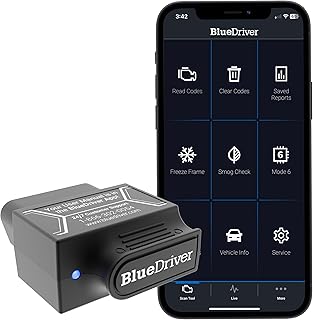
Bluetooth Pro OBDII Scan Tool for iPhone & Android - No Subscription Fee - OBD2 Car Scanner and Code
$84.95
Check Price on Amazon →How often should I change the oil in my Jeep JK?
Severe duty (most JK owners): every 3,000-4,000 miles or 6 months. Normal duty: every 8,000 miles or 12 months. Use 5W-20 full synthetic oil. The 3.8L engine (2007-2011) should stick to the shorter interval due to oil consumption issues. The 3.6L (2012-2018) tolerates slightly longer intervals but benefits from frequent changes if you off-road or tow.
What’s the difference between severe duty and normal duty maintenance schedules?
Severe duty includes short trips under 10 miles, frequent off-roading, towing, dusty conditions, stop-and-go traffic, and extreme temperatures. Most JK owners fall under severe duty. Normal duty assumes long highway driving in moderate climates with no towing or off-roading — this applies to very few JK owners.
Can I use regular oil instead of synthetic in my JK?
You can, but I don’t recommend it. Synthetic oil costs $10-15 more per change but handles heat better, resists breakdown longer, and flows better at cold startup. Given how hard JK engines work (especially with lifts and larger tires), synthetic is cheap insurance against sludge and premature wear.
What happens if I don’t change my differential fluid?
Differential fluid breaks down from heat and contamination. By 30,000-40,000 miles of severe duty, the fluid turns into an abrasive sludge that destroys bearings and gears. Skipping diff service is one of the fastest ways to grennade a JK axle. The cost to replace ring-and-pinion gears is $2,000-3,000. A $60 fluid change prevents this.
My JK has “lifetime” transmission fluid. Do I really need to change it?
No. “Lifetime” is marketing. The automatic transmission fluid (W5A580) breaks down from heat. By 60,000 miles, it’s oxidized and full of clutch material. Change it at 60,000 miles regardless of what the owner’s manual says. A transmission rebuild costs $2,500-4,000 and is 100% preventable with a $80-120 fluid change every 60k miles.
How do I know which fluid my transfer case needs?
Look at your JK trim and 4WD system. The NV241 Command-Trac (Sport and Sahara) uses ATF+4 automatic transmission fluid. The NV241OR Rock-Trac (Rubicon) uses 75W-140 synthetic gear oil. Using the wrong fluid causes hard shifts, grinding, and expensive repairs. Write it on a piece of tape and stick it in your glove box.
What torque spec should I use for my JK’s lug nuts?
95-115 ft-lb for most JKs, but always check your owner’s manual — some years vary. Use a calibrated torque wrench. Over-torqued lugs warp rotors and snap wheel studs. Under-torqued lugs walk loose and can cause wheel separation.
Can I do my own oil changes, or should I pay a shop?
Absolutely do your own oil changes. It takes 30 minutes, costs $40 in parts, and saves $40-80 in shop labor. Over a decade of severe duty service, you’ll save $500-800 on oil changes alone. That’s money toward a lift kit or winch.
My JK smells like mildew when I use the AC. What’s wrong?
Your cabin air filter is clogged. Replace it (10-minute job, $15 cost) and the smell usually goes away. If it persists, your evaporator core is probably moldy and needs professional cleaning.
How long do JK wheel bearings last?
60,000-100,000 miles typically, but can fail earlier with aggressive off-roading or water crossings. Check bearings at every tire rotation by grabbing the tire at 12 and 6 o’clock and rocking it. Any play or clunking means the bearing needs replacement.
Is it worth upgrading to a torque wrench?
Yes. Absolutely. The 1/2 Inch Drive 90-Tooth Dual-Direction Micrometer Torque Wrench ($150) handles lug nuts and most suspension fasteners. It works in tight spaces and lasts forever. You’ll use it hundreds of times.
1/2 Inch Drive 90-Tooth Dual-Direction Micrometer Torque Wrench (40-300 ft-lb) | TRQ52403
$150
Check Price on Amazon →Conclusion
JK maintenance is straightforward if you follow the schedule, use the correct fluids, and track what you do. Most JK owners can DIY the majority of routine maintenance — oil changes, air filters, tire rotations, differential service, and fluid flushes. You’ll save $5,000-8,000 over a decade and gain confidence in your vehicle.
The severe duty schedule applies to almost all JK owners. Follow it. The 3,000-4,000 mile oil change interval, 15,000-mile differential service, and 30,000-mile transfer case service intervals aren’t pessimistic — they’re physics. Your fluids work harder. Change them more often.
Invest in a few key tools: a torque wrench, oil filter wrench, socket set, and OBDII scanner. Start with oil changes. Work your way up to more complex tasks. Keep a maintenance log. Track every service. That log becomes priceless when you’re selling your JK with 200,000 miles and a documented service history.
Your JK will run 200,000+ miles if you follow this schedule. It won’t if you don’t. Simple as that.
For more guidance on selecting the right JK and understanding model-specific maintenance needs, check the complete JK buyers guide and best year JK to buy.
Get the Free JK Build Planner
Complete PDF with mod checklists, gear ratios, tire sizing charts, and budget worksheets. Everything you need to plan your JK build.
No spam. Unsubscribe anytime. By subscribing, you agree to our Privacy Policy.
Jeep JK Guide
We're JK owners who've been building, breaking, and fixing Wranglers for years. Everything here is tested on our own rigs - no sponsored fluff, just honest recommendations.
Learn more about us →Get the JK Build Planner
Free PDF with complete build checklists, gear ratios, and tire fitment guides.
By subscribing, you agree to our Privacy Policy.
Related Articles
2018 Jeep Wrangler JK Maintenance Schedule: Final Year Service Guide
Complete 2018 Jeep Wrangler JK maintenance schedule with severe service intervals, fluid specs, and cost breakdowns. Keep your final-year JK running strong.
2017 Jeep Wrangler JK Maintenance Schedule: Complete Service Guide
2017 Jeep JK needs 0W-20 synthetic oil every 5,000-10,000 miles, tire rotation every 5,000-7,500 miles, and differential service every 15,000-60,000 miles depending on use.
Jeep JK Maintenance Schedule: Complete Guide for 2007-2018 Wranglers
Complete maintenance schedule for 2007-2018 Jeep JK Wranglers. Includes oil change intervals, major service milestones, 3.8L vs 3.6L differences, and DIY tool recommendations.