Lift & Suspension

How to Regear Jeep JK: Complete DIY Guide to Changing Gear Ratios
43 min read
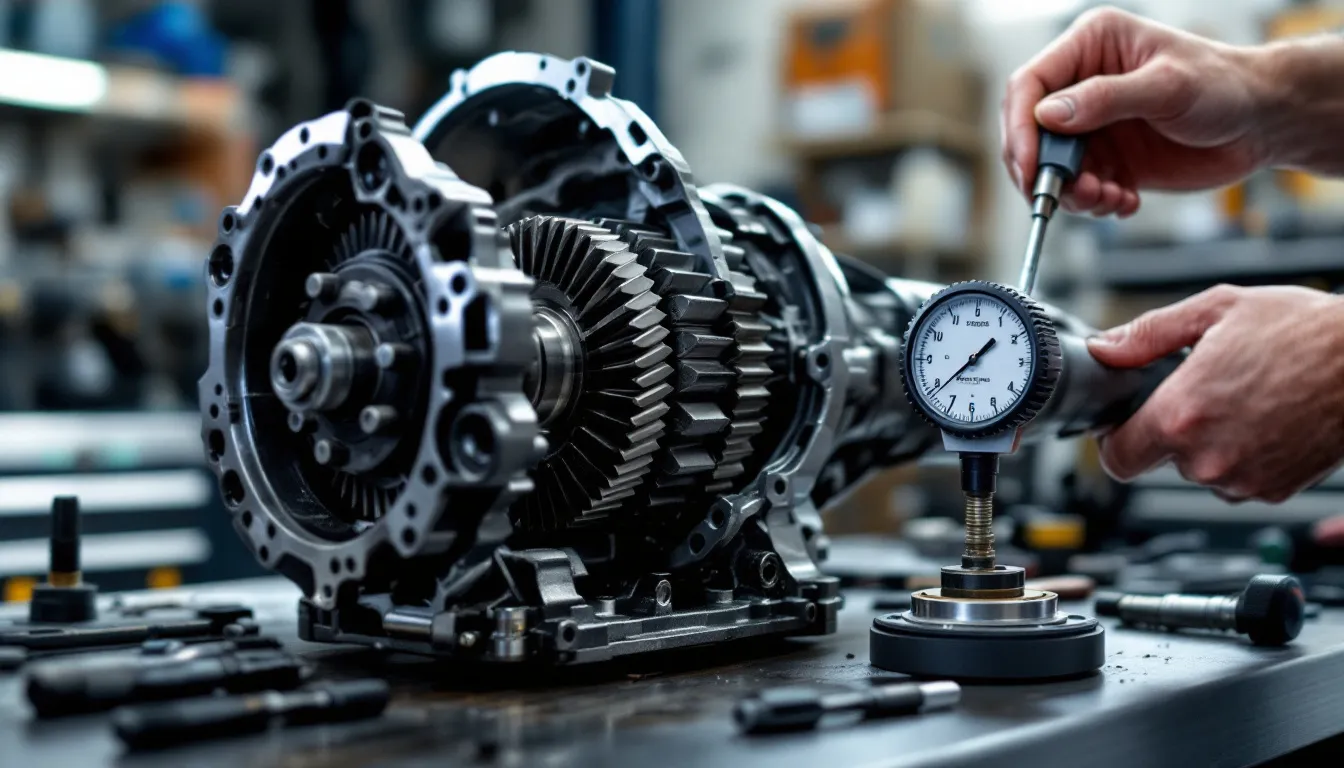
Jeep Wrangler JK differential with ring and pinion gears during regear installation

Affiliate Disclosure: This article contains affiliate links. If you purchase through these links, we may earn a small commission at no additional cost to you. We only recommend products we genuinely believe in and have personally tested. Learn more.

To regear a Jeep JK, you’ll remove the differential covers, press out the old ring and pinion gears, install new gears with precise pinion depth and backlash settings (verified with marking compound), set proper bearing preload, and follow a 500-mile break-in procedure. The job requires specialized tools like pinion depth gauges and dial indicators, takes 8-12 hours per axle for beginners, and costs $600-900 in parts if you DIY versus $1,500-2,500 total at a shop.

That’s the short version. The reality is more nuanced.

After running 35-inch tyres on stock 3.21 gears for four months, I regeared both axles to 4.56. The difference felt like driving a completely different vehicle — highway RPM dropped back to where it belongs, the transmission stopped hunting, throttle response came back. The install I left to a specialist in Somerset West because differential work isn’t something I trust myself with yet. The tolerances on ring and pinion setup are measured in thousandths of an inch.

But here’s the thing: regearing is entirely doable for capable DIYers willing to invest in the right tools and approach the job methodically. You’ll restore the power and driveability you lost when you installed those bigger tyres. You’ll extend your transmission’s life by not forcing it to hunt for gears constantly. And you’ll save $500-1,000 compared to shop rates.

This guide walks you through everything — when you need to regear, which ratio to choose, what parts and tools you’ll need, and the complete step-by-step installation process. If you’ve installed 33-inch or larger tyres and you’re still running stock gears, this is the most important modification you’ll make to your JK.

When Do You Need to Regear?

The math here is straightforward: when you install larger tyres, you effectively lower your gear ratio. A stock JK with 3.73 gears and 255/75R17 tyres (roughly 32 inches diameter) has an effective ratio of 3.73:1. Swap in 35-inch tyres and your effective ratio drops to roughly 3.41:1 — equivalent to running stock tyres with 3.41 gears.

You’ve just lost power, torque multiplication, and drivability.

Here’s when you need to regear based on tyre size:

33-inch tyres: Usually need regearing if you’re running 3.21 gears (common on manual Sport models). You can get away with 3.73 gears if the Jeep is primarily a daily driver, but 4.10 or 4.56 will feel noticeably better.

35-inch tyres: Almost always need regearing. Stock 3.21 gears are completely inadequate. Even 3.73 gears leave the engine labouring. Expect to move to 4.56, 4.88, or 5.13 depending on your engine and use case.

37-inch tyres: Absolutely require regearing. You’re looking at 4.88 minimum, more likely 5.13 or 5.38 for the 3.8L engine or dedicated rock crawlers.

Stock gear ratios by trim vary. Sport and Sahara models came with 3.21 gears on manual transmissions or 3.73 on automatics. Rubicon models come with 4.10 gears from the factory, which is why they handle 33s better than Sport models — they start with more favourable gearing.

Symptoms of wrong gearing include sluggish acceleration, the transmission hunting for gears (particularly the automatic constantly shifting between third and fourth on gentle grades), high RPMs at highway speeds, poor fuel economy, and in severe cases, transmission overheating from constant torque converter slippage. If you’re seeing 3,000+ RPM at 100 km/h with 35s, your gearing is wrong.

[CITATION: Jeep JK factory gear ratio specifications and tyre size recommendations from Jeep service manual]

Choosing the Right Gear Ratio

Selecting the optimal gear ratio requires balancing tyre size, engine type, and intended use.

Here’s the gear ratio chart by tyre size based on aggregated community experience:

Tyre Size3.8L V6 (2007-2011)3.6L Pentastar (2012-2018)
33 inches4.56 or 4.884.10 or 4.56
35 inches4.88 or 5.134.56 or 4.88
37 inches5.13 or 5.384.88 or 5.13
40 inches5.385.13 or 5.38

The 3.8L engine needs numerically higher gears than the 3.6L because it produces less torque — 237 lb-ft versus 260 lb-ft. If you’re running the earlier engine and you’re on the fence between two ratios, choose the higher (numerically larger) number.

Daily driver versus dedicated off-roader also matters. If you spend 80% of your time on tarmac and highways, lean toward the numerically lower ratio in each range. The 4.88 gears with 35s will cruise comfortably at highway speeds without excessive RPM. If you rock crawl frequently and want maximum torque multiplication for technical trails, choose 5.13 — you’ll sacrifice some highway comfort for better low-speed control.

Automatic versus manual transmission makes a small difference. Automatics benefit slightly more from numerically higher gears because the torque converter provides additional multiplication at low speeds. Manual transmission JKs can sometimes get away with one step lower (4.56 instead of 4.88, for example) if you don’t mind working the gearbox.

After regearing, you’ll need to recalibrate your speedometer. The electronic speedometer reads driveshaft speed and calculates road speed based on the programmed gear ratio and tyre size. Change either variable and your speedometer reads incorrectly. Products like the Superchips Flashcal or a visit to a Jeep dealer with the factory diagnostic tool will reprogram the computer with your new ratio.

For my own build — 35-inch tyres on a 2014 JK with the 3.6L Pentastar used primarily as a daily driver with weekend trail use — I chose 4.56. It’s on the conservative end of the range, but highway cruising at 120 km/h sits comfortably around 2,400 RPM. If I’d gone with 37s, I’d have chosen 4.88 without question.

Understanding JK model year differences helps you identify which engine you have and therefore which gear ratio makes sense for your specific vehicle.

[CITATION: Gear ratio selection recommendations from Dana manufacturer specifications]

Gear Ratio Calculator & Reference Guide

$15-30

★★★★☆ Verified Amazon Product

Check current price on Amazon →

Understanding JK Axle Configurations

Before you order gears, you need to know exactly which axles you have. Jeep used different axle combinations depending on trim level, and this determines which gear sets you’ll buy.

Dana 30 front axle: Found on Sport and Sahara models. The ring gear diameter is 7.2 inches. It’s adequate for 33-inch tyres and acceptable for 35s if you’re not beating on it. The Dana 30’s weak point is the passenger-side inner axle shaft, which has a relatively small diameter and tends to twist under extreme torque loads. If you’re running 35s on a Dana 30 and you wheel aggressively, upgrading to chromoly axle shafts is smart insurance.

Dana 44 front axle: Found on Rubicon models. The ring gear diameter is 8.5 inches. Stronger than the Dana 30 in every dimension — larger ring gear, thicker axle shafts, beefier differential. Handles 35-inch tyres comfortably and 37s with appropriate driving style. If you’re planning to run 37s or larger, the Dana 44 is mandatory — either buy a Rubicon or plan for a front axle swap.

Dana 44 rear axle: Standard on all JK trims including Sport and Sahara. Rubicon models get a slightly beefier Dana 44 HD variant with thicker axle tubes and electronic lockers, but from a regearing perspective, they use the same ring and pinion sets.

One critical point: you must regear both axles on a 4WD vehicle. Some people mistakenly think they can save money by regearing just the rear axle. Don’t. When you engage 4WD with mismatched gear ratios, the front and rear driveshafts rotate at different speeds. The transfer case tries to force them to match. Something breaks — usually the transfer case chain, which costs far more to replace than the gears you tried to save money on.

Identifying your axles is straightforward. The Dana 30 differential cover is roughly 9 inches across with 10 bolts in a circular pattern. The Dana 44 cover is roughly 10.5 inches across, also with 10 bolts, but noticeably larger diameter. If you’re still not sure, check your door sticker for axle codes or count the teeth on your ring and pinion (more on that in the preparation section).

Rubicon vs Sport vs Sahara differences extend beyond just axles — it’s worth understanding the complete package if you’re still in the buying phase.

Watch for common JK problems during disassembly — worn unit bearings, leaking pinion seals, or damaged carrier bearings are all easier to address while you have the differential apart.

[CITATION: Dana axle specifications and load ratings from Dana’s official technical documentation]

What You’ll Need: Complete Parts List

Regearing requires either complete kits or individual components sourced separately. Here’s the breakdown.

Complete Re-Gear Kits

Complete kits include everything you need for one axle: ring and pinion set, master install kit (bearings, seals, shims, pinion nut, marking compound), and sometimes carrier bearings. They save research time and ensure component compatibility.

For Rubicon owners (Dana 44 front and rear): The USA Standard Gear Re-Gear & Installation Kit in 4.88 ratio is purpose-built for dual Dana 44 setups. It includes both front and rear ring and pinion sets, complete master install kits, bearings, seals, and shims for both axles at $595 total. That’s exceptional value — buying front and rear separately typically costs $100-150 more. The 4.88 ratio is ideal for 35-37 inch tyres on Rubicons used as daily drivers with moderate trail use.

USA Standard Gear Re-Gear & Installation Kit, 4.88 Ratio, Compatible with Jeep JK Rubicon, ZGK015

USA Standard Gear Re-Gear & Installation Kit, 4.88 Ratio, Compatible with Jeep JK Rubicon, ZGK015

$595

★★★★☆ Verified Amazon Product

Check Price on Amazon →

Premium alternative: The Yukon Stage 2 Jeep JK Re-Gear Kit w/Covers for Dana 30/44, 4.88 Ratio, 24 Spline runs $862.06 but represents the premium tier of gear quality. Yukon is known in the off-road community for precise gear mesh and quiet operation. If you’re a perfectionist or it’s your first regear and you want the best chance of a successful setup, the extra cost buys peace of mind. The kit includes ring and pinion, master install kit, bearings, and seals. Yukon’s warranty support is solid — if you suspect a manufacturing defect, they stand behind their products.

Yukon Stage 2 Jeep JK Re-Gear Kit w/Covers for Dana 30/44, 4.88 Ratio, 24 Spline

Yukon Stage 2 Jeep JK Re-Gear Kit w/Covers for Dana 30/44, 4.88 Ratio, 24 Spline

$862.06

★★★★☆ Verified Amazon Product

Check Price on Amazon →

Both kits assume you’re comfortable with the installation process or you’re paying a shop to install them. Neither includes hand tools.

Budget-Friendly Option: Buy Components Separately

Experienced DIYers sometimes source individual components to mix premium parts in critical areas with value parts elsewhere. A Dana 44 Ring and Pinion Gear Set for JK costs $200-400. Add a separate master install kit (around $100-120 from Yukon or Nitro), and you’re at $300-330 per axle versus $400-500 for a complete kit.

Dana 44 Ring and Pinion Gear Set for JK

$200-400

★★★★☆ Verified Amazon Product

Check current price on Amazon →

The math works if you’re doing both axles and you’re comfortable researching compatible master install kits. The risk is mismatched components — buying a master install kit designed for a different carrier style, or shims that don’t fit your specific axle variant. If you’re doing this for the first time, the $100-150 you save buying individual parts isn’t worth the headache of troubleshooting compatibility issues mid-install.

What’s in a Master Install Kit

A quality master install kit includes:

  • Pinion bearing set (inner and outer races, rollers)
  • Carrier bearing set (races and rollers)
  • Pinion seal
  • Crush sleeve or solid spacer (controls pinion bearing preload)
  • Shim set (multiple thicknesses for pinion depth and carrier preload adjustment)
  • Pinion nut
  • Marking compound (for checking gear contact pattern)
  • Thread locker
  • Sometimes gear oil and assembly lube

Cheap kits skimp on bearing quality or shim variety. Poor-quality bearings cause premature failure — you’ll be pulling the differential apart again in 20,000 km. Insufficient shim selection means you can’t dial in proper pinion depth or backlash, which leads to noise and accelerated wear.

Consumables and Fluids

You’ll need differential fluid — Synthetic 75W-90 Differential Fluid or 75W-140 synthetic gear oil depending on your climate and use case. Budget 2-3 quarts per axle. Royal Purple, Mobil 1, and Red Line all make quality gear oils. Some JK owners swear by 75W-140 for towing or extreme heat; others run 75W-90 year-round without issues.

Synthetic 75W-90 Differential Fluid

$25-50

★★★★☆ Verified Amazon Product

Check current price on Amazon →

Don’t reuse old differential cover gaskets. Buy new ones or use RTV silicone (follow the service manual’s recommendation for your specific axle).

Assembly lube is critical during installation — it provides initial lubrication before the gear oil reaches all surfaces during the first rotation.

Optional Upgrades

If you’re running 35-inch tyres on a Dana 30 front axle, consider upgrading to chromoly axle shafts at the same time. The factory shafts are adequate for most use cases, but aggressive wheeling or heavy throttle in low-range 4WD can twist them. Chromoly shafts cost $400-600 for the pair but eliminate the most common Dana 30 failure point.

RCV performance axles with heavy-duty CV joints are the ultimate upgrade for Dana 30 rigs seeing serious abuse, but at $1,000-1,400 for a pair, they’re overkill unless you’re competing or running 37s on a Dana 30 (which you shouldn’t be).

For those wanting to explore differential upgrades beyond basic regearing, a Limited Slip Differential for Dana 44 ($400-700) provides improved traction on slippery terrain by maintaining more equal power distribution between left and right wheels compared to open differentials.

Limited Slip Differential for Dana 44

$400-700

★★★★☆ Verified Amazon Product

View on Amazon →

Comparison Table: Regear Kit Options

ProductPriceBest ForIncludes
USA Standard ZGK015 (4.88, Rubicon)$595Rubicon owners wanting complete front + rear kitRing/pinion both axles, master install kits, bearings, seals
Yukon Dana 44 Kit (4.88)$862.06Premium quality, quietest gearsRing/pinion, master install kit, bearings, seals
Dana 44 Ring and Pinion Set$200-400Budget-conscious DIYer buying components separatelyRing/pinion only (rear axle)

The takeaway: buy a complete kit from USA Standard or Yukon unless you’re experienced enough to source individual components and verify compatibility. The few dollars saved aren’t worth mismatched parts causing a failed installation.

[CITATION: Master install kit component specifications and quality requirements from bearing manufacturer documentation]

Essential Tools You’ll Need

Regearing requires both standard tools and specialized differential setup tools. You can’t skip the specialized stuff — improper setup tools lead to gear failure, which means doing the job twice.

Specialized Differential Tools

Pinion depth setting tools: These determine how deep the pinion gear sits in the carrier. Too shallow or too deep by even 0.003 inches causes noise and accelerated wear. Most tool sets include a dummy pinion shaft, setup bearing, and depth gauge specific to your axle type (Dana 30 or Dana 44).

Dial indicator with magnetic base: Measures backlash (the gap between ring and pinion teeth when one gear is held stationary). Target range is 0.006-0.010 inches. You need to measure to within 0.001 inches, so a quality dial indicator (not a cheap digital caliper) is mandatory.

Bearing race driver set: Presses bearing races into the axle housing and carrier without damaging them. Using a punch and hammer works until it doesn’t — one slipped punch gouges a race, ruins a $40 bearing, and costs you hours of time ordering a replacement.

Gear puller: Removes the pinion bearing from the pinion shaft. A jaw-style puller works, but a dedicated pinion puller makes the job far easier.

Setup bearing: A reusable bearing that allows you to measure pinion depth and preload without installing the actual (one-time-use) crush sleeve. You’ll adjust pinion depth multiple times during setup — using the setup bearing saves destroying new bearings with repeated installations.

Tool rental is common for differential work. AutoZone and O’Reilly both loan/rent specialty tools in many locations. Local off-road shops sometimes loan tools to customers or offer weekend rentals. If you’re doing one regear and never plan to do another, renting makes more sense than buying a $300 tool set you’ll use once.

If you’re serious about maintaining your own JK long-term, buying the tools is an investment. I’ve used my differential tool set three times now across different projects, and each use has saved me $500+ in shop labour.

Standard Tools

You’ll also need:

  • 1/2-inch drive socket set (deep and standard sockets, 10mm-21mm range)
  • Torque wrenches: one ft-lb range (0-150 ft-lb) and one in-lb range (0-200 in-lb) for pinion preload
  • Impact wrench (air or electric) for pinion nut removal
  • Pry bars (24-inch and 36-inch for positioning carrier)
  • Dead blow hammer (for tapping bearing races and adjusting ring gear position)
  • Catch pan for gear oil
  • Shop rags and degreaser (cleanliness is critical in differential work)

Workspace Requirements

You need a clean, well-lit area. Garage or carport minimum. Bench vise helps immensely for holding components during disassembly. A sturdy workbench gives you space to organize parts and shims — losing a 0.003-inch shim in the dirt means ordering a new master install kit.

Temperature matters. If you’re working in freezing conditions, bearings and races won’t seat properly. Aim for 15-25°C ambient temperature if possible.

[CITATION: Tool specifications and setup procedures from Dana differential service manual]

From my own experience teaching myself Jeep maintenance: having the right tools for the job isn’t optional. My first oil change, I overtightened the drain plug because I didn’t use a torque wrench. Torque specs exist for a reason. Differential work is ten times more sensitive than an oil change — improper bearing preload or backlash causes catastrophic gear failure.

Before You Start: Critical Preparation Steps

Regearing isn’t intuitive. You can’t troubleshoot mid-job without foundational knowledge. Spend time preparing before you turn the first bolt.

Check Your Current Gear Ratio

You need to know your starting point. Three methods:

Count teeth: Remove the differential cover and count teeth on the ring gear and pinion. Divide ring gear teeth by pinion teeth. A ring gear with 41 teeth and a pinion with 11 teeth = 3.73 ratio (41 ÷ 11 = 3.727).

Check door sticker: The driver’s door jamb sticker includes axle codes. Google your specific code to identify the gear ratio.

GPS vs speedometer method: Drive at a steady 100 km/h indicated on your speedometer. Check GPS speed. If GPS reads significantly different, your speedo is calibrated for a different ratio or tyre size than you’re currently running. This method is less precise but confirms something is wrong.

Verify Axle Identification

Dana 30 front differentials have a 9-inch cover diameter with 10 bolts. Dana 44 front and rear have 10.5-inch covers, also 10 bolts. The size difference is obvious when you compare them side-by-side.

If you’re checking a used JK before purchase, this identification step helps verify whether the seller’s claims about axle upgrades are accurate. The pre-purchase inspection checklist covers other verification steps for used JKs.

Photograph Everything

Take photos during disassembly. Shim locations, bearing positions, carrier orientation, ring gear bolt pattern — all of it. Your memory isn’t reliable 12 hours into a job when you’re trying to remember which side the 0.010-inch shim goes on.

I keep a repair journal now documenting every job I do on my JK — what I did, what torque specs I used, what I’d do differently. It’s become one of the most valuable documents I own, and it directly feeds into the guides on this site. For differential work, that journal includes detailed photos at every step.

Clean Your Workspace Thoroughly

Any dirt, metal shavings, or debris that gets into the differential during reassembly will destroy gears. Sweep the floor, wipe down your workbench, clean your tools. Think clean-room mindset, not “good enough for the garage.”

Read Instructions Completely Before Starting

Every gear manufacturer includes setup instructions specific to their product. Read them. Completely. Before you start. The general process is the same across brands, but specific torque values, shim thickness starting points, and pinion depth nominal measurements vary by manufacturer and axle type.

Consider Doing the Rear Axle First

The rear axle is slightly simpler than the front on JKs — no CV axles, no unit bearings, fewer components to work around. If this is your first regear, tackling the rear first builds skills and confidence before you move to the more complex front axle with its CV shafts and steering knuckle clearance issues.

Take your time. Hasty disassembly leads to forgotten steps during reassembly, which leads to leaks, noise, or catastrophic failure.

[CITATION: Pre-installation preparation procedures from professional differential shop standards]

Step-by-Step Installation Process

This section covers the complete regearing process from disassembly through final assembly. Budget 8-12 hours for your first axle, 6-8 hours for the second once you’ve learned the process.

Section 1: Disassembly

Step 1: Park on level ground, chock wheels, engage parking brake. Jack up the Jeep and support on jack stands at the frame rails — never work under a vehicle supported only by a jack.

Step 2: Remove the wheels using your impact wrench or breaker bar. Set them aside.

Step 3: Remove brake calipers by removing the two slider bolts (usually 13mm or 15mm depending on year). Hang calipers from the frame with wire or zip ties — don’t let them hang by the brake line.

Step 4: Remove brake rotors. If they’re stuck (common), use a rubber mallet to tap them free. Don’t damage the hub surface.

Step 5: Remove axle shafts. For the rear axle on non-Rubicon models, you’ll drain the differential fluid first, then remove the differential cover, pull the cross-pin retaining bolt, slide out the cross-pin, and push the axle shafts inward to remove the C-clips. Then pull the axle shafts out. Rubicon rear axles and front axles use different methods — consult your service manual.

Step 6: Disconnect the driveshaft at the differential yoke. Mark the yoke and driveshaft with paint or a scribe so you can reinstall in the same orientation (prevents vibration from phase imbalance). Remove the four U-joint strap bolts and separate the driveshaft from the yoke.

Step 7: Drain the differential fluid if you haven’t already. Position a catch pan underneath, remove the drain plug (if equipped) or remove the differential cover bolts. Gear oil smells terrible and stains concrete — use a large catch pan.

Step 8: Remove the differential cover completely. Clean the mating surface on the axle housing with a scraper and solvent. Old gasket material or RTV must come off completely for the new gasket to seal properly.

Section 2: Remove Old Gears

Step 9: Remove the carrier bearing caps. These are held by two or four bolts depending on axle type. Mark the caps with a scribe or paint — they must reinstall in the exact same orientation.

Step 10: Pry the carrier assembly out of the housing using pry bars. The carrier is heavy (15-25 pounds) — don’t drop it.

Step 11: Place the carrier in a bench vise. Remove the ring gear bolts. These are typically 10mm or 12mm hex heads torqued to 70-100 ft-lb and often have thread locker. Use an impact wrench or a long breaker bar. If bolts are stuck, apply penetrating oil and let it sit for an hour.

Step 12: Separate the ring gear from the carrier. Tap it gently with a dead blow hammer if it doesn’t slide off easily. Inspect the carrier for wear or damage — pitting, scoring, or cracks mean you need a new carrier.

Step 13: Remove the pinion nut. This requires holding the pinion flange stationary (use a flange holding tool or large adjustable wrench) while you remove the nut with an impact wrench. The nut is torqued to 200-250 ft-lb on most Dana axles and typically has a staked portion or cotter pin.

Step 14: Use a puller to remove the pinion flange from the pinion shaft. A jaw-style puller or a specific yoke puller works. Don’t hammer on the flange — you’ll damage the pinion threads.

Step 15: Tap the pinion shaft out of the housing from the front using a soft mallet or dead blow hammer. The pinion will slide out the rear with the pinion bearing still attached.

Step 16: Note shim locations. There are typically shims behind the pinion head (between the pinion and the inner bearing) and sometimes shims behind the outer bearing race. Measure these with calipers and write down the thickness — they give you a starting point for the new gear setup.

Step 17: Press the pinion bearing off the pinion shaft using a bearing splitter and press or a jaw puller. Don’t damage the bearing races — you’ll reuse the outer races for setup.

Section 3: Clean and Inspect

Step 18: Clean every component thoroughly. Use solvent and brushes to remove old gear oil, metal shavings, and any debris. Pay special attention to the axle housing — any contamination left inside will destroy your new gears.

Step 19: Inspect the carrier bearings. Spin them by hand — they should rotate smoothly with no grinding, clicking, or roughness. Check for pitting on the races or rollers. If bearings are worn, replace them (they’re included in quality master install kits).

Step 20: Inspect the axle housing bearing bores. Look for scoring, pitting, or wear. Minor surface rust is normal; deep pits or grooves mean the housing may need machining or replacement.

Section 4: Install Pinion

Step 21: Press new pinion bearing races into the axle housing using a bearing race driver. Ensure they seat fully — an incompletely seated race causes incorrect pinion depth and premature failure.

Step 22: Install the setup bearing (reusable bearing from your tool set) onto the pinion shaft. Don’t install the actual pinion bearing yet — you’ll remove and reinstall the pinion multiple times during setup, and setup bearings are designed for this.

Step 23: Determine starting shim thickness for pinion depth. Most gear sets include a pinion depth variance number etched on the pinion head (something like “+3” or “-2”). This number indicates how many thousandths of an inch the pinion needs to move from nominal depth. A “+3” marking means add 0.003 inches of shims; a “-2” means remove 0.002 inches.

Step 24: Install shims behind the pinion head (between the pinion and the inner bearing race). Start with the calculated thickness based on the variance number and your old shim measurement.

Step 25: Install the pinion into the housing carefully. Install the outer bearing race, pinion flange, and pinion nut. Tighten the nut gradually while checking pinion bearing preload with an in-lb torque wrench.

Step 26: Measure pinion bearing preload. Rotate the pinion several times to seat the bearings, then measure the rotational torque required to spin the pinion. Target preload for new bearings is typically 15-25 in-lb (check your master install kit instructions). Adjust by tightening or loosening the pinion nut. Don’t exceed maximum preload — over-tightening destroys bearings.

Step 27: Check pinion depth using a pinion depth gauge tool. This tool measures the distance from the pinion head to the carrier bearing bores and tells you if the pinion is positioned correctly. If depth is off, disassemble, adjust shims, and repeat.

This iterative process of measuring depth, adjusting shims, and re-checking is where most of the time goes. It’s not uncommon to install and remove the pinion four or five times before you hit the correct depth.

Section 5: Install Ring Gear

Step 28: Clean the carrier and new ring gear mating surfaces with solvent. Ensure no oil, dirt, or debris remains.

Step 29: Apply thread locker to the ring gear bolts (included in most master install kits or use Loctite 271).

Step 30: Position the ring gear onto the carrier. Ensure bolt holes align and the ring gear seats fully against the carrier face.

Step 31: Install ring gear bolts hand-tight, then torque in a star pattern (opposite bolts in sequence) to specification. Most Dana 44 ring gears torque to 70-100 ft-lb; Dana 30 to 50-70 ft-lb. Check your specific gear set instructions.

Step 32: Press new carrier bearings onto the carrier if they weren’t pre-installed. Use a bearing driver and press — don’t hammer them on.

Section 6: Set Carrier Bearing Preload and Backlash

Step 33: Install the carrier assembly into the axle housing. The carrier sits on the pinion, and the carrier bearings seat into their races in the housing.

Step 34: Install carrier bearing caps in their original orientation. Torque the cap bolts to specification (typically 50-80 ft-lb depending on axle).

Step 35: Measure backlash using a dial indicator. Mount the indicator so the tip contacts a ring gear tooth at a 90-degree angle. Hold the pinion stationary (insert a large screwdriver between pinion teeth and housing) and rock the ring gear back and forth. The dial indicator measures the movement — this is backlash.

Step 36: Adjust backlash to 0.006-0.010 inches by changing shim thickness behind the carrier bearings. Moving shims from one side to the other moves the ring gear closer to or farther from the pinion. If backlash is too tight (less than 0.006 inches), move shims from the ring gear side to the opposite side. If too loose (more than 0.010 inches), move shims to the ring gear side.

Each shim adjustment requires removing the carrier, changing shims, reinstalling the carrier, and re-measuring. Budget 2-4 iterations to dial it in.

Step 37: Once backlash is correct, set carrier bearing preload by adding 0.002-0.005 inches of shims to both sides. This preloads the carrier bearings slightly and prevents them from walking under load.

Section 7: Check Gear Pattern

Step 38: Apply marking compound (included in master install kits) to several ring gear teeth. Use a thin, even coat on both the drive side (convex) and coast side (concave) of the teeth.

Step 39: Rotate the ring gear through several complete revolutions in both directions while applying light resistance to the pinion (to simulate load).

Step 40: Examine the pattern on the marked teeth. A correct pattern shows contact centered on the tooth face, avoiding the toe (inner edge) and heel (outer edge). The pattern should appear on both drive and coast sides.

Interpreting patterns:

  • Pattern too close to toe: pinion too deep, remove shims
  • Pattern too close to heel: pinion too shallow, add shims
  • Pattern too far toward top of tooth: move ring gear away from pinion (increase backlash)
  • Pattern too far toward bottom of tooth: move ring gear toward pinion (decrease backlash)

Step 41: Adjust pinion depth or backlash based on the pattern and repeat the marking compound test until the pattern is centered.

This is the most critical step in the entire process. A poor gear pattern causes noise and dramatically shortens gear life. Take your time. Some installations require 6-8 pattern checks before everything lines up.

Section 8: Final Assembly

Step 42: Once the pattern is correct, disassemble one final time and install the actual pinion bearing (not the setup bearing). Install the new crush sleeve (or solid spacer if converting).

Step 43: Reinstall the pinion, torquing the pinion nut in small increments while checking preload. The crush sleeve collapses as you tighten the nut, setting bearing preload. Once you hit target preload (15-25 in-lb for new bearings), stop — you cannot loosen the pinion nut and maintain correct preload with a crush sleeve.

Step 44: Reinstall the carrier assembly with final shims.

Step 45: Torque all bolts to specification: carrier bearing cap bolts, ring gear bolts, pinion nut.

Step 46: Install a new differential cover gasket or apply RTV silicone per the service manual. Torque cover bolts in a star pattern to avoid warping the cover.

Step 47: Fill the differential with gear oil through the fill plug until oil reaches the bottom of the fill hole. Most Dana 44s take 2-2.5 quarts.

Step 48: Reinstall axle shafts, C-clips (if applicable), cross-pin, and cross-pin retaining bolt.

Step 49: Reinstall the driveshaft in the original orientation (using your alignment marks from disassembly).

Step 50: Reinstall brake rotors, calipers, and wheels. Torque lug nuts to specification (typically 95-130 ft-lb for JK).

You’ve now regeared one axle. Repeat the entire process for the second axle.

Break-In Procedure and First Fluid Change

New gears need to wear together gradually. Rushing this process causes premature failure and voids most manufacturers’ warranties.

First 15-20 miles: Vary your speed between 30-70 km/h. Avoid sustained highway speeds. Avoid hard acceleration or heavy throttle. The goal is gentle load variation to allow the gear teeth to mate properly.

20-500 miles: Drive normally but avoid towing, aggressive acceleration, or extended high-speed highway driving. The gears are still wearing in — full load will cause localized heating and premature wear.

500-mile fluid change: This is mandatory. The initial wear-in generates metal particles suspended in the gear oil. Drain the oil, inspect for large metal chunks (small glittery particles are normal; chunks indicate a problem), and refill with fresh gear oil.

1,500-2,000 mile fluid change: Second fluid change removes any remaining wear-in particles and ensures clean oil for long-term durability.

Ongoing maintenance: Change differential fluid every 30,000-50,000 km depending on use. Severe duty (towing, off-roading, extreme temperatures) requires more frequent changes. Inspect for leaks at the differential cover and pinion seal. Check for unusual noise.

Normal sounds versus problems: A slight whine during the first few hundred kilometres is normal as gears mate. The whine should decrease over time. Grinding, clunking, or howling indicates a problem — incorrect pinion depth, insufficient preload, or poor gear pattern. If you hear these sounds, pull the differential apart and recheck your setup before you destroy the gears.

After my own 4.56 regear, I followed the break-in procedure religiously. The first few hundred kilometres involved careful driving and listening for any unusual sounds. The gears smoothed out noticeably after about 800 km, and by the 500-mile fluid change, the slight whine present initially had almost completely disappeared.

Proper break-in extends gear life from 100,000+ km to potentially 200,000+ km. Skip it and you’ll be lucky to get 15,000 km before the gears start howling.

Understanding JK oil change intervals and broader maintenance schedules helps you plan differential fluid changes alongside other regular maintenance tasks.

Common Mistakes and How to Avoid Them

Most regearing failures trace back to a handful of common mistakes. Here’s what to avoid.

Mistake 1: Incorrect pinion depth. This is the number one cause of noise and premature wear. Symptoms include whining that doesn’t decrease during break-in and unusual wear patterns on gear teeth. The fix: don’t skip the setup bearing step. Measure pinion depth properly using the gauge tool, and don’t assume the shim thickness from your old gears is correct for the new ones.

Mistake 2: Improper backlash. Too tight (less than 0.006 inches) causes binding and overheating. Too loose (more than 0.010 inches) causes clunking on throttle transitions. Measure carefully with a quality dial indicator, and verify at multiple points around the ring gear — backlash should be consistent within 0.002 inches at all measurement points.

Mistake 3: Wrong bearing preload. Insufficient preload allows bearings to walk, causing noise and premature failure. Excessive preload causes overheating and bearing failure. Use an in-lb torque wrench to measure rotational resistance, and hit the manufacturer’s specified preload range. Don’t guess.

Mistake 4: Dirty assembly. Any dirt, metal shavings, or debris inside the differential destroys gears quickly. Clean everything meticulously. Use clean rags. Work in a clean environment. Think surgical-level cleanliness.

Mistake 5: Reusing old crush sleeve. Crush sleeves are one-time-use components. They collapse during installation to set pinion bearing preload. Reusing an old crush sleeve means you cannot achieve proper preload — it’s already compressed. Always use a new crush sleeve, or convert to a solid spacer (which is reusable but requires precise measurement during setup).

Mistake 6: Not checking gear pattern. The marking compound test verifies your pinion depth and backlash settings are correct. Skipping it means you’re guessing. A poor pattern causes accelerated wear even if the gears are quiet initially. Do the test, read the pattern, adjust if needed.

Mistake 7: Wrong torque specs. Over-torquing the pinion nut is common — people assume “tighter is better.” It’s not. Excessive torque crushes the crush sleeve too far, causing excessive bearing preload and overheating. Under-torquing allows the nut to loosen over time. Use a torque wrench and follow the spec.

Mistake 8: Rushing the job. Regearing takes time. If you try to shortcut the iterative setup process — measuring, adjusting, re-measuring — you’ll get it wrong. Budget a full weekend per axle for your first regear. Experience speeds things up, but precision matters more than speed.

Troubleshooting after installation:

  • Noise (whining, howling): Usually pinion depth or backlash issue. Recheck pattern and measurements.
  • Vibration: Driveshaft not reinstalled in original orientation, or loose pinion nut.
  • Leaks: Differential cover gasket not sealing, pinion seal damaged during installation, or cover bolts not torqued evenly.

From my own experience teaching myself Jeep maintenance, I’ve learned that mistakes are inevitable when you’re learning. The overtightened drain plug on my first oil change taught me to respect torque specs. Differential work requires that same respect multiplied by ten — the consequences of mistakes are far more expensive than a stripped drain plug.

Should You DIY or Pay a Shop?

The decision to DIY or hire a shop comes down to tools, skills, time, and risk tolerance.

Cost comparison:

  • DIY parts: $600-900 for both axles (complete kits)

  • DIY tools: $150-400 if buying (or $0-100 if renting)

  • DIY total: $750-1,300

  • Shop install: $800-1,500 labour plus $700-1,000 parts (shops mark up parts 20-40%)

  • Shop total: $1,500-2,500

You’ll save $500-1,000 by doing it yourself, assuming you don’t make catastrophic mistakes that require redoing the work.

Skill requirements: You need mechanical aptitude, patience with precision measurement, and comfort with iterative trial-and-error setup. If you’ve successfully done brake jobs, suspension work, or engine repairs, you have the foundational skills. If you’ve never turned a wrench, regearing is not the place to start.

Time commitment: Budget 8-12 hours per axle for your first regear. Experienced wrenchers can knock out an axle in 4-6 hours, but expect longer when you’re learning. If you only have weekends and you’re doing both axles, plan for two full weekends.

When to DIY:

  • You have the tools or can rent/borrow them
  • You’re mechanically inclined and you’ve done intermediate-level wrenching before
  • You want to learn differential setup for future projects (axle swaps, locker installs)
  • You have time and a suitable workspace
  • You’re willing to accept the learning curve and potential for mistakes

When to pay a shop:

  • You’re on a tight timeline (shop can knock out both axles in a day)
  • You don’t have tools and renting/buying doesn’t make financial sense for one job
  • You don’t have a clean, well-lit workspace
  • You have low risk tolerance for mistakes — the cost of a failed DIY regear (destroyed gears, damaged housing) can exceed the cost of just hiring a shop initially

Choosing a shop: Find specialists who focus on Jeep and 4x4 work. Ask about their warranty on gear setup — reputable shops guarantee their work for at least 12 months or 20,000 km. Check online reviews specifically for differential work. Ask if they use quality gear brands (USA Standard, Yukon, Nitro) or cheap offshore kits.

From my own journey teaching myself Jeep maintenance, I’ve learned that every DIY job builds skills and confidence for the next project. I left my first regear to a specialist because I didn’t trust myself with the precision required. Now, three years and dozens of projects later, I’m confident I could tackle it. The value of learning to maintain your own rig extends beyond one job — it’s a skillset that saves money on every future project.

If you’re serious about building your JK and you plan to do axle swaps, locker installs, or other differential work in the future, DIY regearing is an investment in your own mechanical education. If you just want bigger tyres and restored performance and you have no interest in becoming a differential expert, pay a shop and spend your weekend on the trails instead.

For readers who want a comprehensive printed reference covering regearing alongside other JK upgrades, the Jeep Wrangler JK 2007 - Present: Performance Upgrades book provides step-by-step instructions and photos. It’s useful for planning a complete build and understanding how regearing fits into the bigger picture.

Jeep Wrangler JK 2007 - Present: Performance Upgrades (Performance How-to)

Jeep Wrangler JK 2007 - Present: Performance Upgrades (Performance How-to)

Check Amazon for current price

★★★★☆ Verified Amazon Product

Check Price on Amazon →

What to Do After Regearing

Regearing doesn’t happen in isolation — there are complementary steps to complete the job properly.

Recalibrate your speedometer immediately. The electronic speedometer reads driveshaft speed and calculates road speed based on the programmed gear ratio. Change the ratio and your speedometer reads incorrectly — usually slower than actual speed with numerically higher gears. Tools like the Superchips Flashcal allow you to reprogram the PCM with your new gear ratio in about 10 minutes. Alternatively, visit a Jeep dealer with factory diagnostic tools for reprogramming. This isn’t optional — an incorrect speedometer affects shift points on automatic transmissions, cruise control accuracy, and fuel economy calculations.

Adjust tyre pressure monitoring if equipped. JKs from 2008 onward have TPMS sensors in the wheels. If you’ve changed tyre size along with regearing, you may need to reset the TPMS system to prevent false low-pressure warnings. Consult your owner’s manual for the reset procedure.

Consider complementary upgrades. If you’ve installed 35-inch tyres and regeared, your next weak points are brakes and cooling. Stock JK brakes are adequate for 33s but marginal for 35s, especially if you tow or drive in mountains. Upgrading to larger rotors or performance brake pads improves stopping power. If you tow regularly, adding a transmission cooler prevents overheating. The stock radiator is sized for stock tyres and gearing — larger tyres create more rolling resistance and higher loads.

Understanding brake upgrade options helps you plan the next phase of your build.

Monitor performance for the first 1,000 km. Watch for any unusual noises, vibrations, or leaks. Check differential fluid level after the first 50 km and again at 500 km. A small leak at the cover gasket is easy to fix early — waiting until you’ve lost a quart of gear oil risks damaging the gears from insufficient lubrication.

Update your maintenance records. Note the new gear ratio, the date and mileage of the regear, the fluid type you used, and when you plan the next fluid change. If you sell the JK later, these records demonstrate proper maintenance and increase resale value.

Regearing often happens as part of a broader build. If you’re still in the research phase deciding whether to buy a JK already modified or build one yourself, factor regearing costs into your total budget. A JK already regeared to 4.88 with 35-inch tyres saves you $1,500-2,000 in parts and labour compared to buying a stock JK and regearing it yourself.

[CITATION: Post-installation calibration requirements from Jeep electronic control module specifications]

For readers who want comprehensive printed reference covering regearing alongside other JK upgrades, the Jeep Wrangler JK 2007 - Present: Performance Upgrades book provides step-by-step instructions and photos. It’s useful for planning a complete build and understanding how regearing fits into the bigger picture.

Jeep Wrangler JK 2007 - Present: Performance Upgrades (Performance How-to)

Jeep Wrangler JK 2007 - Present: Performance Upgrades (Performance How-to)

Check Amazon for current price

★★★★☆ Verified Amazon Product

Check Price on Amazon →

Frequently Asked Questions

Can I regear just one axle to save money?

No. Regearing only one axle on a 4WD vehicle causes the front and rear driveshafts to rotate at different speeds when you engage 4WD. The transfer case tries to force them to match, which causes binding and typically destroys the transfer case chain. The repair cost for a damaged transfer case exceeds the cost of the gears you tried to save money on. Always regear both axles.

How long do new gears last?

With proper setup and maintenance, ring and pinion gears last 100,000+ km. Exceptional setups with perfect gear patterns and diligent fluid changes have reached 150,000-200,000 km. Poor setup — incorrect pinion depth, wrong backlash, or contaminated assembly — can destroy gears in under 10,000 km. The setup quality determines longevity far more than the brand of gears.

Do I need to regear if I’m staying with 33-inch tyres?

It depends on your current gear ratio. If you’re running 3.73 or 4.10 gears, 33-inch tyres will feel acceptable for most daily driving and light off-roading. If you’re on 3.21 gears (common on manual Sport models), 33s will feel sluggish and you’ll benefit noticeably from regearing to 4.10 or 4.56. The 3.8L engine particularly struggles with 33s on 3.21 gears due to its lower torque output.

What’s the difference between 4.88 and 5.13 gears?

Numerically, 5.13 provides more torque multiplication — better low-end grunt for rock crawling and steep climbs. The trade-off is higher engine RPM at highway speeds. With 35-inch tyres, 4.88 gears cruise at roughly 2,400 RPM at 120 km/h; 5.13 gears sit closer to 2,600 RPM. For dedicated trail rigs or 3.8L engines, choose 5.13. For daily drivers or 3.6L engines, 4.88 is usually the better compromise.

Can I keep my stock wheels and tyres after regearing?

Yes, but you’ll have numerically higher gearing than stock. If you regear to 4.88 and then run stock 32-inch tyres, your effective ratio becomes roughly 5.30 — quicker acceleration than stock but worse fuel economy and higher highway RPM. Most people regear specifically to accommodate larger tyres, so running stock tyres after regearing defeats the purpose.

Should I upgrade to chromoly axle shafts at the same time?

For Dana 30 front axles with 35-inch tyres, chromoly axle shafts are recommended if you wheel aggressively or run significant tyre pressure reductions for rock crawling. The factory shafts are adequate for mild use, but aggressive throttle in low-range 4WD can twist them. For Dana 44 axles, chromoly shafts are optional unless you’re running 37s or larger.

How do I know if I have the right gear pattern?

A correct gear pattern shows contact centered on the tooth face on both drive and coast sides, avoiding the toe (inner edge) and heel (outer edge) of the tooth. The pattern should cover roughly 50-60% of the tooth face. Patterns near the toe indicate the pinion is too deep; patterns near the heel mean too shallow. Patterns near the top or bottom of the tooth indicate backlash issues.

What causes whining after regearing?

Slight whining during the first few hundred kilometres is normal as gears mate. If whining persists or worsens after 500 km, it usually indicates incorrect pinion depth or improper bearing preload. Check your gear pattern and bearing preload measurements. Don’t accept persistent whining as “normal” — it indicates accelerated wear.

Conclusion: Is Regearing Worth It?

Larger tyres cripple your JK’s performance without proper gearing. Stock 3.21 or even 3.73 gears paired with 35-inch tyres force your engine to labour at every speed, your transmission to hunt for gears constantly, and your fuel economy to plummet. Left uncorrected, this accelerates transmission wear and costs you thousands in premature rebuilds.

Regearing restores your Jeep’s power, improves fuel economy compared to mismatched gearing, and extends transmission life by reducing constant torque converter slippage and gear hunting. The transformation is night-and-day — ask anyone who’s driven a JK with 35s on stock gears versus properly regeared. It’s like driving a different vehicle.

The challenge: regearing is complex, time-consuming, and requires precision setup. This isn’t a weekend project for beginners. But for capable DIYers with mechanical aptitude, the right tools, and patience for iterative setup, it’s entirely doable. You’ll save $500-1,000 compared to shop rates and gain invaluable skills for future differential work.

If you’ve installed 35-inch tyres and you’re still running stock gears, regearing is one of the best investments you’ll make in your JK. The difference in driveability, power delivery, and mechanical sympathy is transformative.

After running stock gears with 35s for four months, I finally regeared to 4.56. Highway cruising dropped from almost 3,000 RPM to a comfortable 2,400 RPM. The transmission stopped hunting. Throttle response came back. The install I left to a specialist — differential work demands precision I wasn’t confident I could deliver — but the investment was worth every rand.

Gather your tools, order your parts, set aside a weekend (or two), and restore your JK’s performance. The trails are waiting.

For readers planning broader JK builds, understanding how regearing fits into lift kits and suspension upgrades helps you sequence modifications logically and budget appropriately.

Yukon Stage 2 Jeep JK Re-Gear Kit w/Covers for Dana 30/44, 4.88 Ratio, 24 Spline

Yukon Stage 2 Jeep JK Re-Gear Kit w/Covers for Dana 30/44, 4.88 Ratio, 24 Spline

$862.06

★★★★☆ Verified Amazon Product

Check Price on Amazon →
Free PDF Guide

Get the Free JK Build Planner

Complete PDF with mod checklists, gear ratios, tire sizing charts, and budget worksheets. Everything you need to plan your JK build.

No spam. Unsubscribe anytime. By subscribing, you agree to our Privacy Policy.

JK

Jeep JK Guide

We're JK owners who've been building, breaking, and fixing Wranglers for years. Everything here is tested on our own rigs - no sponsored fluff, just honest recommendations.

Learn more about us →

Get the JK Build Planner

Free PDF with complete build checklists, gear ratios, and tire fitment guides.

By subscribing, you agree to our Privacy Policy.