Best Air Compressor for Jeep JK: Portable vs Onboard Comparison
Best Air Compressor for Jeep JK: Portable vs Onboard Comparison
I learned the hard way why every JK owner needs a reliable air compressor. A few years back, I was coming down Bainskloof Pass after a weekend of trail running when I spotted a stranded Land Cruiser with a flat. The driver had a plug kit but no way to reinflate the tire. I pulled over, grabbed my portable compressor from the recovery kit, and had him aired back up in fifteen minutes. That moment reinforced something I already knew but hadn’t fully internalized: air isn’t just about airing down for trails—it’s about having the capability to help yourself and others get home safely.
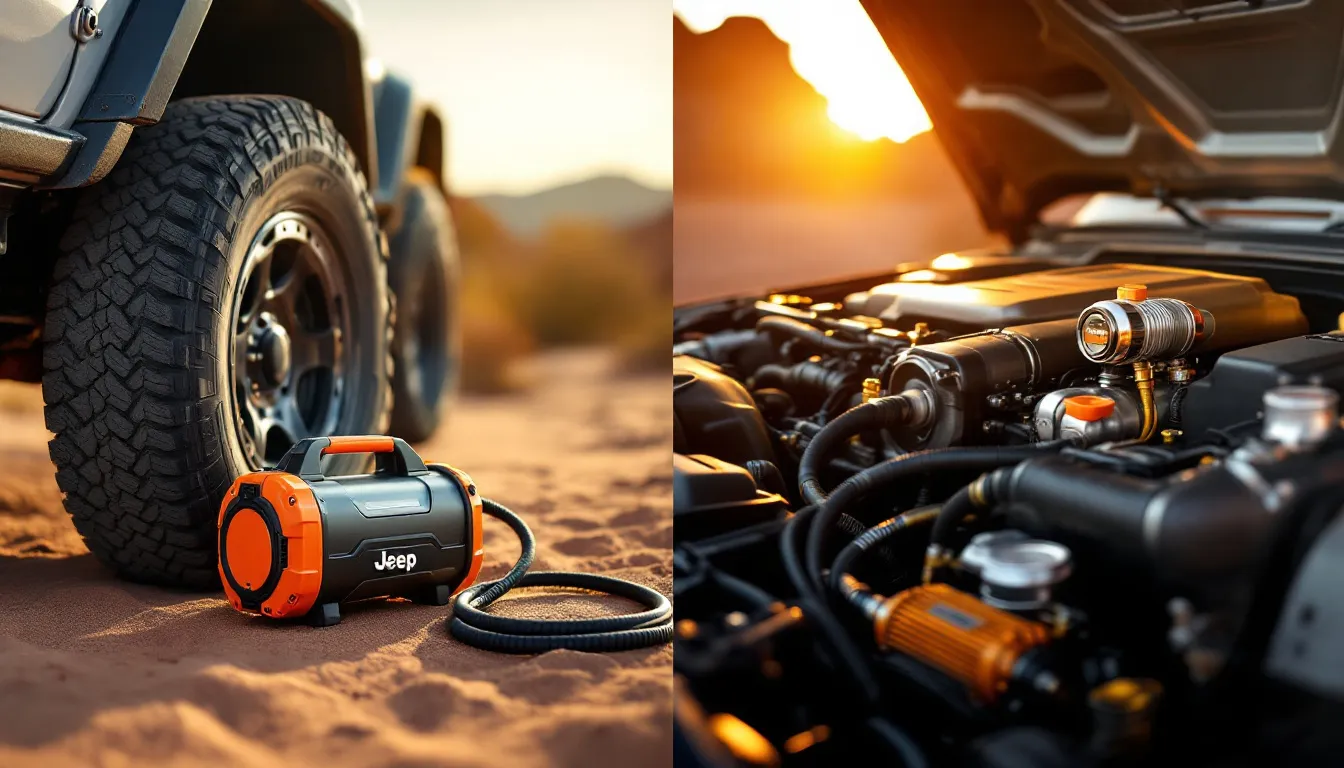
The choice between portable and onboard air for your JK comes down to three factors: how often you air down, how much space you have, and whether you’re willing to run wiring. Portable compressors live in your cargo area and plug into 12V outlets or battery clamps. Onboard systems mount permanently in the engine bay with hardwired power and deliver faster airing times with better duty cycles. Most weekend wheelers start with portable—it’s affordable, requires zero installation, and works fine for occasional use. Serious trail runners eventually upgrade to onboard for the speed and convenience of a permanently mounted system with quick-disconnect fittings. If you regularly air down for sand, rocks, or mud, you’ll want something that can handle four 35-inch tires without overheating.
For airing back up after a trail run, you’ll also want fast tire deflators to complete your recovery kit—they cut deflation time from minutes to seconds.
Quick Picks: Best Air Compressors for JK at a Glance
Here’s the short version if you’re in a hurry. These picks represent the best balance of CFM output, duty cycle, and real-world reliability based on JK community feedback and my own testing.
| Compressor | Type | CFM @ 30 PSI | Best For | Price Range |
|---|---|---|---|---|
| Viair 400P (Best Overall Portable) | Portable | 2.30 | Weekend wheelers, up to 35" tires | $200-250 |
| ARB Twin Compressor (Best Overall Onboard) | Onboard | 6.16 | Serious trail runners, air lockers, tools | $600-700 |
| Smittybilt 2781 | Portable | 2.54 | Budget option, occasional use | $80-120 |
| Viair 450P | Portable | 2.30 | 37"+ tires, faster airing | $300-350 |
| Viair 450C Onboard | Onboard | 2.30 | Single-compressor onboard, mid-budget | $350-400 |
CFM (cubic feet per minute) measures airflow volume—the higher the number, the faster you’ll inflate tires. PSI (pounds per square inch) measures pressure, which matters less than you think since most compressors easily hit 150+ PSI. The real spec to watch is duty cycle: the percentage of time a compressor can run before it needs to cool down. A 33% duty cycle means it runs for 20 minutes, then sits idle for 40. For airing up four 33-35 inch JK tires from 15 PSI to 32 PSI, you’ll want at least 2.0 CFM and a 50% duty cycle or better to avoid constant cooling breaks.
Portable vs Onboard Air: Which System is Right for Your JK?
The portable versus onboard decision isn’t about which system is “better”—it’s about matching the tool to your use case and installation comfort level. I’ve run both setups in different JKs, and each has clear strengths.
Portable compressors store in your cargo area or strapped to the tailgate and connect via battery clamps or a 12V accessory plug. They cost $80-350, require zero installation, and work on any vehicle you own. The downside: slower airing times, limited duty cycles on budget models, and you’ll need to dig them out and set them up each time. For weekend wheelers who air down a few times per season, portable makes perfect sense. I ran a Viair 400P for three years before upgrading to onboard, and it handled everything from beach sand to mountain trails without complaint.
Onboard systems mount permanently in the engine bay with hardwired power and air lines running to quick-disconnect fittings on the bumper or fender. They cost $350-700 depending on CFM output, require 4-6 hours of installation (more if you’re not comfortable with electrical upgrades), and deliver significantly faster airing with better duty cycles. The ARB Twin at 6.16 CFM will air four 35-inch tires in the time it takes a basic portable to do two. If you wheel monthly or run a lift with 35s or larger, onboard saves enough time to justify the cost and complexity.
I made the switch to onboard after running 35-inch mud terrains in the Cederberg for the first time. Airing down from 32 PSI to 18 PSI transformed how the Jeep handled rocky climbs—the sidewall flex was dramatic, and traction improved noticeably. But airing back up took 45 minutes with my portable compressor, and I had to let it cool twice. That experience taught me that bigger tires demand higher CFM output, not just for speed but to avoid burnout on trail. If you’re planning to regear and run 35s, budget for a compressor upgrade at the same time.
Here’s the decision matrix:
Choose portable if:
- You air down fewer than 6 times per year
- You’re running factory tire sizes or 33s
- You want a multi-vehicle solution that travels between rigs
- You’re not comfortable running permanent wiring
- Budget is under $250
Choose onboard if:
- You wheel monthly or more
- You’re running 35-inch tires or larger
- You plan to add air lockers or run air tools
- You have experience with 12V wiring or are willing to pay for professional installation
- You value speed and convenience over portability
For readers building a soft top JK for summer wheeling, portable makes sense since you may not want to commit to permanent modifications. Hard top rigs with roof racks and full recovery gear often go onboard since they’re already set up as dedicated trail vehicles.
Best Portable Air Compressors for Jeep JK (2007-2018)
Portable compressors range from $80 emergency inflatorsrs to $350 prosumer units that rival some onboard systems. Here are the models JK owners consistently recommend after real-world use.
Viair 400P — Best Overall Portable
The Viair 400P hits the sweet spot for most JK owners. At 2.30 CFM and a 33% duty cycle, it airs up four 33-inch tires from 15 PSI to 32 PSI in about 25-30 minutes total, including cooling breaks. The unit draws 30 amps max and comes with a 40-amp inline fuse, battery clamps, and a 30-foot air hose—long enough to reach all four corners without moving the compressor. The external heat sink keeps operating temps reasonable even in summer heat.
Real-world JK use: I’ve used this compressor for three seasons on 33-inch BFG KO2s and never had a failure. It handles sand recoveries, rock crawling deflation, and helping other drivers without complaint. The 400P works fine plugged into a 12V outlet if your JK has a heavy-duty accessory circuit, but battery clamps deliver more consistent power and eliminate voltage drop issues.
Pros:
- Reliable 2.30 CFM output for 33-35” tires
- Includes all necessary fittings and hose
- External heat sink improves duty cycle
- Works on 12V outlet or battery clamps
Cons:
- 33% duty cycle requires cooling breaks on larger tires
- Slightly bulky for 2-door JK cargo areas
- Price point higher than budget options
Smittybilt 2781 — Best Budget Portable
If $100 is your ceiling, the Smittybilt 2781 delivers surprising performance for the price. At 2.54 CFM, it actually outflows the Viair 400P on paper, though the 20% duty cycle means you’ll take more frequent cooling breaks. This compressor works best for occasional use—three or four trail days per year, not weekly wheeling. The carry bag and included deflator/inflator gauge make it a complete kit right out of the box.
Real-world JK use: Several friends run this compressor as a backup or emergency unit in their cargo bins. It handles 33-inch tires adequately but struggles with 35s due to the duty cycle limitations. For Rubicon trim JKs with larger factory tires, this works as a starter compressor before you commit to a higher-end unit.
Pros:
- 2.54 CFM at a budget price point
- Includes gauge and storage bag
- Adequate for occasional trail use
- Good for 33” tires and smaller
Cons:
- 20% duty cycle means frequent cooling
- Build quality doesn’t match Viair
- Not recommended for regular use on 35”+ tires
Viair 450P — Best for 37-Inch Tires and Larger
Step up to the 450P if you’re running 37s or plan to in the future. The CFM output stays at 2.30 (same as the 400P), but the heavier-duty motor and improved cooling extend the duty cycle to 100% at 100 PSI—meaning it can run continuously until the job is done. This compressor is overkill for factory tire sizes but becomes essential when you’re moving the air volume required by 37x12.50 tires. The 450P draws up to 40 amps and requires battery clamps; don’t try running it through a 12V outlet.
Real-world JK use: This is the portable you want if you’re serious about big tires but not ready to commit to onboard installation. The 100% duty cycle makes a noticeable difference when airing four large tires—no waiting for the compressor to cool means you’re back on pavement faster. The 450P handles air lockers and small air tools in a pinch, though it’s not ideal for continuous tool use.
Pros:
- 100% duty cycle at operating PSI
- Handles 37”+ tires without overheating
- Can run air lockers and small tools
- Heavy-duty motor built for durability
Cons:
- Price approaches budget onboard systems
- Larger and heavier than 400P
- Overkill for 33” tire setups
ARB CKMP12 Portable — Premium Portable Option
The ARB portable compressor delivers onboard-quality airflow in a portable package. At 2.12 CFM and a 100% duty cycle, it’s slightly slower than the Viair units but runs continuously without thermal shutdown. ARB’s build quality is excellent—this compressor is sealed against dust and moisture and comes with a 3-year warranty. The integrated pressure regulator and gauge eliminate the need for separate fittings.
Real-world JK use: This is the portable that onboard owners keep as a backup or loaner unit. The price is steep for a portable, but if you value reliability and don’t mind the weight (about 25 lbs with the air hose), the ARB won’t disappoint. It’s particularly popular with JK owners who also run ARB lockers, since the compressor can be integrated into an onboard system later if you decide to upgrade.
Pros:
- 100% duty cycle for continuous operation
- Excellent build quality and warranty
- Integrated pressure gauge and regulator
- Can be integrated into onboard system later
Cons:
- Premium price for portable unit
- Heavier than competing models
- CFM slightly lower than Viair 400P
Best Onboard Air Systems for Jeep JK (2007-2018)
Onboard systems eliminate the setup hassle of portable compressors and deliver faster airing with better duty cycles. Installation is more involved, but the convenience pays off if you wheel regularly.
ARB Twin Compressor — Best Overall Onboard
The ARB Twin is the gold standard for onboard air in the JK community. Two motors running in parallel deliver 6.16 CFM at 0 PSI (flow rate decreases as pressure increases, but it’s still significantly faster than any portable). The 100% duty cycle means it runs continuously until the job is done—no thermal shutdowns, no cooling breaks. Four 35-inch tires aired from 15 PSI to 32 PSI typically take 10-12 minutes total, roughly half the time of a quality portable compressor.
The Twin also powers ARB air lockers without requiring a separate compressor, and it handles light-duty air tools (impact wrenches, blow guns) when you add an air tank. The sealed motor and water separator make it durable enough for dusty trails and water crossings. Most JK owners mount it on the driver-side firewall in the engine bay, though the 2-door models have less clearance and may require creative mounting.
Installation overview:
- Mount compressor to firewall or fender well using vibration-isolating mounts
- Run 8-gauge power wire from battery with 40-amp inline fuse
- Route air line from compressor through firewall to quick-connect fitting on bumper
- Wire activation switch to dash or use wireless controller
- Install water separator and pressure gauge in air line
For detailed wiring guidance, refer to the JK electrical upgrades article or the winch installation guide if you’re already familiar with 12V systems.
Pros:
- 6.16 CFM for fastest airing in class
- 100% duty cycle, runs continuously
- Powers air lockers and light air tools
- Sealed motor, highly durable
- 3-year warranty
Cons:
- Premium price ($600-700)
- Requires 4-6 hours installation
- Larger footprint than single-motor systems
- Overkill if you only air up tires occasionally
Viair 450C Onboard — Best Mid-Budget Onboard
The Viair 450C offers onboard convenience at half the cost of the ARB Twin. At 2.30 CFM, it matches the portable 450P for output but with the permanent mounting and wiring that make it quick-connect ready. The 100% duty cycle at 100 PSI means it handles 35-inch tires without overheating, though airing times run about 20-25 minutes for four tires—slower than the Twin but still faster than dragging out a portable compressor.
This is the onboard system most JK owners install when they want the convenience of hardwired air but don’t need the speed of a dual-motor setup. It mounts to the firewall with less bulk than the Twin, making it a better fit for 2-door JKs with limited engine bay space.
Installation overview:
- Mount compressor to firewall using factory bolt holes if available
- Run 8-gauge power wire with 40-amp fuse to battery positive terminal
- Ground to chassis near compressor mount
- Route air line through firewall grommet to bumper quick-connect
- Install pressure switch or manual activation
If you’ve installed a winch before, the wiring process is nearly identical. The air line routing is the new element, but it follows the same path as electrical cables through the firewall.
Pros:
- 2.30 CFM handles 35” tires adequately
- 100% duty cycle prevents overheating
- Half the price of ARB Twin
- Smaller footprint for 2-door JKs
Cons:
- Slower than dual-motor systems
- Not powerful enough for air tools
- Single motor less redundancy than Twin
Kilby Onboard Air System — Best for Integrated Bumper Mounts
Kilby’s onboard system integrates the compressor into their aftermarket bumper designs, eliminating the need for engine bay mounting. This is ideal for JK owners who want to keep the engine bay stock or who have already filled available space with a winch, auxiliary battery, or upgraded cooling components. The Viair 480C compressor delivers 2.30 CFM with a 100% duty cycle and mounts inside a weatherproof enclosure built into the bumper structure.
The downside: you’re locked into Kilby bumpers, and the integrated design costs more than buying a standalone compressor and mounting it yourself. But if you’re already shopping for a heavy-duty front bumper, the all-in-one solution eliminates the mounting and wiring headaches.
Installation overview:
- Install Kilby bumper per manufacturer instructions
- Wire compressor from integrated enclosure to battery (wiring pre-routed in bumper)
- Connect air line from compressor to quick-connect on bumper face
- Install activation switch in cab
Pros:
- Integrated bumper mount saves engine bay space
- Clean installation with minimal visible wiring
- 2.30 CFM handles 35” tires
- Weatherproof enclosure protects compressor
Cons:
- Requires Kilby bumper purchase
- More expensive than standalone compressor
- Limited upgrade options if you want higher CFM later
Air Compressor Buying Guide: CFM, PSI, and Duty Cycle Explained for JK Owners
Let’s cut through the marketing specs and focus on what actually matters when you’re airing up 33-35 inch tires on a trail.
CFM: The Spec That Matters Most
CFM (cubic feet per minute) measures how much air volume the compressor moves. Higher CFM means faster airing. For JK owners, here’s the practical breakdown by tire size:
| Tire Size | Minimum CFM | Recommended CFM | Approx. Airing Time (4 tires, 15→32 PSI) |
|---|---|---|---|
| Factory (29-32") | 1.5 CFM | 2.0+ CFM | 15-20 minutes |
| 33-35" | 2.0 CFM | 2.3+ CFM | 20-30 minutes |
| 37" | 2.3 CFM | 4.0+ CFM | 30-40 minutes (2.3 CFM) / 15-20 min (4+ CFM) |
When I ran those 35-inch mud terrains in the Cederberg, I learned this lesson the hard way. My 2.0 CFM portable took nearly 45 minutes to air all four tires back to 32 PSI, and I had to stop twice to let it cool. The sidewall flex and traction gains from airing down were incredible—the Jeep climbed ledges I’d previously had to winch over—but the airing back up process was painful. If I’d known then what I know now, I would have upgraded to a 2.3+ CFM compressor before that trip. The faster you can get back to highway pressure, the less you’ll be tempted to skip airing down in the first place.
PSI: Don’t Overthink It
PSI (pounds per square inch) measures maximum pressure output. Nearly every compressor marketed for vehicles hits 150+ PSI, which is far beyond what you need for tires (most JK owners run 28-35 PSI on pavement). PSI only matters if you’re filling high-pressure air shocks or running specialized tools. For tire inflation, ignore this spec—focus on CFM instead.
Duty Cycle: The Hidden Spec That Matters
Duty cycle is the percentage of time a compressor can run before it needs to cool. A 33% duty cycle means 20 minutes on, 40 minutes off. A 100% duty cycle means it runs continuously until the job is done. This becomes critical when you’re airing up four large tires in summer heat.
Budget compressors (under $150) typically run 20-33% duty cycles. They work fine for emergency use or small tires but force you to take cooling breaks with 35s. Mid-range units ($200-400) offer 50-100% duty cycles and handle regular trail use without issue. Onboard systems almost always feature 100% duty cycles since they’re designed for continuous operation.
For building a complete airing system, pair your compressor with tire deflators for fast airing down—they cut deflation time from several minutes per tire to under 60 seconds total.
Installation Tips: Portable Storage and Onboard Mounting for JK Wranglers
Getting your compressor installed or stored correctly makes the difference between a tool you actually use and one that stays in the garage.
Portable Compressor Storage
Secure your portable compressor—a 20-25 lb projectile in a rollover is dangerous. I use a heavy-duty cargo net anchored to the factory tie-down loops in the rear cargo area, but many JK owners prefer Molle panels or under-seat storage boxes. The key is keeping the compressor accessible but restrained.
Storage locations that work:
- Rear cargo area (4-door): Behind rear seat, strapped to Molle panel or secured with cargo net
- Under rear seat (4-door): Storage boxes designed to fit under bench seat
- Tailgate mount (2-door/4-door): External carriers that mount to spare tire or tailgate—keeps compressor outside but exposes it to weather
- Behind front seats (2-door): Secured to seat mounts or floor tie-downs—takes up passenger space but keeps weight low
Never leave a portable compressor loose in the cargo area. Mount it, strap it, or box it. In a hard stop or rollover, that compressor becomes a battering ram.
Store the air hose and accessories in the same location so you’re not hunting for fittings at the trailhead. Label your storage bag with a checklist: compressor, hose, pressure gauge, tire deflators, valve stem tool, fuse. You’ll thank yourself when you’re setting up in the dark.
Onboard System Installation
Onboard installation requires basic 12V wiring skills and 4-6 hours if you’re methodical. If you’ve installed a winch before, you already have the core skills—onboard air just adds an air line instead of a winch cable.
Mounting locations by JK model:
- 2007-2011 JK (3.8L engine): Driver-side firewall has the most clearance. Avoid mounting near the hot exhaust manifold.
- 2012-2018 JK (3.6L engine): Driver-side firewall or passenger-side fender well both work. The 3.6L engine bay has slightly more room.
- 2-door JK: Tighter engine bay requires smaller single-motor compressors. Consider bumper-integrated systems if space is limited.
- 4-door JKU: More engine bay space accommodates dual-motor systems without issues.
For detailed model year variations that affect mounting space, see the JK model year differences article.
Wiring steps (high-level overview):
- Mount compressor using vibration-isolating rubber mounts—compressors vibrate heavily and will fatigue metal mounts
- Run 8-gauge power wire from battery positive terminal through firewall grommet to compressor
- Install 40-50 amp inline fuse within 12 inches of battery terminal
- Ground compressor to chassis using existing ground point or clean metal surface
- Route air line through firewall grommet (use separate grommet from electrical if possible)
- Install quick-connect fitting on bumper or fender for easy hose attachment
- Wire activation switch to dash or install wireless controller
Safety warnings you cannot ignore:
- Always use an inline fuse rated for your compressor’s max draw—most onboard units draw 30-40 amps
- Secure all wiring with UV-resistant zip ties—loose wires near hot engine components are a fire hazard
- Use split loom or heat-resistant sleeving where air lines or wires pass near the exhaust manifold
- Mount compressor away from heat sources—exhaust manifolds, turbos, and radiators all reduce compressor life
If you’re not comfortable with 12V wiring, refer to the winch wiring guide for detailed electrical best practices, or have a professional shop handle the installation. Most off-road shops charge $200-300 for onboard air installation, which includes proper wire routing, weatherproof connections, and a quick-connect bumper fitting.
Air Compressor FAQ for Jeep JK Owners
What CFM do I need for 35-inch tires on a JK?
You need at minimum 2.0 CFM for 35-inch tires, but 2.3 CFM or higher is recommended. A 2.0 CFM compressor will air four 35-inch tires from 15 PSI to 32 PSI in 30-40 minutes, including cooling breaks if the duty cycle is under 100%. Jump to 2.3+ CFM and you cut that time to 20-25 minutes. If you run 35s regularly, the faster compressor is worth the extra $100-150—waiting an extra 15 minutes at the trailhead gets old fast.
Can I run an air compressor off the cigarette lighter in a JK?
Most compressors draw too much amperage for the 12V accessory outlets in a JK. Factory cigarette lighter circuits are fused at 15-20 amps, but quality compressors draw 20-40 amps at peak load. You’ll blow the fuse immediately or damage the outlet. Small emergency inflators (under 1.5 CFM) may work on a 12V outlet, but anything marketed for off-road use requires battery clamps or hardwired power. Check your compressor’s manual—if it includes battery clamps, it’s too powerful for the accessory outlet.
How long does it take to air up four tires with a portable compressor?
Expect 20-30 minutes for four 33-35 inch tires with a 2.0-2.5 CFM portable compressor. That assumes airing from 15 PSI (typical trail pressure) to 32 PSI (highway pressure) and includes one or two cooling breaks if your compressor has a 33-50% duty cycle. Larger tires take longer—four 37-inch tires can take 40+ minutes with a 2.3 CFM unit. Onboard systems with 4+ CFM cut that time in half. Factor in setup time (connecting hoses, checking pressure) and you’re looking at 30-40 minutes total for the portable process versus 15-20 minutes for onboard.
Do I need an air tank with my onboard compressor?
An air tank improves performance but isn’t required for tire inflation. Compressors deliver continuous airflow, which works fine for tires—you just hold the chuck on the valve stem until the tire reaches target pressure. Add a 2-5 gallon air tank and you gain two benefits: faster initial fill (the tank delivers a burst of stored air before the compressor kicks in) and the ability to run air tools like impact wrenches. Most JK owners skip the tank initially and add one later if they start using air tools regularly. If you only air tires and occasionally blow dust out of the engine bay, save the $150 and skip the tank.
Will an onboard compressor drain my JK battery?
A properly functioning compressor will not drain a healthy JK battery during normal use. Most onboard units draw 15-25 amps and run for 10-20 minutes to air four tires—that’s roughly the same load as running your headlights and heater fan together. A stock JK battery has 60-80 amp-hours of capacity, so you’d need to run the compressor for several hours straight to drain it. If your battery is weak or you have other electrical issues (corroded terminals, failing alternator, parasitic draw), the compressor may expose those problems. For more on JK electrical health, see the JK common problems article.
What’s the best place to mount an air compressor in a 2-door JK?
The driver-side firewall above the steering shaft is the most common location for 2-door JKs. This spot provides reasonable access, keeps the compressor away from the hot exhaust manifold, and allows for relatively short air line and power wire runs. The challenge: 2-door JKs have less engine bay space than 4-door JKUs, so larger dual-motor compressors (like the ARB Twin) may not fit without relocating other components. Single-motor units like the Viair 450C fit more easily. Alternative mounting locations include the passenger-side fender well (behind the battery) or bumper-integrated systems that eliminate engine bay mounting entirely.
Final Recommendation: Which Air Compressor Should You Buy for Your JK?
If you’re running 33-inch tires and air down fewer than 10 times per year, buy the Viair 400P portable. It’s affordable, reliable, and handles weekend wheeling without issue. Store it in a secured cargo box and you’re ready for any trail.
If you’re serious about off-roading—monthly trail runs, 35-inch tires, regular sand or rock crawling—upgrade to the ARB Twin onboard system. The initial cost and installation time pay off immediately in faster airing and the convenience of quick-connect fittings on your bumper. You’ll never go back to portable after experiencing onboard.
For budget-conscious buyers who need onboard convenience without premium cost, the Viair 450C Onboard splits the difference. It’s not as fast as the Twin, but it’s far more convenient than portable and handles 35-inch tires adequately.
The compressor you choose matters less than the habit of airing down when conditions call for it. I’ve learned over the years that the best off-road advice rarely comes from spec sheets or marketing materials—it comes from talking to owners who’ve actually used the gear in real conditions. That’s why I rely on JK community feedback, trail reports from friends who beat their rigs hard, and my own experiences sorting out what works versus what just looks good in photos. Specs tell you what a compressor should do. Real-world testing tells you what it actually does when you’re airing back up in 95-degree heat after a day on the rocks.
For more electrical system upgrades to complement your new compressor, explore the electrical and lighting upgrades section. And if you’re still shopping for your JK, start with the JK buyer’s guide to make sure you pick the right model year and trim for your needs.
Get the Free JK Build Planner
Complete PDF with mod checklists, gear ratios, tire sizing charts, and budget worksheets. Everything you need to plan your JK build.
No spam. Unsubscribe anytime. By subscribing, you agree to our Privacy Policy.
Allan
I'm Allan. I bought a 2014 Jeep Wrangler JKU and I research the hell out of every mod before I touch it. Everything here is tested or deeply researched on my own rig - no sponsored fluff, just honest findings.
Learn more about me →Get the JK Build Planner
Free PDF with complete build checklists, gear ratios, and tire fitment guides.
By subscribing, you agree to our Privacy Policy.
Related Articles
How to Install Halo Headlights on Jeep JK: Step-by-Step Guide
Install halo headlights on your Jeep JK in under an hour with this complete DIY guide. H13 wiring, anti-flicker setup, and proper aiming explained.
How to Wire Aux Switches on Jeep JK: Complete Installation Guide
Step-by-step guide to wiring aux switches on Jeep JK with relays, fuse protection, and safe power routing. Includes troubleshooting and complete diagrams.
Best LED Halo Headlights for Jeep Wrangler JK: Top 7 Picks
The best LED halo headlights for Jeep Wrangler JK balance brightness, DOT approval, and budget. Compare 7 top picks from $60-$600 with installation tips.