Best JK Lift Kits for Towing: Heavy Duty Suspension Options
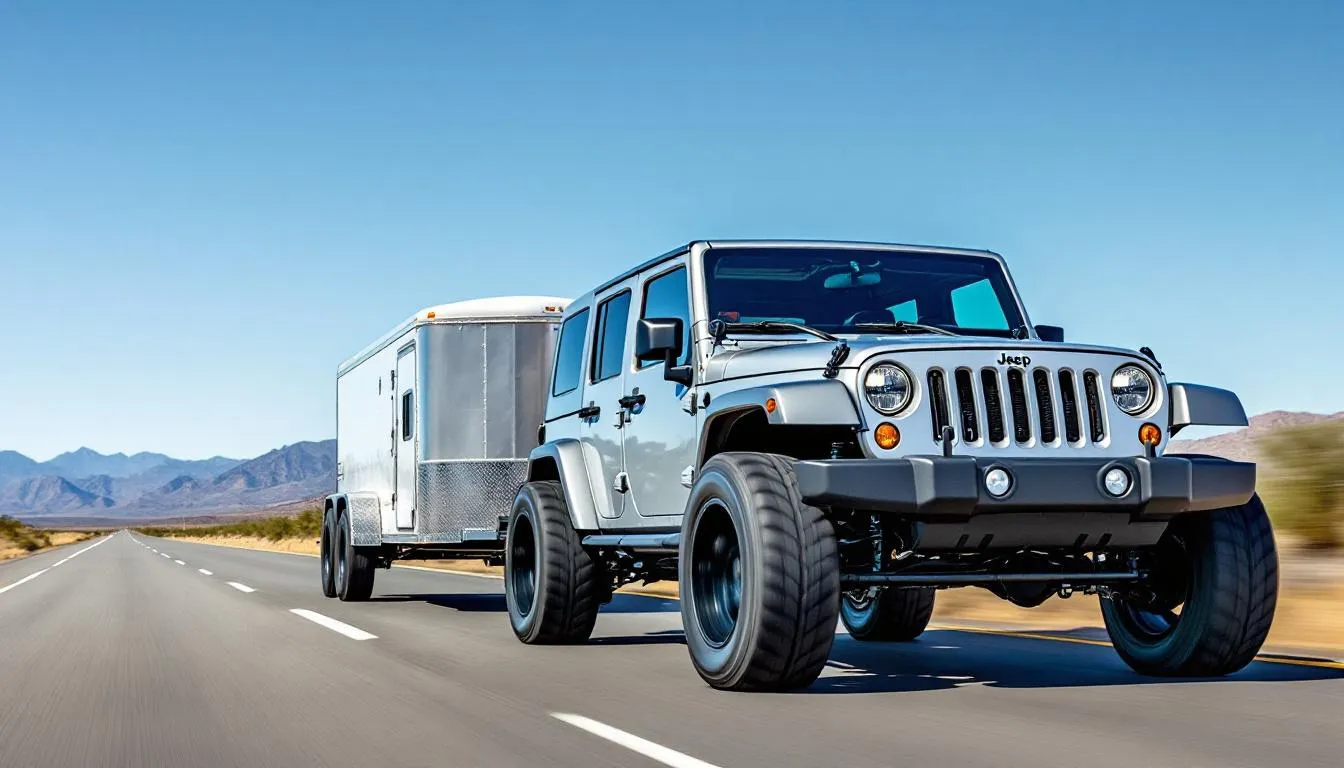
The best JK lift kit for towing isn’t about maximum height—it’s about spring rates, damping control, and maintaining stability under 350-500 pounds of tongue weight. Jeep Wrangler JKs can legally tow up to 3,500 pounds, but stock suspension sags 2-3 inches when you connect a loaded boat trailer or utility trailer, creating dangerous nose-high stance and reduced braking performance.
Heavy-duty lift kits solve this problem using stiffer rear springs (typically 250-280 lb/in versus 200-220 lb/in in trail-focused lifts), high-capacity shocks with 44-50mm pistons, and progressive-rate designs that maintain ride quality when unladen but firm up under load. The right suspension keeps your JK level, improves highway stability, and prevents the squat that throws off headlight aim and steering geometry.
This guide covers complete lift kits rated for maximum towing capacity, shock upgrades that reduce body roll and improve damping, helper spring systems that add load support without permanent ride quality changes, and component builds for custom towing setups. You’ll learn which spring rates work for different trailer weights, how bypass shocks automatically adjust for loaded versus unloaded driving, and what suspension modifications maintain proper geometry under tongue weight.
Whether you tow a 2,800-pound boat twice per summer or daily-haul a 3,400-pound enclosed trailer, the suspension recommendations below address your specific needs without forcing you to choose between comfortable daily driving and stable towing performance.
What Makes a Lift Kit Good for Towing? (It’s Not Just Height)
Height alone does nothing for towing performance. A towing-capable lift kit addresses three specific problems: spring sag under tongue weight, reduced suspension travel during compression, and inadequate damping control when loaded.
Spring rate determines how much a coil or leaf spring compresses under a given weight. Standard lift springs designed for trail use typically rate between 180-220 lbs/in for front coils and 200-240 lbs/in for rears. These rates handle the weight of bumpers, armor, and larger tires, but they weren’t calculated to support an additional 350-500 pounds of tongue weight at the hitch.
When you connect a trailer, tongue weight applies a downward force at the rear bumper—typically 10-15% of total trailer weight. A 3,000-pound boat trailer creates roughly 400 pounds of tongue weight. That force compresses the rear springs, reducing ground clearance and throwing off suspension geometry. The rear axle moves upward in its travel arc, changing pinion angle and creating driveline vibration. Front springs extend as weight transfers off the nose, lifting the front bumper and reducing headlight aim.
Heavy-duty JK towing suspension uses higher spring rates—typically 240-280 lbs/in at the rear—to minimize compression under tongue weight. Some designs use progressive-rate coils that start soft for unladen ride quality but stiffen progressively as they compress. This dual-rate behavior lets you drive comfortably when solo while providing the support needed when loaded.
Shock absorbers control spring oscillation and damping becomes critical when towing. A loaded trailer adds inertia that wants to push and pull the Jeep during acceleration, braking, and cornering. Inadequate damping allows the suspension to bounce through its travel, creating a feedback loop where trailer sway induces body roll, which further destabilizes the trailer.
Towing-specific shocks use larger-diameter pistons (often 46-50mm instead of the standard 40-42mm), increased oil volume, and multistage valving that provides more resistance during high-velocity compression events. Twin-tube designs with separate compression and rebound circuits handle heat buildup better during extended highway pulls. Reservoir shocks offer even more oil capacity and external adjustment for fine-tuning based on load.
Suspension geometry changes matter more when towing than during normal driving. As rear springs compress, the axle rotates slightly, altering caster angle and toe settings. Most drivers notice this as vague steering feel or the Jeep wanting to wander in its lane. Track bars and control arms need to maintain proper angles throughout the suspension’s travel range. Adjustable track bars let you recenter the axle after installing stiffer springs, and fixed-length control arms (versus adjustable) maintain consistent geometry across the full compression cycle.
The best towing suspension isn’t necessarily the stiffest—it’s the system that maintains factory-spec ride height under your typical tongue weight while providing enough travel for off-road use and enough damping control to prevent oscillation at highway speeds.
Top 7 Heavy-Duty Lift Kits for Towing (Ranked by Load Capacity)
These lift kits prioritize load-carrying capacity and stability under towing conditions. Rankings reflect spring rates, shock valving, and real-world performance when hauling trailers in the 2,500-3,500 pound range.
1. Rancho RS66112 Performance System (3.5” Lift)
The Rancho RS66112 uses progressive-rate coils with 260 lb/in rear spring rates and RS5000X shocks featuring nine-stage valving. The system maintains ride height within 0.5 inches under 400 pounds of tongue weight and includes heavy-duty track bar and adjustable control arms to maintain geometry under load. The RS5000X shocks use a twin-tube design with increased oil capacity compared to standard Rancho units.
{{< affiliate-product productId=“rancho-rs66112” title=“Rancho RS66112 3.5” Performance System” description=“Complete towing-focused suspension with progressive springs and 9-stage shocks” image=“/images/products/rancho-rs66112.jpg” cta=“Check Price”
}}
Expect firmer ride quality unladen compared to trail-focused lifts, but the progressive springs soften noticeably once the initial coil wraps take load. Steering response stays consistent whether empty or towing, and highway stability remains neutral at 70 mph with a 3,200-pound trailer. The included brake line extensions and shock boots add durability for mixed street and trail use.
2. Skyjacker H3511K Hydro (3.5” System)
Skyjacker’s H3511K pairs high-arc rear springs with Hydro 7000 shocks that use 50mm pistons and velocity-sensitive valving. Rear spring rates measure 275 lb/in—among the stiffest in bolt-on JK lift kits—which virtually eliminates squat with typical boat trailer tongue weights. The Hydro shocks feature seven compression stages that firm up progressively during rapid suspension movement.
{{< affiliate-product productId=“skyjacker-h3511k” title=“Skyjacker H3511K Hydro System” description=“Maximum spring rate for heavy towing, 275 lb/in rear springs” image=“/images/products/skyjacker-h3511k.jpg” cta=“View on Amazon”
}}
This setup delivers excellent load control but rides harsh when empty, especially over sharp bumps. The stiff springs transmit more road texture to the cabin than progressive-rate designs. It’s the right choice if you tow frequently and prioritize trailer stability over daily comfort. The kit includes front track bar relocation bracket but requires separate adjustable rear track bar for proper axle centering.
3. Rough Country 67730 Vertex (2.5” Lift with Vertex Shocks)
Rough Country’s 67730 combines moderate 2.5” lift height with Vertex shocks that feature external reservoirs and adjustable compression damping. Spring rates measure 230 lb/in front and 255 lb/in rear—less aggressive than dedicated towing kits but paired with superior damping control. The external reservoirs increase oil capacity by 60% compared to monotube shocks, reducing fade during long highway pulls.
{{< affiliate-product productId=“rough-country-67730” title=“Rough Country 67730 Vertex System” description=“Adjustable reservoir shocks with moderate spring rates for mixed use” image=“/images/products/rough-country-67730.jpg” cta=“Check Current Price”
}}
The adjustable compression lets you dial in damping based on load. Set at full soft (12 clicks out), the system rides comfortably for daily driving. Dial in 6-8 clicks of compression when towing, and body control improves dramatically without becoming punishing. The lower lift height minimizes changes to center of gravity, which helps when towing taller trailers like horse trailers or enclosed car haulers.
Spring rates feel softer than the Skyjacker system, allowing about 1 inch of rear squat under 400 pounds of tongue weight. Some drivers add helper springs to further limit compression.
4. Old Man Emu BP-51 Suspension System (2.5” Lift)
The OME BP-51 system uses external-bypass shocks with position-sensitive damping that automatically adjusts based on suspension travel. Light compressions (first 60mm) receive minimal damping for ride comfort. As the shock compresses further, oil flows through progressive bypass circuits, increasing resistance. Under full compression—like when hitting a pothole while towing—maximum damping prevents harsh bottom-out.
{{< affiliate-product productId=“ome-bp51-system” title=“Old Man Emu BP-51 Complete System” description=“External bypass technology with position-sensitive damping” image=“/images/products/ome-bp51.jpg” cta=“View Details”
}}
Spring rates measure 240 lb/in rear, and the system includes OME’s heavy-duty coil springs with progressive winding. The BP-51 shocks feature remote reservoirs connected by braided lines, requiring careful routing during installation to prevent chafing. They’re externally adjustable for both compression and rebound, giving you complete control over ride characteristics.
This is the most expensive option in this category, but the bypass technology delivers ride quality that other heavy-duty systems can’t match. It’s particularly effective when you alternate between unladen daily driving and weekend towing, as you don’t need to change settings—the shocks adjust automatically based on load and terrain.
5. TeraFlex 1251200 Alpine RT2 (2.5” Short Arm)
TeraFlex’s Alpine RT2 system pairs dual-rate coil springs with FlexArm control arms and 2.1” aluminum-bodied shocks. The dual-rate rear springs start at 215 lb/in for the first 2 inches of travel, then jump to 280 lb/in for deeper compression. This design provides comfortable daily ride quality while limiting squat when you connect a trailer.
{{< affiliate-product productId=“teraflex-1251200” title=“TeraFlex Alpine RT2 Short Arm System” description=“Dual-rate springs with anti-squat geometry improvements” image=“/images/products/teraflex-alpine-rt2.jpg” cta=“Check Price”
}}
The FlexArm control arms use forged ends and polyurethane bushings sized to handle increased loads without deflection. The rear lower control arms feature relocated mounting points that improve anti-squat geometry, reducing the suspension’s tendency to compress under acceleration or tongue weight. The included shocks use large-diameter pistons but lack external reservoirs.
Highway manners with a trailer are excellent due to the anti-squat geometry changes. You’ll notice reduced nose-lift during hard acceleration compared to standard-geometry lifts. The system works best for lighter trailers (2,000-2,800 pounds) where the dual-rate springs can do their job without constant deep compression into the stiff secondary rate.
6. Rubicon Express RE7210 Super-Flex (2.5” Short Arm)
Rubicon Express built the RE7210 specifically for JKs used to tow utility trailers, boat trailers, and small campers. It uses constant-rate coils at 250 lb/in rear but includes air bump stops that engage in the final 2 inches of travel. The air bumps act as progressive-rate assisters—they don’t affect ride quality during normal driving, but they prevent metal-to-metal contact when loaded.
{{< affiliate-product productId=“rubicon-express-re7210” title=“Rubicon Express RE7210 Super-Flex” description=“Constant-rate springs with progressive air bump stops” image=“/images/products/rubicon-express-re7210.jpg” cta=“View on Amazon”
}}
The kit includes Rubicon Express Mono-Tube shocks with 46mm pistons and high-flow valving optimized for loaded conditions. These shocks run cooler than twin-tube designs during extended highway use, and they maintain consistent damping characteristics as oil temperature rises. The trade-off is harsher initial response to small bumps compared to twin-tube or reservoir shocks.
Ride height stays within 0.75 inches of target height under 400 pounds of tongue weight—acceptable for most towing scenarios. Steering feel remains consistent, and the air bumps provide excellent bottom-out protection when crossing uneven terrain while towing. You’ll need to replace the air bumps every 30,000-40,000 miles as the internal air chambers lose pressure over time.
7. Zone Offroad J21N (2.5” Lift with Nitro Shocks)
Zone’s J21N offers heavy-duty performance at a mid-range price point. Spring rates measure 245 lb/in rear with linear (constant-rate) design and Nitro gas-charged shocks featuring twin-tube construction. The shocks use 44mm pistons—larger than Zone’s standard trail shocks but smaller than dedicated towing units from Rancho or Skyjacker.
{{< affiliate-product productId=“zone-j21n” title=“Zone Offroad J21N Complete Kit” description=“Budget-friendly towing suspension with constant-rate springs” image=“/images/products/zone-j21n.jpg” cta=“Check Current Price”
}}
The kit includes heavy-duty sway bar links, extended brake lines, and all necessary hardware for a complete installation. The constant-rate springs don’t offer the unladen comfort of progressive or dual-rate designs, but they’re predictable and consistent under load. Expect a firm ride when empty that improves once you add weight—passengers, gear, or trailer tongue weight.
Highway stability when towing is good but not exceptional. The Nitro shocks control body roll adequately at speeds up to 65 mph but start to feel overwhelmed during high-speed lane changes with a loaded trailer. This system works well for occasional towing (weekend warrior use) but shows its limitations if you tow frequently or run at highway speeds for extended periods.
| Lift Kit | Lift Height | Rear Spring Rate | Shock Type | Best For | Approx. Price |
|---|---|---|---|---|---|
| Rancho RS66112 | 3.5” | 260 lb/in progressive | RS5000X 9-stage | Frequent towing, best all-around | $$$ |
| Skyjacker H3511K | 3.5” | 275 lb/in constant | Hydro 7000 7-stage | Maximum load capacity | $$$ |
| Rough Country 67730 | 2.5” | 255 lb/in constant | Vertex adjustable reservoir | Mixed use, adjustability | $$ |
| OME BP-51 | 2.5” | 240 lb/in progressive | External bypass | Premium performance | $$$$ |
| TeraFlex Alpine RT2 | 2.5” | 215/280 lb/in dual-rate | 2.1” aluminum body | Light-medium trailers | $$$ |
| Rubicon Express RE7210 | 2.5” | 250 lb/in constant | Mono-tube 46mm | Utility/boat trailers | $$ |
| Zone Offroad J21N | 2.5” | 245 lb/in constant | Nitro gas twin-tube | Budget occasional towing | $ |
Best Shocks for Towing (Upgrade Your Existing Lift)
If you already run a lift kit but experience squat, sway, or poor damping when towing, upgrading shocks delivers immediate improvement without replacing springs or control arms. Towing-specific shocks prioritize damping control and heat management over trail-focused features like low-speed compliance.
Bilstein 5160 Remote Reservoir Shocks
The 5160 series uses monotube construction with external reservoirs connected by braided hose. Oil capacity increases by 84% compared to standard 5100 shocks, and the remote mounting lets you position the reservoir away from exhaust heat or potential trail damage. Piston diameter measures 60mm—significantly larger than most stock-replacement shocks—providing more damping force at identical shaft speeds.
These shocks use velocity-sensitive valving that delivers soft ride quality at low shaft speeds (under 2 inches per second) but firms dramatically as speeds increase. When you hit a pothole while towing, shaft speed spikes to 8-10 inches per second, and the 5160 generates enough resistance to prevent harsh bottom-out. During highway cruising, small road irregularities create low shaft speeds, so the shocks stay compliant.
The external reservoirs require careful mounting. Front reservoirs typically mount to the frame rail using included brackets. Rear reservoirs can mount to the frame or shock tower, but you’ll need to verify hose routing doesn’t interfere with driveshafts, sway bars, or flex at full droop.
Fox 2.0 Performance Series IFP
Fox 2.0 shocks use Internal Floating Piston (IFP) technology that separates shock oil from the nitrogen charge using a sliding piston instead of a bladder. This design prevents oil cavitation—the formation of air bubbles that reduce damping performance—during prolonged highway use when towing. The aluminum body measures 2.0 inches in diameter, providing substantial oil volume for heat dissipation.
Valving is firmer than trail shocks but not as aggressive as race-oriented Fox units. The compression damping feels progressive—light through the first half of travel, then noticeably stiffer as the shock compresses. This characteristic works well for towing because the shocks stay comfortable unladen but provide increasing control as trailer weight loads the suspension.
Fox doesn’t include reservoirs on the 2.0 series, keeping cost and complexity lower than the 2.5 Factory Race Series. You’ll still get better heat management than twin-tube shocks due to the aluminum body’s superior heat transfer compared to steel. These shocks work particularly well if you tow in mountainous terrain where sustained braking generates significant suspension activity.
King OEM Performance Series
King builds their OEM Performance shocks with towing and payload in mind. The 2.5-inch aluminum body houses a 50mm piston with multistage compression and rebound stacks. Oil capacity measures 12 ounces per shock—roughly double a standard monotube—and the nitrogen charge pressure can be custom-set based on your typical load weight.
The shocks ship with 200 psi nitrogen charge for unloaded JKs. If you consistently tow, King recommends increasing charge pressure to 225-250 psi, which raises the effective spring rate slightly and reduces how far the suspension compresses under tongue weight. You’ll need a nitrogen charging kit to make these adjustments, but it provides tuning capability that fixed-charge shocks can’t match.
Ride quality feels exceptionally controlled when loaded but can feel overdamped when running empty with high nitrogen pressure. If you tow frequently, the trade-off is worthwhile. If you only tow occasionally, the constant firmness becomes tiresome for daily driving.
Rancho RS9000XL Adjustable Shocks
The RS9000XL offers nine-position external adjustment without requiring nitrogen charging equipment or reservoir mounting. Each click changes the compression damping force by approximately 8%. Position 1 provides the softest ride; position 9 delivers maximum control for heavy loads.
The twin-tube design uses a 44mm piston with position-sensitive valving. At low shaft speeds (small bumps, gentle road undulations), damping force stays relatively constant across all nine positions. At high shaft speeds (large impacts, rapid compression during braking), the difference between position 1 and position 9 becomes dramatic.
For towing, most drivers run positions 6-8 depending on trailer weight. Position 6 works well for lighter trailers around 2,000 pounds. Position 8 handles the JK’s maximum towing capacity without excessive body motion. The ability to adjust without tools—just twist the external knob—makes these shocks practical for JKs that alternate between daily driving and weekend towing.
Heat management isn’t as effective as reservoir or large-body monotube shocks. During extended highway pulls in hot weather, you may notice damping performance fade slightly as oil temperature rises. The shocks recover quickly once you slow down or stop, but they’re not the best choice for sustained high-speed towing in desert or summer conditions.
Helper Springs: The Secret Weapon for Heavy Towing
Helper springs engage only during compression, providing additional support when you connect a trailer without affecting unladen ride quality. They’re the most cost-effective upgrade for JKs that tow occasionally but need serious load support when hooked up.
Air Lift LoadLifter 5000 Ultimate
Air Lift’s LoadLifter 5000 system uses heavy-duty air springs that mount between the frame rail and rear axle. When deflated, they have minimal effect on ride quality—the suspension behaves exactly as it did before installation. Inflate them to 5-50 psi based on tongue weight, and they act as progressive-rate helpers that increase effective spring rate without changing shock valving or coil springs.
The kit includes dual air springs, mounting brackets, air line, and a dual-path air manifold that lets you adjust both sides simultaneously. You’ll need to add an inflation system—either a basic Schrader valve mounted inside the bumper for manual inflation or an onboard air compressor with cab-mounted controls for on-the-fly adjustment.
With a 3,500-pound trailer creating approximately 450 pounds of tongue weight, running 35-40 psi in the LoadLifter 5000 typically restores ride height to within 0.25 inches of unladen spec. The air springs also reduce body roll during cornering by effectively widening the rear spring base. Highway stability improves noticeably, and the Jeep tracks straighter with less steering correction needed.
Deflate the system when not towing, and ride quality returns to normal. There’s no penalty for daily driving, no permanent increase in spring rate, and no compromise in wheel travel for trail use. The main drawback is installation complexity—you’ll need to drill the frame for mounting bolts and route air lines carefully to avoid pinching or chafing.
Timbren SES Suspension Enhancement System
Timbren’s SES uses hollow rubber springs (technically called Aeon springs) that mount above the axle. Unlike air springs that require inflation, Timbren springs are always in place but only contact the axle during significant compression. They act as progressive bump stops—doing nothing during normal driving but engaging when the suspension compresses under load.
The rubber springs are molded from Aeon, a proprietary blend that’s stiffer than polyurethane but more compliant than solid rubber. They’re pre-compressed during installation, so they sit about 0.5 inches above the axle when unloaded. As tongue weight compresses the suspension, the axle rises into the Timbren spring, and the hollow core collapses progressively, creating increasing resistance.
This system is maintenance-free—no air pressure to check, no lines to leak, no inflation valves to corrode. The trade-off is you can’t adjust support level. The spring rate is fixed by the rubber compound and core design. With typical tongue weights, Timbren SES limits rear squat to about 0.75-1.0 inches. That’s more compression than properly inflated air springs allow, but it’s a massive improvement over no helper springs.
Ride quality when unladen stays nearly identical to stock because the springs aren’t in contact with the axle. Some drivers report a subtle firmness over larger bumps as the suspension approaches the Timbren engagement point, but it’s far less intrusive than permanently installing stiffer coil springs.
Firestone Ride-Rite Air Helper Springs
Firestone’s Ride-Rite system competes directly with Air Lift but uses a slightly different mounting configuration. The air springs mount between the frame and a bracket that bolts to the axle, and they’re shaped like dual-convoluted bellows rather than Air Lift’s sleeve design. Functional performance is nearly identical—adjust air pressure based on load, restore ride height, improve stability.
The Ride-Rite kit includes wireless control options (for specific models) that let you adjust pressure from the cab using a smartphone app. The system monitors pressure in each spring independently and can alert you to leaks or uneven inflation. This technology adds cost but provides convenience if you frequently change loads or tow different trailers.
Installation is similar to Air Lift in complexity. You’ll mount brackets, drill frame holes, and route air lines. The dual-convoluted design provides slightly more progressive spring action than sleeve-style springs—the first convolution compresses easily, then the second convolution engages for additional support. Some drivers prefer this feel, describing it as less abrupt than sleeve springs.
Both Air Lift and Firestone systems work well. Your choice often comes down to specific fitment for your JK year and whether you value Firestone’s wireless controls or Air Lift’s wider range of inflation accessories.
DIY Component Builds: Springs + Shocks for Custom Towing Setups
Buying springs and shocks separately gives you precise control over spring rates and damping characteristics. This approach works well if you have specific requirements—like very heavy tongue weights or mixed towing and rock crawling—that complete kits don’t address.
Selecting Spring Rates for Your Load
Calculate your typical tongue weight first. For trailers, tongue weight should be 10-15% of gross trailer weight. A 3,000-pound boat trailer creates 300-450 pounds of tongue weight depending on how you load gear. Add any additional rear cargo—coolers, spare tires, recovery gear—to get total rear axle load increase.
JK rear coil springs compress approximately 1 inch per 200 pounds of added weight when using standard 200 lb/in springs. If you want to limit squat to 0.5 inches under 400 pounds of tongue weight, you need springs rated around 400 lb/in (400 pounds / 0.5 inches = 800 lb/in combined for both springs, or 400 lb/in per spring).
That calculation is simplified—it doesn’t account for shock damping, spring preload, or suspension geometry changes—but it provides a baseline. In practice, towing-focused builds use rear springs between 250-300 lb/in. Springs above 300 lb/in create punishing ride quality when unladen.
Recommended Spring Options
Eibach Pro-Lift coils are available in specific spring rates from 225-285 lb/in for JK rear applications. They’re progressive-rate designs—the coils are wound with variable spacing so initial compression feels softer than deep compression. Order them in 2.5” or 3.5” lift heights depending on tire size, and specify your target spring rate based on towing needs.
EVO Manufacturing sells dual-rate Plush Ride coils that transition from soft initial rate (210 lb/in) to firm secondary rate (290 lb/in) at the midpoint of travel. These work exceptionally well for towing because unladen ride quality stays comfortable, but once tongue weight compresses the springs halfway, the stiffer secondary rate engages.
MetalCloak Game-Changer springs use variable-rate design with progressive spacing and shot-peened construction. They’re available in specific rates for towing applications, and MetalCloak provides spring rate charts based on total vehicle weight including cargo and tongue weight. Their 6-Pak shocks pair well with these springs, though you can mix and match based on preference.
Pairing Shocks to Spring Rates
Match shock damping force to spring rate using a general rule: firmer springs need higher damping forces to control oscillation. A 280 lb/in spring has more stored energy when compressed than a 220 lb/in spring, so it rebounds more forcefully and requires more damping to prevent bouncing.
For springs rated 250-270 lb/in, consider shocks with medium to firm valving like Fox 2.0 Performance or Bilstein 5160. For springs above 270 lb/in, step up to firmer valving like King OEM Performance or Rancho RS9000XL set to positions 7-9.
Adjustable shocks give you flexibility to fine-tune the combination. Start with medium settings and increase damping if you notice bouncing or float over undulating roads when towing. Reduce damping if the ride feels harsh over small bumps when unladen.
Front Spring Considerations
Don’t ignore front springs when building a towing setup. Tongue weight transfers load off the front axle, which can reduce steering feel and braking effectiveness. Using slightly stiffer front springs (increase by 10-15% over standard) helps maintain front-end geometry and keeps the nose planted during towing.
OME makes matched spring sets where front spring rates complement rear rates for balanced handling when loaded. TeraFlex offers front springs in multiple rates, letting you fine-tune front/rear balance based on how you load the Jeep.
Some component builds intentionally run softer front springs (195-210 lb/in) to improve unladen ride quality, accepting that the nose will rise slightly when towing. This works if you prioritize daily comfort over maximum towing performance. Pair soft front springs with position-sensitive front shocks that firm up during extension to control the nose-lift behavior.
Towing Setup Beyond Suspension: Brake Controllers, Weight Distribution, & Sway Control
Suspension handles vertical loads, but towing safely requires addressing horizontal forces (acceleration, braking) and rotational forces (sway, yaw). These components work together with your lift kit to create a complete towing system.
Brake Controllers
Jeep Wrangler JKs don’t include factory trailer brake integration. You’ll need to install an aftermarket brake controller that triggers the trailer’s electric brakes in proportion to your braking input. The controller monitors how hard you press the brake pedal and sends corresponding voltage to the trailer brake magnets.
Proportional brake controllers like the Tekonsha Prodigy P3 use accelerometers to detect vehicle deceleration and apply trailer brakes at matching intensity. Harder stops generate more deceleration, which triggers stronger trailer brake application. This system feels natural—the trailer brakes engage smoothly without distinct activation you can feel through the pedal.
Time-delayed controllers like the Hopkins Insight apply trailer brakes based on a preset delay and ramp rate. You set how quickly brake force builds and maximum output percentage. These controllers cost less but require manual adjustment based on trailer weight and road conditions. They’re adequate for light trailers on flat terrain but lack the precision of proportional systems for heavy loads or mountain driving.
Install the controller where you can reach the manual override lever without taking your eyes off the road. The most common mounting location is below the dash on the driver’s side, near the hood release. Route the controller’s output wire through the firewall to the trailer connector at the rear bumper. Most installations require splicing into the brake light circuit to provide brake signal input to the controller.
Weight Distribution Hitches
Weight distribution (WD) hitches use spring bars to transfer tongue weight from the rear axle back to the front axle and forward to the trailer axles. This system counteracts the lever-arm effect created by a 2-foot hitch extension applying 400 pounds of downward force behind the rear axle.
The hitch head mounts to a standard 2” receiver and includes adjustment slots for spring bar chains. Tension on these chains creates upward force at the ball mount, which rotates the hitch head slightly. That rotation lifts the rear of the Jeep while pushing down on the trailer tongue, redistributing weight more evenly across all axles.
Proper setup returns front axle weight to within 100 pounds of unladen spec. You’ll measure front fender height before connecting the trailer, then adjust spring bar tension until front fender height returns to that measurement with trailer connected. Most WD hitches include built-in sway control using friction pads or cams that resist trailer yaw movement.
Equal-i-zer and Fastway E2 systems integrate sway control into the spring bar attachment points. Blue Ox SwayPro uses a separate friction unit that mounts between the hitch head and spring bars. Integrated systems are cleaner and easier to set up, but separate units often provide stronger sway resistance for longer or taller trailers.
Sway Control Devices
Sway occurs when external forces (crosswinds, passing trucks, uneven road surfaces) cause the trailer to yaw side-to-side. The trailer pushes against the Jeep’s rear bumper, which induces body roll and steering corrections. Left unchecked, sway builds into a feedback loop that can become uncontrollable.
Friction sway control uses a lever arm and friction pads to resist trailer rotation. One bracket bolts to the trailer frame; another clamps to the hitch ball mount. A telescoping bar connects them, and friction pads inside the bar resist extension and compression. When the trailer tries to yaw, the friction bar fights that movement.
Dual-cam sway control (like Equal-i-zer’s system) uses curved brackets at the spring bar attachment points. As the trailer yaws, these cams rotate against each other, creating progressive resistance. The system is self-adjusting—more yaw creates more resistance—and it doesn’t require manual tensioning like friction bars.
Electronic sway control works through trailer brake modulation. If the system detects trailer sway (using accelerometers or yaw sensors), it applies the trailer brakes on one side to counteract the movement. This is the most effective system but requires a sophisticated brake controller and properly functioning trailer brakes.
Integrating Suspension with Towing Accessories
Your lift kit affects weight distribution hitch setup. Lifted JKs position the receiver higher, which changes the angle between the ball mount and trailer tongue. Most WD hitches include adjustable ball mounts that let you level the trailer, but extreme lift heights (4 inches or more) may require drop shanks or special ball mounts.
Stiffer suspension reduces how much the Jeep squats when you engage the WD hitch’s spring bars. You’ll need to increase spring bar tension compared to stock suspension to achieve the same weight transfer. Start with the manufacturer’s recommended tension for your tongue weight, then measure front fender height and adjust until you restore unladen height.
Helper springs and air springs work alongside WD hitches. The WD hitch transfers some tongue weight forward and to the trailer, while helper springs support remaining weight at the rear axle. Used together, they minimize squat to almost zero while maintaining level front-to-rear stance.
How to Choose the Right Lift Kit for Your Towing Needs
Start by defining how you use your JK. The right lift for someone who tows a 2,800-pound boat twice per month differs completely from someone who daily-tows a 3,500-pound enclosed trailer for work.
Towing Frequency
If you tow less than once per month, prioritize daily ride quality and use helper springs or air springs to handle occasional loads. A standard lift kit with 2.5-3.5” height and moderate spring rates (220-240 lb/in rear) will handle trail use and daily driving well. Add Air Lift LoadLifter 5000 or Timbren SES for the handful of days when you connect a trailer.
This approach gives you comfortable daily driving 95% of the time and adequate load support when needed. You’ll experience 0.5-1.0” of squat when towing, but that’s acceptable for occasional use. Total cost stays lower because you’re not paying for heavy-duty springs and shocks you rarely use.
If you tow weekly or more, build towing capability into the base suspension. Choose a lift kit with 250-280 lb/in rear springs and towing-specific shocks with high damping force and heat management. The ride will feel firmer unladen, but you’ll eliminate squat and maintain stability during frequent towing.
Systems like Rancho RS66112, Skyjacker H3511K, or component builds with Eibach high-rate springs deliver the support you need without requiring helper springs. You’ll maintain consistent ride height, predictable handling, and reduced wear on suspension components from constant compression cycles.
Trailer Weight Distribution
Light trailers (under 2,500 pounds) create 250-375 pounds of tongue weight and work well with moderate spring rates around 240 lb/in. Medium trailers (2,500-3,200 pounds) create 375-480 pounds of tongue weight and need springs rated 260-280 lb/in or helper springs. Heavy trailers (3,200-3,500 pounds) create 480-525 pounds of tongue weight and require maximum-capacity suspension with helper springs or air springs.
Consider trailer balance too. A boat trailer with the boat positioned properly creates 12-13% tongue weight—manageable with heavy-duty springs alone. The same trailer with the boat too far forward might create 18-20% tongue weight, requiring helper springs to prevent excessive squat.
Utility trailers loaded unevenly put more weight on one side, which creates asymmetric suspension loading. Adjustable air springs let you compensate by running higher pressure on the loaded side. Fixed-rate helper springs like Timbren SES engage equally on both sides and can’t compensate for uneven loads.
Combined Off-Road and Towing Use
This is the hardest scenario to optimize. Off-road performance benefits from softer springs, longer travel, and compliant damping. Towing performance requires stiffer springs, controlled travel, and firm damping. The goals conflict directly.
Progressive or dual-rate springs offer the best compromise. They provide soft initial rates for trail articulation and small-bump compliance, then transition to firm secondary rates when compressed under load. OME BP-51, TeraFlex Alpine RT2, and EVO Plush Ride systems all use this approach.
Pair progressive springs with adjustable shocks. Run soft damping settings (Fox 2.0 set light, Rancho RS9000XL position 3-4) for trail use where you need suspension compliance. Switch to firm settings (Fox 2.0 set aggressive, RS9000XL position 7-8) for towing where you need controlled damping.
Accept that neither mode will be perfect. Trail performance won’t match a dedicated crawling setup with super-soft springs and position-sensitive shocks. Towing performance won’t match a heavy-duty constant-rate system. But you’ll get 80% of both, which is the best compromise possible.
Lift Height and Center of Gravity
Taller lifts raise the center of gravity, which increases body roll during cornering and reduces stability when towing. A 2.5” lift provides enough clearance for 35” tires while minimizing CoG changes. A 3.5” lift accommodates 37” tires but noticeably affects highway handling with a trailer.
If you plan to run 35” tires or smaller, stick with 2.5” lift height for towing. The lower center of gravity improves stability, and you can still clear obstacles that matter for most trail use. If you need 37” tires for serious rock crawling, a 3.5” lift becomes necessary, but plan to add sway control devices and potentially steering stabilizers for towing use.
Some JK owners run asymmetric setups—3.5” front lift for tire clearance at the fenders, 2.5” rear lift for lower CoG and reduced rear-end height. This creates a slight nose-high stance that helps counteract nose-lift when towing. It’s unconventional, but it works well for specific use cases.
Installation Considerations & Pro Tips
Most towing-focused lift kits require the same installation process as standard lifts—you’re replacing springs, shocks, and potentially control arms. But several details specific to towing setups deserve attention.
Spring Installation and Load Settling
Heavy-duty springs take longer to settle than trail-rated springs. Initial ride height will measure 0.5-1.0” taller than advertised lift height for the first 500-1,000 miles. The spring coils compress slightly as the material seats into its working range, and bushings compress as they take load cycles.
Plan for this during installation. If you’re targeting 2.5” of lift, expect 3.0-3.5” immediately after installation. Some installers pre-compress heavy-duty springs using a press before installation to accelerate settling, but this isn’t necessary—normal driving accomplishes the same thing.
Don’t panic if one corner sits higher than others initially. Manufacturing tolerances mean individual springs can vary by 0.25-0.5” in free length. Weight distribution in your Jeep (fuel tank, spare tire, driver position) creates asymmetric loading that shows up as uneven ride height. After 500 miles of mixed driving, height typically evens out.
If one corner remains more than 0.75” different after settling, verify the spring is seated properly in the upper and lower perches. Coil springs can rotate during installation, leaving the end tang misaligned with the perch pocket. Loosen the shock, use a jack to unload the spring slightly, rotate it into position, and re-compress.
Track Bar and Geometry Correction
Stiffer springs change how the suspension behaves through its travel arc, which affects steering geometry. The track bar connects the frame to the axle and controls side-to-side axle position. As the suspension compresses under tongue weight, the axle moves in an arc determined by control arm length and angles. If the track bar length doesn’t match this arc, the axle pulls to one side as it compresses, creating steering pull.
Adjustable track bars let you recenter the axle after installation and maintain proper geometry as ride height changes under load. Most towing-focused builds include adjustable front and rear track bars. If your kit doesn’t include them, budget for aftermarket units from JKS, Synergy, or TeraFlex.
Set track bar length with the suspension at ride height under typical load—half tank of fuel, driver seated, cargo you normally carry. This becomes your baseline geometry. When you connect a trailer and the suspension compresses, the axle will shift slightly, but starting from a centered position minimizes the effect.
Shock Mounting and Reservoir Placement
Reservoir shocks require careful planning for hose routing. The reservoir needs to mount where it won’t contact the driveshaft, exhaust, or sway bar during full suspension compression and extension. Front reservoirs typically mount to the frame rail using L-brackets. Rear reservoirs can mount to the shock tower, frame rail, or inside the rear quarter panel.
Route braided hoses with gentle curves—no sharp bends that could kink under flex. Secure hoses every 8-12 inches using cushioned clamps that prevent chafing against metal edges. Leave enough slack that the hose doesn’t pull tight at full droop or full compression. Test by cycling the suspension through full travel before final installation.
Some reservoir shocks use bottom-feed hoses (reservoir mounts below the shock body). Others use top-feed hoses (reservoir mounts above). Bottom-feed designs are easier to bleed during initial fill but require more careful routing to prevent the reservoir from contacting the ground during articulation.
Torque Specifications and Thread Locker
Heavy-duty suspension components endure higher loads than standard parts. Spring perch bolts, control arm bolts, and shock mounting hardware must be torqued to specification using a calibrated torque wrench. Under-torqued fasteners will loosen under load. Over-torqued fasteners can strip threads or snap studs.
Most spring perch bolts require 45-55 ft-lbs. Control arm bolts need 65-85 ft-lbs depending on diameter. Shock mounting bolts typically spec at 25-35 ft-lbs for upper mounts and 15-20 ft-lbs for stem-mount lowers. Check your kit’s instructions for specific values.
Apply medium-strength thread locker (blue Loctite) to all suspension bolts. Don’t use red (high-strength) Loctite—you’ll need to disassemble components for maintenance, and red requires heat to break the bond. Blue provides adequate security while remaining removable with hand tools.
Alignment After Installation
Towing-spec suspension changes caster, camber, and toe settings beyond what standard lifts create. The stiffer springs reduce suspension droop, which affects how the steering knuckles position when the Jeep sits at ride height. You need a professional alignment to set these angles correctly.
Most alignment shops follow factory JK specs: +4.5 to +5.5 degrees caster, 0 to +0.5 degrees camber, 0.08-0.15” total toe-in. For towing, request slightly more caster (around +6.0 degrees) to improve straight-line stability and steering returnability. The additional caster makes the Jeep track straighter with less driver input—valuable when you’re pulling a trailer on the highway.
Camber should stay near zero. Negative camber (tops of tires leaning inward) reduces stability and causes uneven tire wear when towing. Positive camber (tops leaning outward) is acceptable for off-road use but should be minimized for towing. Toe is critical—excess toe-in or toe-out creates tire scrub and increases rolling resistance when towing.
Re-check alignment after 500 miles of driving. The suspension settling process can shift geometry slightly as bushings seat and springs compress. If you notice steering pull or uneven tire wear during the first few towing trips, schedule a second alignment check.
FAQ: Towing with a Lifted JK
Does lifting my JK reduce towing capacity?
No. The JK’s 3,500-pound towing capacity is determined by frame strength, transmission cooling, and braking capability, not suspension height. Lifting changes the suspension’s ability to handle tongue weight without sagging, but it doesn’t change the maximum trailer weight the Jeep can pull safely. Heavy-duty lift kits actually improve towing performance by reducing squat and maintaining proper geometry under load.
Can I tow with a 4-inch or taller lift?
Yes, but you’ll need to address center of gravity concerns and potentially upgrade brake components. Taller lifts raise the hitch receiver, which can create unfavorable angles with the trailer tongue. Use an adjustable drop hitch to level the trailer. Taller lifts also increase body roll during cornering—add sway control devices and consider a steering stabilizer to improve highway stability.
Do I need a weight distribution hitch with a lifted JK?
For trailers over 2,500 pounds, yes. Weight distribution hitches transfer tongue weight from the rear axle forward, which prevents excessive squat and maintains front-end steering feel. Lifted JKs benefit even more from WD hitches because the higher center of gravity makes them more sensitive to weight transfer. The hitch setup requires adjustment for lifted suspension—measure and set spring bar tension to restore unladen front ride height.
How much tongue weight can helper springs support?
Air springs like Air Lift LoadLifter 5000 can support up to 5,000 pounds of additional rear axle load when inflated to maximum pressure, but the JK’s frame and hitch receiver limit you to the factory 3,500-pound towing capacity (roughly 350-525 pounds of tongue weight). Timbren SES supports up to 4,000 pounds. Both systems eliminate virtually all squat when properly configured for tongue weight within the JK’s capacity.
Will towing damage my lift kit?
Not if the suspension is properly rated for the load. Towing-spec lift kits use stronger spring wire, reinforced shock bodies, and heavy-duty bushings designed to handle repeated compression cycles under load. Standard trail-focused lifts with soft springs may experience accelerated wear if used frequently for towing—the springs compress into the soft coils repeatedly, work-hardening the metal and eventually causing sag. Match your suspension to your towing frequency.
Can I install helper springs without replacing my existing lift?
Yes. Helper springs mount independently of your existing coils and shocks. They’re designed to supplement whatever suspension you already run. Air Lift and Firestone systems bolt to the frame and axle using brackets that don’t interfere with spring perches. Timbren SES mounts above the axle using U-bolts. You can install helper springs on a stock-height JK, a 2.5” lift, or a 4” lift—they work with any setup.
Do I need special shocks for towing, or just stiffer springs?
Both components matter. Stiffer springs prevent squat by increasing spring rate, but shocks control how the springs respond to dynamic loads—braking, acceleration, hitting bumps. Towing generates more heat in shocks due to sustained highway speeds and constant weight. Standard shocks may fade (lose damping force) as oil temperature rises. Towing-spec shocks use larger oil volumes, reservoir designs, or better heat dissipation to maintain consistent performance under load.
How do I know if my current lift can handle towing?
Measure rear squat under your typical tongue weight. Connect your trailer and measure from the ground to a fixed point on the rear bumper. Disconnect the trailer and measure the same point. If the Jeep squats more than 1.5 inches, your springs are too soft for frequent towing. If you experience float, bouncing, or poor damping control at highway speeds, your shocks lack adequate damping force for the load.
Final Verdict: Best JK Lift Kits for Towing
For frequent towing and maximum load capacity, the Rancho RS66112 Performance System delivers the best combination of spring rate, shock performance, and complete component integration. The 260 lb/in progressive-rate springs and nine-stage RS5000X shocks handle tongue weights up to 500 pounds while maintaining ride quality when unladen. It’s a complete system that requires no additional components for most towing scenarios.
For budget-conscious builds or occasional towing, pair a standard lift kit like the Rough Country 67730 Vertex with Air Lift LoadLifter 5000 helper springs. This combination costs less than dedicated towing kits while providing excellent load support when you need it. You’ll compromise daily ride quality slightly when the air springs are inflated, but deflate them between towing trips and the suspension returns to normal behavior.
For JKs that split time between serious off-road use and regular towing, the Old Man Emu BP-51 System with position-sensitive bypass shocks offers the best of both worlds. The shocks automatically adjust damping based on suspension position and velocity, providing trail compliance when unladen and firm control when loaded. It’s expensive, but the technology delivers performance that fixed-rate systems can’t match.
If you’re building a custom setup from components, prioritize spring rate first, shock selection second. Choose rear springs rated 260-280 lb/in based on your typical tongue weight, then match shocks with adequate damping force and heat management. Bilstein 5160 or Fox 2.0 Performance shocks pair well with any spring rate in this range. Add helper springs if you occasionally exceed your spring capacity or want to eliminate the last bit of squat for show-quality stance.
Whatever system you choose, verify your towing setup includes a proportional brake controller, properly adjusted weight distribution hitch, and functional sway control. Suspension handles vertical loads, but safe towing requires addressing braking, weight transfer, and trailer stability through complete system integration. The best JK lift kit for towing is the foundation—build the rest of the system to match its capabilities.
Remember that proper lift kit selection affects every aspect of towing performance, from highway stability to brake effectiveness. Take time to match your suspension to your actual towing needs rather than choosing based on maximum lift height or brand loyalty alone.
Get the Free JK Build Planner
Complete PDF with mod checklists, gear ratios, tire sizing charts, and budget worksheets. Everything you need to plan your JK build.
No spam. Unsubscribe anytime. By subscribing, you agree to our Privacy Policy.
Allan
I'm Allan. I bought a 2014 Jeep Wrangler JKU and I research the hell out of every mod before I touch it. Everything here is tested or deeply researched on my own rig - no sponsored fluff, just honest findings.
Learn more about me →Get the JK Build Planner
Free PDF with complete build checklists, gear ratios, and tire fitment guides.
By subscribing, you agree to our Privacy Policy.
Related Articles
Best Exhaust for Jeep JK 3.6: Pentastar-Specific Performance Systems
The best exhaust for 2012-2018 Jeep JK 3.6L Pentastar: cat-back systems from Borla, MBRP, and Gibson offering 5-10 HP gains, improved sound without drone, and bolt-on installation.
Best Axle Back Exhaust for Jeep JK: Budget-Friendly Sound Upgrades
Best axle back exhaust for Jeep JK delivers 70-80% of the sound improvement at 30-40% of the cost. Our top picks balance aggressive tone with zero drone and bolt-on installation.
Best Sounding Exhaust for Jeep JK: 8 Aggressive Options Ranked
Find the best sounding exhaust for Jeep JK with our ranked guide. Compare 8 aggressive cat-back and axle-back systems for tone, drone, and value.