JK Door Storage Solutions: Wall Mounts, Carts & Vertical Racks Compared
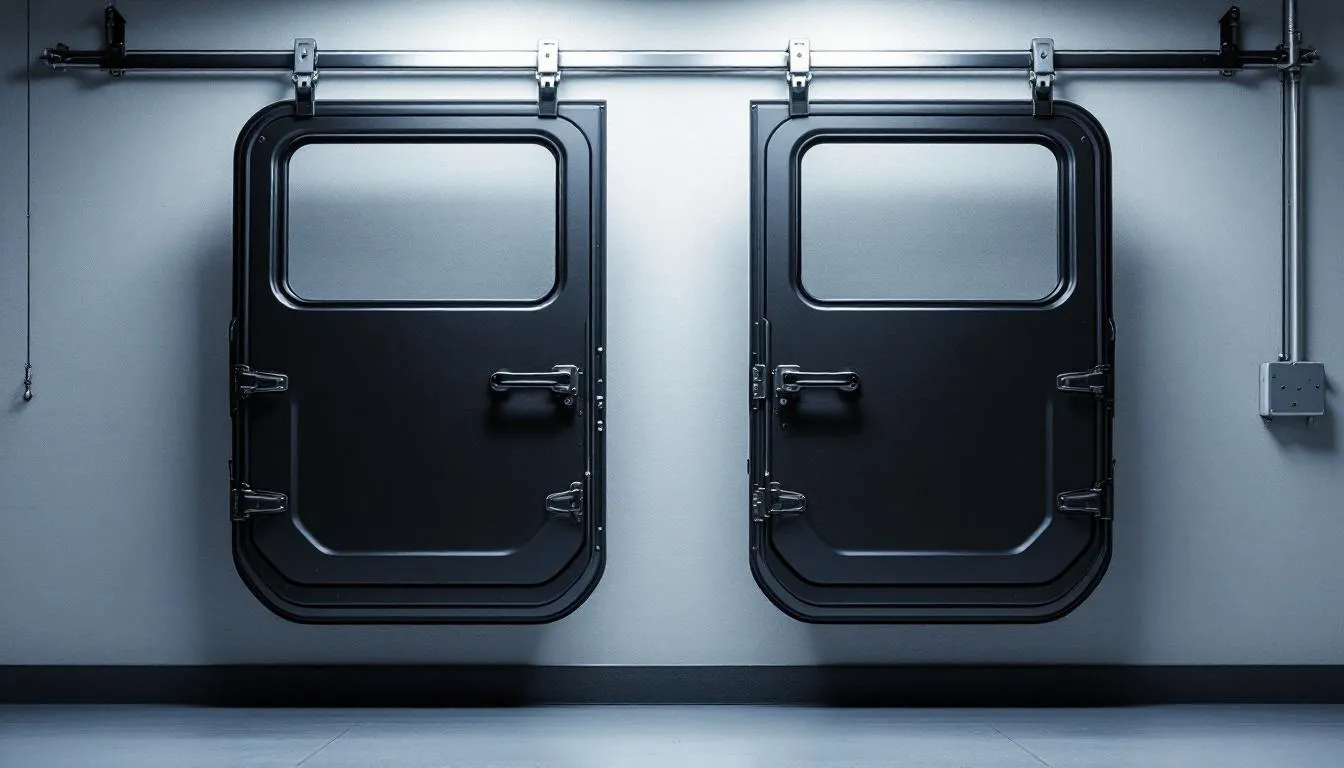
The best JK door storage solutions include wall-mounted hangers ($20-$77), rolling door carts ($200), and heavy-duty vertical racks with locking wheels. Your choice depends on garage space, how often you remove doors, and your protection requirements.
I learned this the hard way after leaning my JK doors against a garage wall for exactly one weekend. A gust from the open roller door sent both doors sliding down the concrete, leaving paint scratches that still remind me of that mistake three years later. That $45 lesson pushed me to research proper door storage before the next doorless season.
JK doors aren’t cheap. OEM replacements run $800-1200 each. For a four-door JKU, you’re protecting $3200-4800 worth of doors. Spending $20-200 on proper storage isn’t just about garage organization — it’s about preventing damage to a significant investment while making doorless driving practical instead of stressful.
This guide breaks down the three main storage categories, helping you match the right solution to your garage layout and usage pattern. Whether you’re running soft tops or hard tops, proper door storage protects your investment when you go topless.
Why Proper Door Storage Matters for Your JK
JK doors fail in storage the same way they fail on the trail — at the weakest points. Hinge pins bend when doors lean against walls at wrong angles, distributing weight unevenly. Paint chips where door edges contact concrete or metal surfaces. Weatherstripping compresses under improper stacking, losing its seal permanently.
The replacement cost context matters. Those OEM JK doors at $800-1200 each make a $200 storage system look brilliant. Even budget wall hangers at $20 pay for themselves by preventing a single paint chip or bent hinge pin. I’ve watched forum members spend $500 repainting a door edge because they stored doors improperly for one season.
Garage safety enters the equation when doors fall. A 50-60 pound JK door falling from a leaning position against a wall can cause real injury. I know a JKU owner whose door fell onto a toolbox, shattering the mirror and putting a dent in the door skin that insurance wouldn’t cover because it happened in his garage, not on the road.
Frequency considerations drive your storage decision. If you’re like me — running doorless from October through March in Cape Town — you’ll remove and reinstall doors dozens of times per season. Quick access matters. Compare that to someone who stores doors once in May and reinstalls in September. Seasonal storage prioritizes protection over convenience.
The math is simple: protect your doors properly or replace them eventually. This applies whether you run half doors and tube doors or full factory doors.
Wall-Mounted Door Hangers: Space-Saving Budget Option

Wall-mounted brackets solve the floor space problem by hanging doors vertically on garage walls. You’ll attach brackets to wall studs and hang doors by their hinges, freeing up floor space for vehicles or gear.
The three featured products differ in construction quality and price positioning. Xprite offers US flag pattern styling with rubber lining at $33.99 for a four-pack. Xislet delivers basic heavy-duty mounting at $19.99 — the budget entry point. KUAFU provides premium construction at $76.50, positioned for owners wanting maximum durability.
Installation requires finding studs 16-24 inches on center, matching the spacing of JK door hinges. You’ll need a drill, level, and stud finder. Each door weighs approximately 50-60 pounds, so mounting directly into studs isn’t optional — drywall anchors will fail. For a four-door setup, plan for 6-8 feet of linear wall space to accommodate all doors with proper spacing between hangers.
Protection features separate adequate from excellent. Rubber lining on contact points prevents paint scratches. I learned this from a forum member who mounted bare metal hooks and discovered fine scratches after one season. Adjustable hooks accommodate different hinge configurations, particularly useful if you’ve modified doors or run aftermarket half doors.
Wall hangers work best when you have dedicated garage wall space and remove doors seasonally or monthly rather than weekly. If your garage doubles as a workshop, ensure hanger placement doesn’t interfere with workbench access or storage shelving. Consider this alongside your other JK modifications when planning garage layout.
When I helped a JKU owner install the Xprite hangers, the rubber lining impressed us. His doors had just been repainted, and he was paranoid about scratches. The soft contact points gave him confidence to actually use the system instead of babying the doors with towels and moving blankets.
Xprite Door Storage Hangers with US Flag Pattern & Rubber Lining, 4 PCS Removable Wall Mounted Door
$33.99
Check Price on Amazon →
Xislet 4Pcs Jeep Door Hangers Jeep Wall Mount for Door Storage Hangers Compatible with 1956-2025 Jee
$19.99
Check Price on Amazon →
KUAFU Wall Mount Door Storage Hanger Compatible with Jeep Wrangler CJ-7 YJ TJ JK JL Door Storage Rac
$76.5
Check Price on Amazon →Pros:
- Free up floor space for vehicles or gear
- Lowest cost entry point ($20-77)
- No moving parts to maintain
- Works for 2-door and 4-door JK setups
Cons:
- Requires dedicated wall space
- Installation commitment (drilling into studs)
- Less convenient for frequent door swapping
- Not suitable for renters
Rolling Door Carts: Maximum Flexibility and Portability
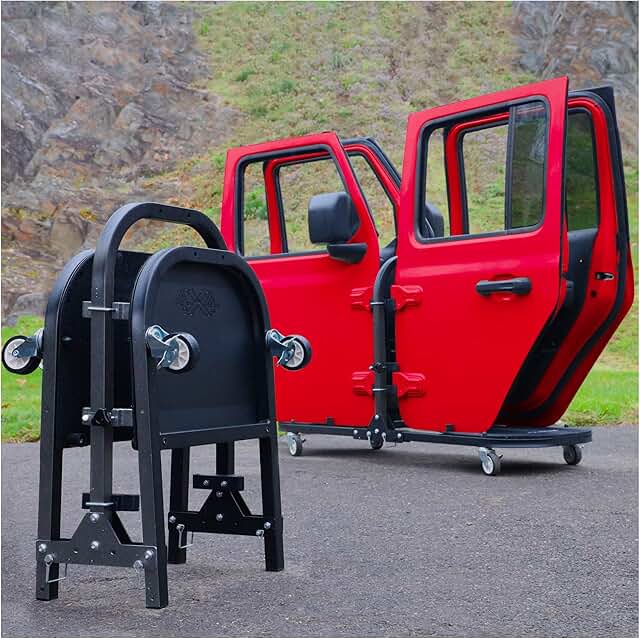
Rolling carts eliminate the installation requirement by supporting doors on wheeled frames. You’ll store doors vertically on the cart and roll the entire assembly wherever needed in your garage or storage area.
The EZ4X4 Aluminum Cart at $199.99 represents the category benchmark. The folding design collapses for storage when not holding doors — useful during months when doors stay on the JK. Aluminum construction keeps weight manageable while supporting four full-size JK doors. Patented design elements address the stability issues that plague cheaper cart attempts, and compatibility extends across JK and JL platforms.
Compare carts against wall mounts for mobility advantages. You can reorganize your garage without remounting brackets. No wall installation means renters avoid damaging walls. I know two JK owners who roll their doors outside for cleaning and photography — try that with wall-mounted hangers. When not in use, fold the cart and tuck it behind other storage.
The space tradeoff matters: carts require approximately 3x4 feet of floor space when loaded with doors. That’s floor space you can’t use for other purposes while doors are stored. But you can wheel the cart into a corner when you park the JK, then roll it out when you need garage center access.
Price positioning puts carts at 3-6x more than basic wall hangers. That $200 investment makes sense for specific situations: renters who can’t drill walls, frequent door swappers who reorganize garages seasonally, or owners who need mobility for cleaning and maintenance.
During the Namibia trip planning, I considered a cart for storing the JKU doors while we were away. The folding design appealed because the garage space would store camping gear during the trip. I ultimately chose wall mounts because we weren’t renting, but that cart flexibility solves real problems for the right buyer.
EZ4X4 Aluminum Black 4 Door Folding Rolling Door Cart, Storage Door Rack Holder Stand fits Jeep® Wra
$199.99
Check Price on Amazon →Pros:
- No wall installation required (renter-friendly)
- Mobile for garage reorganization
- Folding storage when not in use
- Can move doors outside for cleaning
Cons:
- Requires 3x4 feet of floor space
- 3-6x more expensive than wall hangers
- Moving parts to maintain (wheels, folding mechanism)
- Floor space unusable while cart is loaded
Heavy-Duty Vertical Racks: Professional-Grade Storage

Heavy-duty vertical organizers represent the premium category, designed for frequent use and maximum protection. These systems prioritize stability, capacity, and paint protection over cost considerations.
The JROAD Upgrade Door Hanger emphasizes locking wheels for stability during door loading and unloading. Four-door vertical capacity accommodates complete JKU door sets, and compatibility extends to JK, JL, Gladiator JT, and even 2021+ Ford Bronco applications. Heavy-duty construction withstands repeated weekly use without degradation.
Professional-grade features justify the premium positioning. Locking mechanisms prevent the cart from rolling while you’re loading doors — a critical safety element I’ve seen omitted on cheaper systems. Vertical storage maximizes floor space better than horizontal alternatives. Integrated padding protects paint and hinges more comprehensively than basic rubber-lined hooks.
The ideal buyer runs doorless frequently — weekly rather than seasonally. Serious JK enthusiasts who swap doors for different trail conditions need this convenience level. Professional shops storing customer doors require the stability and protection to avoid liability. Owners with premium paint or vinyl wraps can’t risk the scratches that cheaper solutions might cause. This matters especially for specific model years with factory paint packages.
I watched a shop in Stellenbosch use a similar heavy-duty system for customer vehicles. They service multiple Wranglers simultaneously and need to store doors safely while working on other modifications. The locking wheels prevented a door cart from rolling when a tech bumped it with a creeper. That stability alone justified their investment.
JROAD Upgrade Door Hanger Storage Rack Bracket Holder for 2007-2026 Jeep Wrangler JK JL Gladiator JT
Check Amazon for current price
Check Price on Amazon →Pros:
- Locking wheels prevent movement during loading
- Maximum protection for premium paint/wraps
- Built for weekly use and frequent swapping
- Professional-grade stability
Cons:
- Premium price point
- Requires 4x2 feet of floor space plus clearance
- Overkill for seasonal door removal
- Moving parts to maintain
Garage Space Planning for JK Door Storage
Measure before buying. Wall hangers need 6-8 feet of linear wall space at 5-6 feet height, depending on door length and spacing between hangers. Mount hangers high enough that doors hang clear of floor obstacles but low enough you can safely lift doors on and off. Rolling carts require 3x4 feet of floor space with clearance for door swing radius when loading. Vertical racks need 4x2 feet with adequate clearance to maneuver doors without hitting walls or vehicles.
Two-door JK setups halve the space requirements compared to four-door JKU configurations. If you’re running a two-door, you can often fit wall hangers in a 4-foot section of wall. Four-door owners going full doorless need to plan for storing all four doors simultaneously — that’s 6-8 feet of wall or a full-size cart. Consider this alongside hardtop storage solutions when organizing your garage.
Garage layout optimization starts with storing doors near your JK parking spot. Carrying 60-pound doors across a garage gets old fast. I positioned my wall hangers on the wall directly behind where the JKU parks, giving me a three-foot carry distance instead of fifteen. Corner placement keeps main work areas clear while utilizing otherwise-wasted space.
Multi-vehicle garages require prioritizing wall versus floor space based on other vehicles and equipment. If you’ve already consumed floor space with toolboxes and compressors, wall hangers make more sense. If your walls hold shelving and pegboard tool storage, floor-based carts or racks become the practical choice.
Account for door swing radius when planning cart or rack placement. You’ll rotate doors during loading, requiring clearance. Ensure adequate lighting wherever you position storage — lifting doors in poor lighting invites dropped doors and pinched fingers.
When organizing gear for the Namibia trip, I mapped our garage completely. The JKU storage system, recovery gear, camping equipment, and tool storage all competed for the same space. That planning revealed that vertical door storage freed up enough floor space for our camping gear staging area, which made trip preparation significantly easier. This integrated approach works whether you’re storing doors alongside bikini tops or full soft tops.
Protecting Your Doors During Storage
Hinge pins bear full door weight in storage systems. Improper support distributes weight unevenly, bending pins over time. Ensure your storage solution supports doors at both hinge points, not just one. Paint and vinyl along door edges prove vulnerable to scratches from metal hangers or concrete walls — even careful placement isn’t enough without proper padding.
Padding requirements aren’t negotiable for painted doors. Rubber lining on contact points prevents paint damage from metal-on-metal contact. For basic wall hangers lacking rubber, add foam pipe insulation to contact areas. Never rest doors directly on concrete — even temporarily. One JK owner I know left doors on concrete for two days and discovered etching from moisture trapped between the surfaces.
Weatherstripping preservation matters for long-term storage. Avoid compressing weatherstripping during storage by maintaining vertical orientation. Horizontal stacking crushes weatherstripping under door weight, permanently deforming the seal. Vertical storage maintains door shape, preventing seal warping that causes wind noise and water leaks after reinstallation.
Clean doors before storage to prevent damage from trapped dirt and grit. During the steel bumper installation weekend, I learned this lesson with greasy handprints on the door edge. That grit scratched the paint when I hung the door on my basic hangers. Now I wash and dry doors before storage, and I’ve added wax to door edges for seasonal storage that lasts months.
Environmental factors affect stored doors. Garage humidity corrodes exposed metal hardware on hinges and mirror mounts. Temperature extremes affect weatherstripping elasticity — I’ve seen weatherstripping become brittle in extreme heat. Cover stored doors if your garage accumulates dust from woodworking or other projects. Understanding common JK problems helps you identify when storage has damaged door components.
Choosing the Right Storage Solution for Your Needs
Three factors drive your decision: available garage space, frequency of door removal, and budget. Match these factors against storage categories to find your solution.
Choose wall hangers ($20-77) when you have dedicated wall space, remove doors seasonally or monthly, prioritize budget, and own your garage permanently. The Xislet four-pack at $19.99 represents the minimum viable solution. Xprite at $33.99 adds rubber lining for better protection. KUAFU at $76.50 delivers premium durability for long-term use.
Choose rolling carts ($200) when you rent and can’t drill walls, reorganize your garage frequently, want to move doors outside for cleaning, or have limited wall space but adequate floor space. The EZ4X4 cart solves the portability problem and folds for storage when not holding doors.
Choose vertical racks when you swap doors weekly, need maximum protection for premium paint or wraps, run a professional shop, or prioritize convenience over cost. The JROAD system delivers locking stability and integrated protection for serious enthusiasts. This matters particularly when comparing Rubicon versus Sport models with different paint packages.
| Storage Type | Space Required | Portability | Protection Level | Price Range | Ideal For |
|---|---|---|---|---|---|
| Wall Hangers | 6-8 ft wall | None (permanent) | Good with padding | $20-77 | Seasonal swappers, homeowners |
| Rolling Carts | 3x4 ft floor | Excellent | Good | ~$200 | Renters, frequent reorganizers |
| Vertical Racks | 4x2 ft floor | Good (wheels) | Excellent | Premium | Weekly swappers, pro shops |
I run wall hangers on my JKU because I own the garage and remove doors seasonally. A friend who rents and wheels every weekend runs a cart so he can move it for his landlord’s inspections. Another friend who runs a custom shop invested in heavy-duty racks because customer doors require maximum protection. All three of us chose correctly for our situations.
Common Questions About JK Door Storage
How much space do I need to store JK doors?
Wall hangers require 6-8 feet of linear wall space for a four-door JKU, or 4 feet for a two-door JK. Mount hangers at 5-6 feet height. Rolling carts need approximately 3x4 feet of floor space when loaded. Vertical racks require 4x2 feet plus clearance for door swing during loading. Always measure your available space before purchasing.
Can I store JK doors horizontally?
Horizontal storage compresses weatherstripping under door weight, permanently deforming seals. This causes wind noise and water leaks after reinstallation. Vertical storage maintains door shape and prevents seal damage. If you must store horizontally temporarily, place padding between stacked doors and limit stacking time to days, not months.
Do I need to remove doors to store them?
This question usually comes from owners considering whether to leave doors on the JK during long-term vehicle storage. If you’re storing the complete vehicle for months, leaving doors on prevents storage challenges. But for active JKs where you want doorless driving, yes — you’ll remove and store doors separately to protect them from garage hazards.
Will storage solutions work with aftermarket doors?
Most wall hangers and carts accommodate aftermarket half doors, tube doors, and different door materials. Verify hinge spacing matches before purchasing. Tube doors typically weigh less than stock doors, making weight capacity less critical. Heavy steel doors may require reinforced hangers rated for higher weight limits.
How do I protect painted doors in storage?
Use rubber-lined or padded contact points on all storage hardware. Wash and dry doors before storage to remove dirt and grit. Apply wax to painted surfaces for long-term seasonal storage. Avoid storing doors in direct sunlight, which fades paint. Cover doors if your garage accumulates dust from other projects.
Final Recommendations
Match your storage solution to your usage pattern and garage reality. Space availability, removal frequency, and budget determine the right choice for your specific situation.
For budget-conscious buyers with wall space, the Xislet wall hangers at $19.99 deliver functional door storage without unnecessary features. Add foam pipe insulation to contact points if you’re paranoid about paint protection. This setup works perfectly for seasonal door removal when you own your garage.
For portability and renter-friendly installation, the EZ4X4 cart at $199.99 solves the no-drill-holes requirement while providing mobility for garage reorganization. The folding design makes this cart useful even during months when doors stay on your JK.
For premium needs and frequent swapping, the JROAD vertical rack delivers professional-grade protection with locking wheels and integrated padding. If you swap doors weekly or protect premium paint, this investment makes sense.
The protection ROI matters: investing $20-200 prevents damage to $800-1200 doors and makes doorless driving practical instead of stressful. I’ve seen too many forum posts from owners who learned this lesson the expensive way — after doors fell or got scratched in makeshift storage. Don’t learn this lesson after the fact, especially when protecting replacement soft tops or other JK investments.
Set up storage before peak doorless season. Rushing into spring with no storage plan leads to leaning doors against walls or other compromises that risk damage. Measure your garage space this week, assess how often you’ll remove doors, choose the solution matching your pattern, and prioritize door protection over convenience.
When I installed my wall hangers three years ago, I eliminated the stress of door storage completely. Now when the weather breaks and doorless season starts, I spend fifteen minutes removing doors instead of thirty minutes worrying about where to put them safely. That convenience made doorless driving significantly more enjoyable — which is the whole point of owning a Wrangler.
Get the Free JK Build Planner
Complete PDF with mod checklists, gear ratios, tire sizing charts, and budget worksheets. Everything you need to plan your JK build.
No spam. Unsubscribe anytime. By subscribing, you agree to our Privacy Policy.
Jeep JK Guide
We're JK owners who've been building, breaking, and fixing Wranglers for years. Everything here is tested on our own rigs - no sponsored fluff, just honest recommendations.
Learn more about us →Get the JK Build Planner
Free PDF with complete build checklists, gear ratios, and tire fitment guides.
By subscribing, you agree to our Privacy Policy.