Best Gear Ratio For 37 Inch Tires Jeep JK: Complete Regearing Guide
This article contains affiliate links. We may earn a commission at no extra cost to you.
I learned about proper gearing the hard way. After mounting 35-inch tires on my 2012 JK Sport, I spent four months struggling with stock 3.21 gears before finally biting the bullet and regearing to 4.56. The transformation wasn’t subtle — it was like getting a new Jeep. Suddenly, the transmission stopped hunting for gears on hills, highway merging became confident instead of terrifying, and the engine stopped laboring at every stoplight.
For 37-inch tires on a Jeep JK, 5.13 gears are the best choice for most drivers, offering an ideal balance of highway comfort and off-road capability. Automatic transmission owners may prefer 5.38 gears for better low-end response, while manual transmission drivers often find 5.13 provides excellent all-around performance without excessive highway RPM.
Regearing both axles typically costs $2,000-$3,000 installed at a reputable shop. That’s not pocket change, but it’s mandatory if you want your JK to drive properly with 37s. Skip the regear and you’ll face transmission overheating, burned clutches, premature drivetrain wear, and fuel economy that makes a diesel truck look efficient. The question isn’t whether to regear with 37-inch tires — it’s which ratio to choose.
Why Gear Ratios Matter With 37-Inch Tires
When you install 37-inch tires on a JK that came with 32s from the factory, you’re fundamentally changing the mechanical advantage between your engine and the ground. Each wheel rotation now covers significantly more distance, which means your engine has to work much harder to achieve the same acceleration and climbing ability.
Think of it like shifting a 10-speed bicycle into high gear and trying to climb a hill. Technically possible, but you’re grinding away at the pedals while barely moving forward. Your transmission does the same thing with oversized tires and stock gearing — constantly downshifting, slipping the torque converter, and generating excessive heat trying to compensate for the mechanical disadvantage.
The symptoms of improper gearing are unmistakable once you know what to look for. Your Jeep will feel sluggish from a stop, requiring excessive throttle input to get moving. On the highway, the transmission hunts between gears constantly, unable to find a comfortable cruise. Steep hills that used to be easy now require a downshift or two. And your transmission overheating issues become more frequent, especially when towing or driving in hot weather.
Even worse, your fuel economy tanks. Not just a little — we’re talking a 30-40% drop in MPG compared to stock. That’s because your engine is working outside its efficient powerband for most driving conditions. Lower gears restore the engine to its optimal RPM range for power delivery and efficiency.
The goal of regearing is to restore the engine speed (RPM) and drivetrain ratio that Jeep originally engineered for the vehicle. With proper gearing, your JK will accelerate normally, cruise comfortably, climb confidently, and minimize the mechanical stress that leads to expensive failures down the road.
Best Gear Ratios for 37-Inch Tires on JK Wrangler
Let’s cut through the forum debates and give you the straight answer. For most JK owners running 37-inch tires, 5.13 gears are the goldilocks ratio — not too tall for off-road work, not too short for highway comfort. This ratio works particularly well for daily drivers who split time between pavement and trails.
Here’s how the three most common ratios compare:
| Gear Ratio | Highway Comfort | Off-Road Performance | Fuel Economy | Best For |
|---|---|---|---|---|
| 4.88 | Excellent | Good | Best | Highway-heavy driving, manual transmission |
| 5.13 | Very Good | Very Good | Good | Balanced daily driver, most versatile |
| 5.38 | Good | Excellent | Fair | Trail-focused rigs, automatics, rock crawling |
If you’re running an automatic transmission and spend significant time rock crawling or in technical terrain, 5.38 gears give you noticeably better throttle response and crawl control. The trade-off is slightly higher highway RPM — you’ll be turning about 2,400 RPM at 70 mph instead of 2,200 RPM with 5.13s. That’s not uncomfortable, but it’s noticeable.
Manual transmission owners often prefer 5.13 gears because you have complete control over gear selection. The slightly taller ratio gives you a bit more top-end room in each gear without sacrificing much low-end grunt. If you rarely see trails and mostly cruise highways, 4.88 gears are viable, but you’re giving up significant off-road capability for modest highway gains.
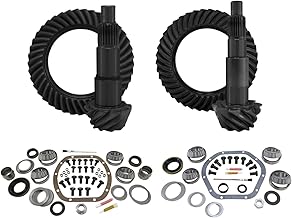
Yukon Gear & Axle - Gear & Install Kit for Jeep JK non-Rubicon 4.88 Ratio - includes ring and pinion (4.88 ratio) - YGK013
$620
Check Price on AmazonThe Yukon kit includes everything except installation labor: ring and pinion, carrier bearings, pinion seal, crush sleeve, and marking compound. It’s a quality USA-made option that includes the small parts many cheaper kits leave out. Just remember you need kits for both front and rear axles unless you’re only regearing one end (which is never recommended — always regear both).
One more consideration: Rubicon owners have a significant advantage with their 4:1 low-range transfer case. That extra reduction in the transfer case means you can run slightly taller gears like 4.88 and still have excellent crawl ratios. Non-Rubicon JKs with the 2.72:1 transfer case benefit more from the deeper 5.13 or 5.38 gears. Read more about the Rubicon’s 4:1 transfer case advantage and how it affects your gearing decisions.
Manual vs Automatic Transmission Considerations
Your transmission type should significantly influence your gear ratio choice. The fundamental difference comes down to control and torque multiplication.
If you have a manual transmission (NSG370 6-speed or AX15 5-speed), 5.13 gears are the sweet spot. You have complete control over gear selection, so you can keep the engine in its powerband through strategic shifting. The 6-speed manual has tight gear spacing, which means you’re never far from the right gear for any situation. The slightly taller 5.13 ratio gives you comfortable highway cruising in 6th gear without sacrificing usable power in lower gears.
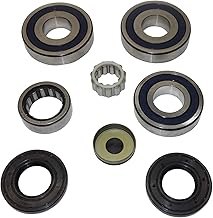
Manual transmission owners planning a complete drivetrain refresh should consider addressing the NSG370’s known bearing issues at the same time. The
If you have an automatic transmission (42RLE 4-speed or NAG1 5-speed), 5.38 gears make more sense for most drivers. Automatics rely on torque converter multiplication and pre-programmed shift points. With 37-inch tires, your transmission computer is constantly confused about when to shift. The deeper 5.38 gears give the automatic more leverage to work with, reducing torque converter slip and keeping the transmission from hunting between gears.
The automatic transmission’s lack of engine braking compared to a manual also benefits from deeper gears. When descending steep trails, 5.38 gears provide more compression braking force in low range, reducing brake wear and giving you better control. Manual transmission drivers can simply drop a gear or two for the same effect.
Highway RPM is higher with 5.38 gears in an automatic, but it’s not excessive. You’ll be around 2,400 RPM at 70 mph, which is well within the 3.6L Pentastar’s comfort zone. The engine isn’t straining — it’s actually operating in a more efficient range than it would be lugging along at 1,900 RPM with stock gears and 37s.
Highway vs Off-Road Performance Trade-Offs
Every gear ratio involves compromises. Understanding these trade-offs helps you make the right choice for your specific driving style.
Highway Performance:
With 4.88 gears and 37-inch tires, highway driving feels closest to stock. You’ll cruise at about 2,100 RPM at 70 mph, which is quiet and economical. Wind noise from the larger tires will be more noticeable than engine noise. The downside is noticeable sluggishness when accelerating from 45-60 mph — passing maneuvers require planning, and you’ll often find yourself waiting for the transmission to downshift before you have usable power.
With 5.13 gears, you’re at approximately 2,200 RPM at 70 mph. This is the happy medium. Acceleration feels responsive without being aggressive. The engine has enough torque on tap for confident highway merging and passing. Fuel economy is slightly worse than 4.88 gears but better than stock gears with 37s. Most drivers report this ratio feels “right” on the highway — not lugging, not screaming.
With 5.38 gears, expect around 2,400 RPM at 70 mph. The engine is more audible, but not objectionably loud with a stock exhaust. Throttle response is immediate at any speed, and acceleration from 50-70 mph happens without the transmission searching for lower gears. Fuel economy takes a small hit compared to 5.13 gears — typically 0.5-1 MPG worse in real-world driving.
Off-Road Performance:
This is where deeper gears shine. In technical terrain, your crawl ratio determines how slowly and controllably you can move over obstacles. With 37-inch tires, stock 3.21 or 3.73 gears give you terrible crawl ratios that force you to slip the clutch or ride the brakes constantly.
With 4.88 gears and a 2.72:1 transfer case (non-Rubicon), your crawl ratio in first gear low range is approximately 48:1. That’s adequate for moderate trails but marginal for serious rock crawling. Rubicon owners with the 4:1 transfer case get a 70:1 crawl ratio, which is genuinely capable.
With 5.13 gears, non-Rubicon JKs achieve approximately 53:1 crawl ratio — a noticeable improvement that gives you much better control at walking speed. Rubicon owners reach 78:1, which handles virtually any obstacle with finesse. This is where 5.13 gears prove their versatility — capable enough for serious trails without the highway compromise of even deeper gears.
With 5.38 gears, you’re at 56:1 (non-Rubicon) or 82:1 (Rubicon). This is competition-level crawl capability. You can idle over obstacles that would require careful throttle modulation with taller gears. The downside is minimal unless you’re primarily a highway driver.
One reality check on fuel economy: regearing helps significantly compared to running 37s on stock gears, but it won’t restore factory MPG. In my experience, most JK owners see 13-15 MPG combined with 37s and proper gearing, compared to 15-17 MPG stock. The larger tires, increased weight, and aerodynamic penalty are permanent factors. If you’re considering a JL for its 8-speed automatic transmission advantage, fuel economy is one area where the newer platform genuinely excels.
What Happens If You Don’t Regear With 37s
Some JK owners try to skip regearing to save money. This is a false economy that leads to expensive failures and miserable driving experience. Here’s what actually happens when you run 37-inch tires on stock gears:
Transmission overheating becomes a constant concern. Your automatic transmission’s torque converter stays unlocked more often, generating excessive heat. The fluid breaks down faster, and internal clutch packs wear prematurely. Many owners add an
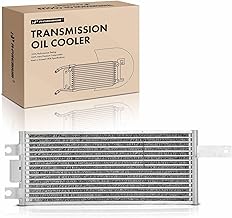
A-Premium Transmission Oil Cooler Compatible with Jeep Wrangler 2012-2017, Wrangler JK 2018, 3.6L
$79.99
Check Price on AmazonClutch life plummets on manual transmissions. You’ll find yourself slipping the clutch constantly to get moving from a stop and to maintain speed on hills. What should be a 100,000-mile clutch becomes a 30,000-mile consumable. Clutch replacement on a JK costs $800-$1,200 in labor alone.
Engine lugging causes long-term damage. Operating an engine below its designed RPM range under load (climbing hills, accelerating) increases combustion chamber deposits, reduces oil pressure, and can lead to piston ring issues over time. The 3.6L Pentastar is a great engine, but it’s designed to operate at 1,800+ RPM under load, not 1,200 RPM.
Fuel economy is worse than with proper gearing. This surprises people, but it’s true. An engine operating outside its efficiency range burns more fuel per mile, even at lower RPM. Many owners report worse MPG with 37s on stock gears than with 37s and 5.13 gears, despite the higher cruising RPM with proper gearing.
The bottom line: if you can afford 37-inch tires, wheels, and the likely suspension upgrades required, you can’t afford NOT to regear. The cost of regearing is mandatory infrastructure, not an optional enhancement.
Regearing Cost and Installation Process
Let’s talk real numbers based on 2024-2025 pricing. Professional regearing for both front and rear axles typically costs:
- Parts (gear sets for both axles): $800-$1,400 depending on brand and ratio
- Installation labor: $1,200-$1,800 at a reputable shop
- Additional parts (bearings, seals, fluid): $200-$400
- Total regear cost: $2,000-$3,000 for quality work
The labor cost reflects the precision required for differential setup. Pinion depth, bearing preload, and backlash must be set to exact specifications. Get it wrong and you’ll have whining gears, premature wear, or catastrophic failure. This isn’t a YouTube-and-weekend project unless you have differential experience and specialized tools (dial indicator, crush sleeve installer, case spreader, bearing pullers).
Installation requires specific supplies. You’ll need about 2 quarts of gear oil per axle —
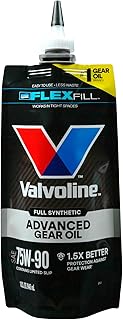
Valvoline FlexFill Advanced Full Synthetic 75W-90 Gear Oil 1 Quart Pouch
$15.48
Check Price on AmazonMost shops also recommend replacing axle bearings and seals while the axles are apart. The
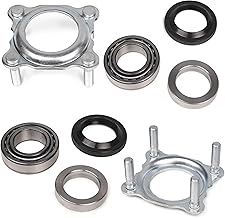
2pcs Rear Axle Bearing and Seal Kit Compatible with Jeep Wrangler JK/JKU 2007 2008 2009 2010 2011 2012 2013 2014 2015 2016 2017 Replaces 68008523AA 68003270AA 83503077 68499023AA
$77.88
Check Price on AmazonThe “might as well” upgrade opportunity is significant with regearing. Since both axle assemblies are disassembled, this is the perfect time to upgrade to upgraded differential covers with better cooling fins, increased fluid capacity, and magnetic drain plugs. It’s also the ideal time for adding lockers during the regear — the labor overlap means you’re only paying for the locker installation, not full differential disassembly again.
Plan on your Jeep being at the shop for 3-5 days for a straightforward regear, longer if you’re adding lockers or discovering other issues. A quality shop will test drive the vehicle and verify proper gear pattern before returning it to you. You should not hear whining or experience vibration with properly installed gears.
One final note: you’ll need a programmer or dealer visit to recalibrate your speedometer and odometer after regearing. The speedometer is calculated based on transmission output shaft speed and factory tire diameter. With new gears and oversized tires, it will read incorrectly. Most programmers cost $300-$500 and also allow other modifications like adjusting tire size, TPMS, and removing speed limiters.
Supporting Modifications for 37-Inch Tires
Regearing solves the drivetrain issues with 37-inch tires, but several other modifications are necessary or highly recommended for proper fit and function:
Suspension lift: You need minimum 3.5 inches of lift to clear 37-inch tires without rubbing. More is better for articulation and avoiding contact at full compression.
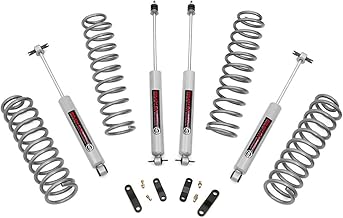
Rough Country 2.5" Lift Kit for 2007-2018 Jeep Wrangler JK Unlimited - 67930
$299.95
Check Price on AmazonThis kit provides the baseline lift needed, though many owners running 37s opt for 4-inch or adjustable systems for better clearance at full flex. The kit includes everything needed for basic lift but lacks adjustable track bars and upgraded shocks that larger tires benefit from.
Steering stabilizer upgrade: 37-inch tires create significantly more feedback through the steering system, especially on rough roads. The added rotating mass and leverage amplify every bump and rock into the steering wheel.
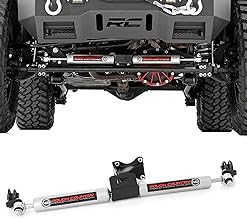
Rough Country N3 Dual Steering Stabilizer for 07-18 Jeep Wrangler JK - 8734930
$149.95
Check Price on AmazonA dual steering stabilizer setup like this reduces steering vibration and prevents death wobble by damping oscillations before they amplify. Not strictly necessary, but highly recommended for comfort and safety.
Wheel spacers or proper offset wheels: Factory JK wheels don’t provide enough backspacing for 37-inch tires to clear suspension components and avoid rubbing at full lock. You’ll need either wheel spacers to push the tires outward or aftermarket wheels with proper offset. The
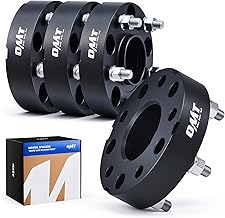
Orion Motor Tech 5x5 Wheel Spacers Compatible with Jeep Wrangler JK Grand Cherokee Commander, 1.5" Wheel Spacers with 1/2x20 Studs, 5x127 71.5 mm Hub Centric Wheel Spacer Kit, Set of 4, Black
$102.99
Check Price on AmazonAdditional modifications to consider:
- Brake upgrades: Larger tires increase rotational mass, requiring more stopping power. Consider upgraded brake pads at minimum.
- Upgraded axle shafts: Stock JK axle shafts can handle 37s with careful driving, but upgraded chromoly shafts provide insurance against breakage on trails.
- High-clearance fenders: Most owners with 37s trim or replace factory fenders for better clearance and flex.
- Extended brake lines: Factory brake lines may be stretched at full droop with larger lift and tires.
- Bump stops: Limit compression travel to prevent tire-to-fender contact when the suspension compresses.
The total cost of properly building a JK for 37-inch tires — lift, gears, wheels, tires, and supporting mods — typically exceeds $8,000-$10,000. That’s why 35-inch tires are so popular: they require less supporting infrastructure while still providing serious capability improvement over stock.
Frequently Asked Questions
Q: Can I run 37-inch tires on stock gears?
A: Technically yes, but you shouldn’t. Your JK will be dangerously sluggish, the transmission will overheat and fail prematurely, and fuel economy will be abysmal. The drivetrain strain from incorrect gearing with 37s causes thousands of dollars in damage over time — far more than regearing costs upfront.
Q: What’s the difference between 5.13 and 5.38 gears?
A: 5.38 gears provide about 5% more torque multiplication than 5.13 gears. That translates to noticeably better low-end response and crawl control, but slightly higher highway RPM. For daily drivers splitting highway and trail time, 5.13 is more versatile. For trail-focused rigs or automatic transmissions, 5.38 provides better off-road performance.
Q: Do I need to regear both front and rear axles?
A: Yes, always regear both axles to the same ratio. Mismatched gear ratios between front and rear axles will destroy your transfer case. The front and rear driveshafts must turn at the same speed relative to each other for the transfer case to function properly. Running different ratios front and rear causes binding and rapid wear.
Q: Will regearing fix my speedometer with 37-inch tires?
A: No, you’ll need a programmer or dealer calibration. Regearing changes the axle ratio, and oversized tires change the effective diameter — both affect speedometer accuracy. A programmer (like Superchips or Tazer) allows you to input your actual tire size and gear ratio to recalibrate the speedometer. Without recalibration, your speedometer will read incorrectly and your odometer will accumulate miles at the wrong rate.
Q: Can I regear my Jeep myself?
A: Only if you have differential setup experience and specialized tools. Regearing requires precise measurement and adjustment of pinion depth, bearing preload, and backlash. Get these settings wrong and you’ll have noisy gears, premature wear, or catastrophic failure. The required tools — dial indicator, bearing pullers, case spreader, torque wrench, press — cost more than paying a shop for most DIYers. This is one job where professional installation is worth every penny.
Q: How long does a regear take?
A: Professional shops typically need 3-5 days for a straightforward regear of both axles. The actual bench time is 8-12 hours, but shops work on multiple vehicles and need time for test drives and verification. If you’re adding lockers, differential covers, or discovering other issues, expect longer. Rush jobs on differentials usually mean compromised quality — proper gear setup requires patience and precision.
Final Thoughts: Choosing the Right Gear Ratio for Your JK
If you’re running 37-inch tires on your JK, regearing isn’t optional — it’s mandatory infrastructure. The difference between proper gearing and stock gears with 37s is the difference between a capable, enjoyable Jeep and a frustrating money pit that burns through transmissions and clutches.
Choose 5.13 gears if you’re a balanced driver who splits time between highways and trails, especially with a manual transmission. This ratio delivers excellent all-around performance without significant compromises in either direction.
Choose 5.38 gears if you’re trail-focused or running an automatic transmission. The added low-end torque and crawl control make technical terrain easier and more controlled, while highway RPM remains entirely reasonable.
Choose 4.88 gears only if you’re highway-heavy and rarely see difficult trails, particularly if you have a Rubicon with the 4:1 transfer case. Most JK owners find 4.88 gears too tall for 37s in mixed driving.
The $2,000-$3,000 investment in proper regearing transforms your JK from struggling with oversized tires to confidently handling them. Combined with quality supporting modifications, you’ll have a Jeep that’s genuinely capable on trails while remaining civilized on the street — exactly what the JK platform was designed to be.
If you’re new to JK ownership or considering modifications beyond gearing, check out our complete JK buyer’s guide and model year differences to understand how your specific year and trim affects modification choices. Welcome to the 37-inch tire club — done right, you’re going to love the capability they unlock.
This article contains affiliate links. If you purchase through these links, we may earn a small commission at no extra cost to you. This helps support the site and allows us to continue creating content for the Jeep JK community.
Get the Free JK Build Planner
Complete PDF with mod checklists, gear ratios, tire sizing charts, and budget worksheets. Everything you need to plan your JK build.
No spam. Unsubscribe anytime. By subscribing, you agree to our Privacy Policy.
Allan
I'm Allan. I bought a 2014 Jeep Wrangler JKU and I research the hell out of every mod before I touch it. Everything here is tested or deeply researched on my own rig - no sponsored fluff, just honest findings.
Learn more about me →Get the JK Build Planner
Free PDF with complete build checklists, gear ratios, and tire fitment guides.
By subscribing, you agree to our Privacy Policy.
Related Articles
Best Exhaust for Jeep JK 3.6: Pentastar-Specific Performance Systems
The best exhaust for 2012-2018 Jeep JK 3.6L Pentastar: cat-back systems from Borla, MBRP, and Gibson offering 5-10 HP gains, improved sound without drone, and bolt-on installation.
Best Axle Back Exhaust for Jeep JK: Budget-Friendly Sound Upgrades
Best axle back exhaust for Jeep JK delivers 70-80% of the sound improvement at 30-40% of the cost. Our top picks balance aggressive tone with zero drone and bolt-on installation.
Best Sounding Exhaust for Jeep JK: 8 Aggressive Options Ranked
Find the best sounding exhaust for Jeep JK with our ranked guide. Compare 8 aggressive cat-back and axle-back systems for tone, drone, and value.